If you can consistently speak close to the microphone in a small booth and want to make background noise less prominent, compare dynamic USB microphones. In a quiet, acoustically treated booth, you could also consider cardioid condenser models. Before buying, record both your quietest and loudest voice, and check the gain control, headphone monitoring, plosives, included mounting accessories and connection.
Who is a USB microphone for character voices suited to?
Voice artist looking to reduce booth noise
You record in a small booth and can stay close to the microphone, but want to stop the sound of the room from overpowering your voice. RØDE recommends minimising reflections in the recording space as much as possible.
Performer with both soft and loud voices
You switch between quiet and powerful roles and want to be able to check gain, monitoring and peaks before finishing a recording.
Creator with a changing set-up
You want to get started with a direct USB connection, but are weighing up a compact desktop set-up against adding an XLR connection or using a microphone arm later.
What should you look for when choosing?
Dynamic USB microphone
A good fit if: you can stay close to the microphone in a small, untreated booth and want to make the sound of the room less prominent.
Bear in mind: distance and direction still matter. RØDE recommends a speaking distance of around 5–10 cm for the PodMic USB; speaking close to the mic is no substitute for acoustic treatment.
Cardioid USB condenser microphone
A good fit if: your booth is quiet and acoustically treated, and you can adjust your voice carefully.
Bear in mind: reflections and unwanted sounds may also be picked up clearly; a cardioid pattern won’t fix an echoey room.
| Concern |
What to look for |
Who is this important for? |
| Booth noise and reflections |
Listen to a test recording made in your intended location and check the microphone’s direction and any audible reflections. |
When I record in a small booth, I don’t want my voice to get lost among room and background noise; around 31% of consumers prioritise reducing booth noise. |
| Varying vocal volume |
Test your loudest passage, check the level and listen to the recording directly through headphones. |
For both whispering and loud roles, I want to be able to check peaks without losing quiet dialogue. Around 31% of consumers say varying vocal volume is their main concern. |
| Plosives and speaking position |
Check the pop filter, capsule direction and whether an arm or stand will help you keep a consistent position. |
For expressive scripts, I want to reduce plosives and maintain the same distance; this is a priority for around 23% of consumers. |
| Connection and set-up |
Compare the included cable with your computer’s port and check which stand or arm comes in the box. |
I want to be able to get started straight away via USB and know whether the cable and stand will work with my desk; around 15% of consumers place the most importance on having a suitable connection and set-up. |
Common buying mistakes
-
Assuming a directional microphone will eliminate echo
A cardioid pattern won’t remove reflections in the booth. The microphone’s position and direction also affect what you hear.
First, make a test recording in your intended location and listen back before choosing a model.
You may need separate recording equipment for future XLR recordings.
-
Assuming every cable or version will be suitable
Cables and included stands vary by model and version; some models don’t include a desktop arm.
Check the exact product name, your computer’s ports, and which cable and mounting accessories are included.
Brands to consider
RØDE
The PodMic USB is a dynamic USB/XLR microphone; the NT-USB Mini is a compact cardioid USB condenser microphone.
- RØDE lists direct headphone monitoring and an internal pop filter for the PodMic USB. A detachable desktop stand is listed for the NT-USB Mini.
- The NT-USB Mini has no listed XLR output. Speaking close to the mic and positioning it still matter; these features don’t constitute an independent performance comparison.
Shure
The MV7+ is a dynamic USB-C/XLR microphone with voice settings and direct headphone monitoring.
- Shure lists automatic level control and digital processing for the MV7+.
- The listed features don’t guarantee a particular recording result in your booth. The Dutch base version described doesn’t include a desktop arm.
Audio-Technica
The ATR2100x-USB is a dynamic cardioid microphone with USB and XLR connections; the European product information lists voice-over as one of its uses.
- Audio-Technica Europe lists direct monitoring, two USB cables and a foldable desktop stand.
- Check whether the included stand and cables are suitable for your desk and device.
Sennheiser
The Profile USB is a cardioid USB condenser microphone with physical controls for gain, monitor mix and headphone volume.
- Sennheiser lists an included table stand; the Streaming Set includes an arm.
- Compare the versions individually and test whether condenser recording suits the acoustics of your booth.
Elgato
The Wave:3 MK.2 is a USB condenser microphone for creators who want to manage settings and audio mixes on the microphone or in software.
- For the MK.2 specifically, Elgato lists features including cardioid recording, a headphone jack and Clipguard 2.0.
- For the MK.2, Elgato lists Windows 11 or later, macOS 14.2 or later and a USB-C port as system requirements. Check these before buying; don’t confuse the MK.2 with the earlier Wave:3.
USB microphones at Joybuy
These Joybuy products are USB microphones for focused voice recording. The condenser models are best suited to a quiet, acoustically treated booth; check the connection and included mounting accessories for each model.
 No image available
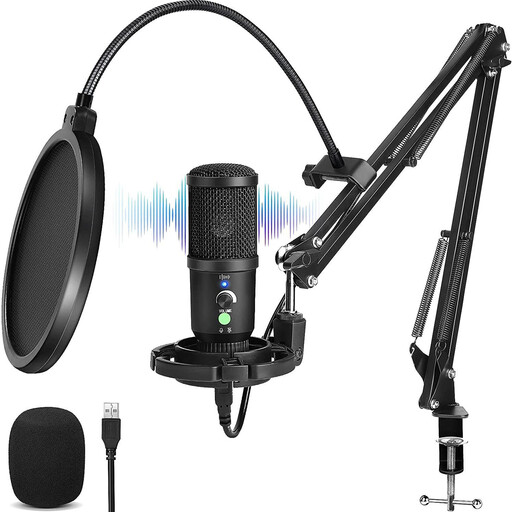
Cardioid USB condenser microphone
Cardioid recording, gain control and headphone monitoring make this a suitable choice for voice recordings where you can point the microphone towards the speaker.
The product description lists an included arm and pop filter. This condenser option is best suited to a quiet, acoustically treated booth; cardioid recording doesn’t remove reflections.
View at Joybuy
 No image available
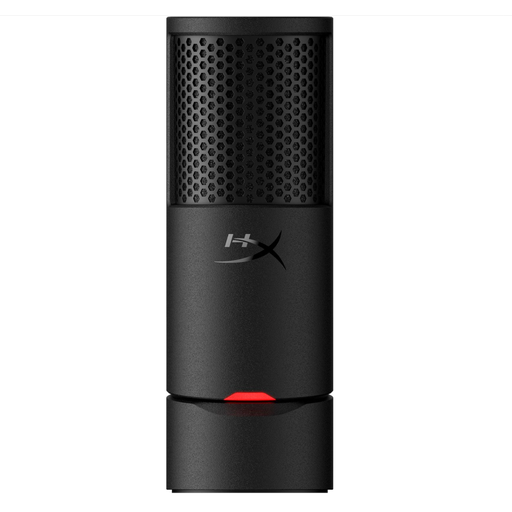
HyperX SoloCast 2
This USB microphone offers cardioid recording for focused voice capture; as a condenser model, it’s best suited to a quiet, acoustically treated booth.
The product description lists a built-in pop filter, a compact adjustable stand and a USB-C to USB-A cable. Test your loudest lines and check that the connection suits your device.
View at Joybuy
 No image available
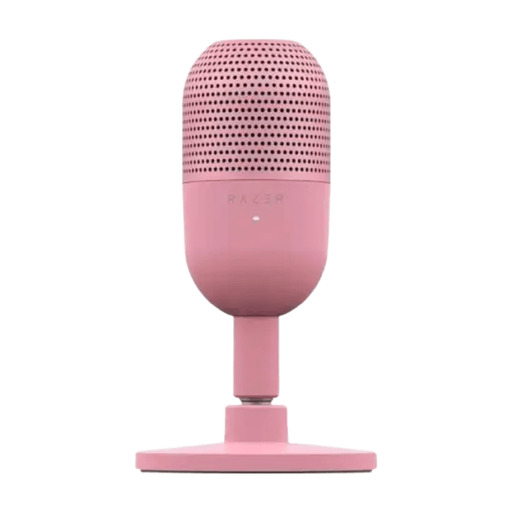
Razer Seiren V3 Mini Quartz
According to the product description, this compact USB microphone has a condenser capsule and a supercardioid pickup pattern for focused voice recording.
The product name mentions tap-to-mute. Check that the controls and positioning work for your desk; as a condenser microphone, this model is best suited to a quiet, acoustically treated booth.
View at Joybuy
Frequently asked questions
Can a cardioid USB microphone help with echo in a small booth?
No. A cardioid microphone picks up sound less strongly from certain directions, but doesn’t remove reflections. Assess a test recording and adjust the positioning or acoustic treatment if needed.
How can you prevent plosives with expressive voices?
Position the microphone carefully, speak slightly across the capsule and test a suitable pop filter with a script full of p and b sounds. The best distance varies by model; RØDE recommends around 5–10 cm for the PodMic USB.
Do I need an audio interface with a USB/XLR microphone?
Not if you connect a suitable device via the USB output. For computer recordings via XLR, check what separate recording equipment you’ll need.
What should I look for when recording both quiet and loud character voices?
Test both extremes before choosing a model and monitor the recording directly through headphones. Check that the gain control and monitoring suit the way you record; a level-control feature is no substitute for listening back.


