
Creator recording voices separately
If you record actors one at a time, a directional microphone and a consistent speaking distance can help keep your recording setup manageable. RØDE recommends a distance of around 5–10 cm for the PodMic USB.


If you record actors one at a time and can keep the microphone close to the mouth, choose a directional dynamic USB microphone for each voice; RØDE recommends a speaking distance of around 5–10 cm for the PodMic USB. For two actors recording together, a microphone with a bidirectional pattern may be suitable, but sharing one track gives you less control over each voice. A cardioid USB condenser microphone is another option for focused voice recordings or detailed sound effects, provided a test recording shows that it suits the sound of your booth.
If you record actors one at a time, a directional microphone and a consistent speaking distance can help keep your recording setup manageable. RØDE recommends a distance of around 5–10 cm for the PodMic USB.
If you want to record several performers at once, first decide whether one shared track will do or whether you want to be able to adjust each voice separately. Bax Music’s recording guide discusses the trade-off between recording together and using a separate microphone for each speaker.
If you also record quiet sound effects, it’s useful to monitor through headphones while recording so you can hear what the microphone is picking up. Audio-Technica describes direct headphone monitoring on the AT2020USB-X.
| What to consider | What to look for | Who is this most important for? |
|---|---|---|
| Recording voices separately | Check the pickup pattern and whether you can keep the microphone at a consistent distance while acting. | If I’m recording one actor at a time, I want to capture their voice clearly and maintain a consistent speaking distance. Around 33% of consumers prioritise recording voices separately in the booth. |
| Recording an ensemble | Decide whether one shared track will do; if using separate microphones, check that your recording setup has enough inputs. | If I’m recording two or more actors at once, I need to choose between one shared track and voices I can adjust separately. Around 27% of consumers say recording an ensemble is their main requirement. |
| Subtle sounds | Make a test recording with voices and sound effects, and check whether you can monitor directly through headphones. | If I want to assess quiet sound effects and vocal nuances, I also need to hear what the microphone picks up in the booth. Around 20% of consumers prioritise capturing subtle details. |
| Connecting and monitoring | Check the connection, headphone output and included stand or arm for the exact version you’re considering. | If I want to get started without a complicated setup, I want to know in advance how to connect the microphone and monitor my recording. Around 20% of consumers prioritise easy connection and monitoring. |
Recording everyone on one shared track gives you less control over the balance and post-production of individual voices. Greater distance from the microphone can also make reflections and background noise more noticeable.
Before you buy, decide whether you want to be able to edit scenes recorded together or each actor’s performance separately.
Recording voices separately may require extra microphones, enough inputs and suitable headphone facilities.
A directional pattern won’t soundproof a small booth; the distance from the microphone and the acoustics of the room also affect the recording.
Make a test recording from the intended performance distance and listen for reflections, breath and plosive sounds, and background noise.
The HyperX SoloCast and SoloCast 2 are different models. The FIFINE K688 is available in versions with different included accessories.
Compare the full model number and check what’s included with the exact version you’re considering.
For a consumer purchase in the Netherlands, your statutory protection isn’t automatically limited to the length of the manufacturer’s warranty. The Dutch government says there is no fixed statutory warranty period; what you can reasonably expect from a product also matters.
Keep your proof of purchase and contact the seller if the product is faulty.
The PodMic USB is a dynamic USB-C/XLR option for close-miked speech; the NT-USB+ is a cardioid USB condenser microphone.
The AT2040USB is a dynamic USB microphone with a hypercardioid pattern; the AT2020USB-X is a cardioid condenser option.
The Yeti is a USB microphone with selectable pickup patterns, for creators who want to switch between focused solo recording and a shared setup.
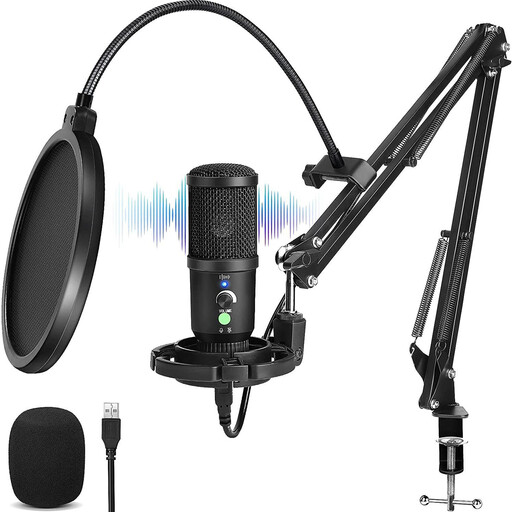
The AM8T is a dynamic USB/XLR microphone set with an arm; for the K688, it’s important to choose the exact version you need.
The SoloCast 2 is a compact USB microphone option with mounting and pop-filtering features.
USB microphones for focused voice recording and a compact recording setup.
 No image available
A cardioid USB condenser microphone to consider for focused voice recording; make a test recording to hear how your booth sounds.
 No image available
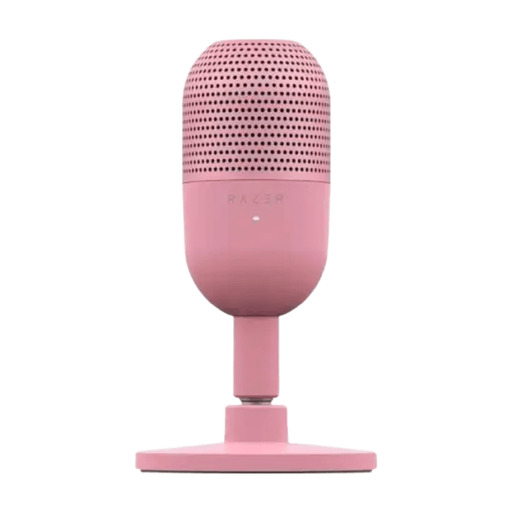
A compact USB microphone to consider if space is limited where you record.
The product name indicates a tap-to-mute function.
Yes, if one shared track suits your needs and the microphone and its position can capture both voices. If you want to adjust the voices separately, Bax Music’s recording guide recommends a separate microphone for each speaker and a recording setup with enough inputs.
RØDE recommends positioning the PodMic USB around 5–10 cm from your mouth. Mount it so you can maintain that position while acting, and check for plosive sounds with a test recording.
Check whether you’re listening through the microphone’s direct headphone monitoring rather than relying only on the delayed computer signal. Audio-Technica lists direct monitoring and a control for balancing the microphone signal against computer audio on the AT2020USB-X.
For a consumer purchase in the Netherlands, the seller is responsible for providing a solution under the statutory guarantee. The Dutch government says there is no fixed statutory warranty period; what you can reasonably expect from the product depends on factors including the type of product.
According to the Dutch government, online purchases from businesses often come with a 14-day cooling-off period, but there are exceptions. Before buying, check which terms apply to the sale in question.
CE marking is required where the applicable harmonised EU rules specify it for the product group in question. The European Commission explains which product rules and conditions may apply; check what applies to the exact version you’re considering.