If you’re recording in a quiet room and want to keep both softer phrases and emphatic lines under control, look for a cardioid USB condenser microphone with a headphone output and easy-to-reach gain control. In a noisy room, a dynamic USB microphone that you keep consistently close to may suit the way you work better, but neither type will automatically remove all background noise. Make a test recording using your softest and loudest lines before making your final choice.
Who is this choice relevant to?
Expressive solo presenter
You’re recording a weather report with calm explanations as well as emphatic lines. You want to be able to monitor and adjust the levels; Elgato and Sennheiser describe model-specific features for processing, level control or monitoring.
Home recorder dealing with room noise
You’re speaking in a room with, for example, ventilation noise or echo, and can stay close to a directional microphone. Shure warns that the MV7+’s noise reduction feature does not remove other voices or dogs barking, among other sounds.
Beginner with a small desk
You want to record a short weather summary easily on a computer and are paying attention to the connection, cable and controls. For example, RØDE says the NT-USB Mini comes with a USB-C-to-USB-A cable.
What should you look for when choosing?
Cardioid USB condenser microphone
Choose this option if: you speak from a fixed position in a quiet room and want to control the levels of softer passages and emphatic lines yourself.
Bear in mind: a sensitive microphone may also pick up sounds in the room; peak protection is no substitute for good positioning or a test recording.
Dynamic USB microphone for close-up speaking
Choose this option if: your room is noisy and you can maintain a fairly consistent distance from the microphone while recording.
Bear in mind: turning away or changing your speaking distance will still affect the recording; noise reduction features do not remove every background sound.
| What to consider |
What to look for |
Who is this important for? |
| Levels for quiet and loud lines |
Check whether the gain control is easy to reach and whether the model has level indicators or peak protection. |
If I alternate calm explanations with emphatic warnings, I want to record both clearly. Around 36% of consumers focus mainly on vocal dynamics. |
| Room noise |
Consider the type of microphone and test the recording from the distance at which you’ll actually be speaking. |
If I’m recording with audible ventilation, echo or other noise, I want to know how my voice will sound in that room. Around 29% of consumers put room noise first. |
| Monitoring and controls |
Check for a headphone output and the controls you want to use while speaking; listen back to a test recording. |
If I want to monitor my delivery as I speak, monitoring and clear level information are important. Around 21% of consumers give controls and listening back top priority. |
| Connection and cable |
Compare the microphone’s connection and supplied cable with the ports and system requirements of your recording device. |
If I want to record a short weather summary without a complicated set-up, I want to know in advance whether the microphone will connect to my computer. Around 14% of consumers prioritise easy connection. |
Common buying mistakes
-
Assuming noise reduction guarantees a quiet recording
Shure says the MV7+’s optional denoiser does not remove other voices or dogs barking, among other sounds. So a voice isolation feature won’t automatically eliminate room noise from a recording.
Make a test recording in the room where you plan to record your weather report and listen to how your voice compares with the sounds around you.
You may need to record again or rearrange the room.
-
Confusing the original Wave:3 with the Wave:3 MK.2
Elgato describes differences between these versions, including the capsule, sample rates and processing features. A product name without the full model designation may therefore refer to a different version.
Check the full model name and the features of the version on offer before choosing.
-
Assuming the supplied cable will fit every computer
The RØDE NT-USB Mini comes with a USB-C-to-USB-A cable. For a device with only a USB-C input, RØDE specifies a different cable.
Compare your recording device’s ports with the cable and check what’s included in the box.
You may need a suitable cable or adapter.
Brands to consider
RØDE
The NT-USB Mini is a compact USB condenser microphone for a simple solo set-up.
- According to RØDE, the NT-USB Mini has a built-in pop filter and direct headphone monitoring.
- The supplied cable is USB-C-to-USB-A; check the connection on your recording device.
Shure
According to Shure, the dynamic MV7+ is designed for close-up speech recording.
- Shure lists Auto Level and an optional real-time denoiser for the MV7+.
- Shure says the denoiser does not remove other voices or dogs barking, among other sounds; voice isolation does not make a recording soundproof.
Elgato
The Wave:3 MK.2 is a USB condenser microphone with model-specific processing and level control.
- Elgato lists Clipguard 2.0 and processing on the microphone.
- For the MK.2, Elgato specifies Windows 11 or later, or macOS 14.2 or later, and a USB-C port as system requirements. Don’t confuse this model with the original Wave:3.
Sennheiser
The Profile USB is a cardioid condenser microphone with on-device controls for a fixed speaking position.
- According to Sennheiser, you can adjust gain, monitor mix and headphone volume directly.
- The manual warns that the level LED may stay green even when a quiet voice is being recorded too softly. Make sure you listen back, too.
Audio-Technica
The ATR2100x-USB is a dynamic microphone for speech recording with USB and XLR connections.
- European product information lists USB-C, XLR, a cardioid pattern and a headphone output.
- The XLR connection is mainly relevant if you actually plan to use a compatible XLR set-up.
USB microphones at Joybuy
This selection includes USB-C wireless lavalier microphones and USB desktop microphones for speech recording. Check each model to see whether its connection, wearing style and controls suit your recording set-up.
 No image available
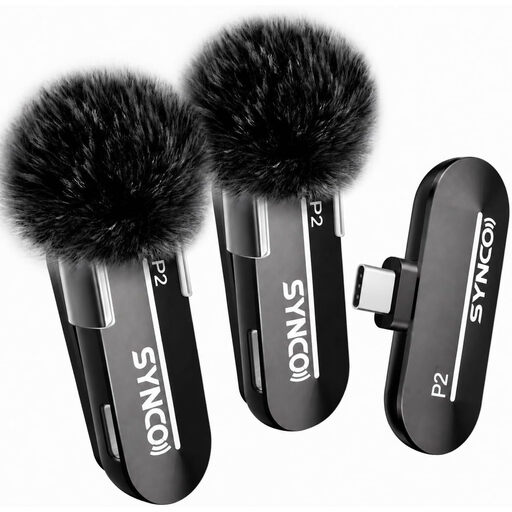
SYNCO P2XT USB-C wireless microphone
A USB-C microphone set-up for monitoring your audio through the receiver while you record.
The product description lists two transmitters, one receiver and real-time audio monitoring through the receiver.
View at Joybuy
 No image available
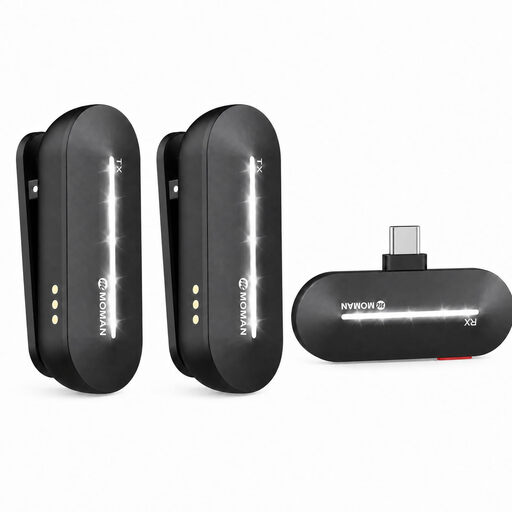
Moman M1CXT USB-C wireless lavalier microphone, 2TX+1RX, 150m range
A wireless lavalier set-up for recording with a USB-C-compatible device.
The product description lists a 2TX+1RX set-up and a monitoring connection on the receiver.
View at Joybuy
 No image available
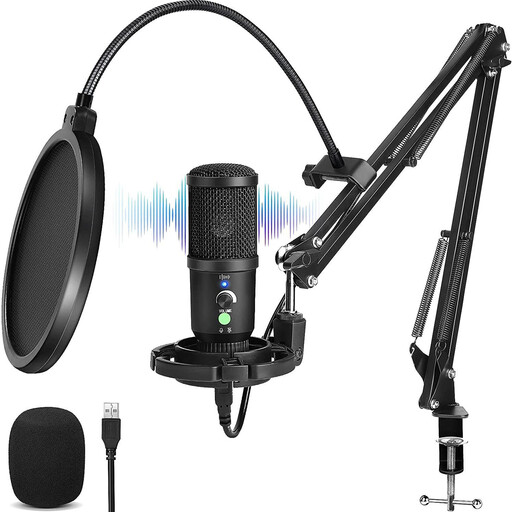
USB condenser microphone with cardioid pattern
A USB condenser microphone for anyone looking for gain control and headphone monitoring.
The product description lists a gain knob and a 3.5mm headphone socket for monitoring.
View at Joybuy
 No image available
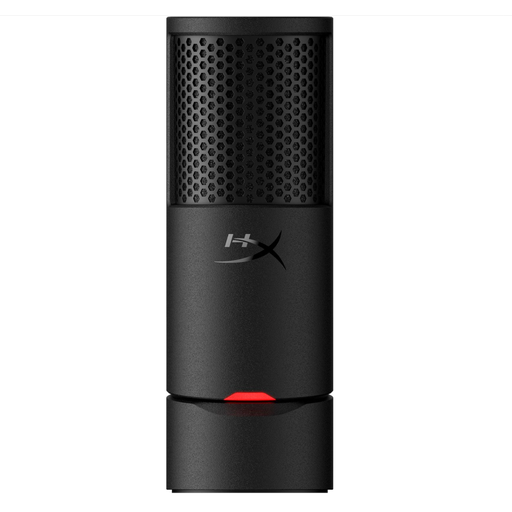
HyperX SoloCast 2 USB microphone, cardioid, black
A cardioid USB microphone for a desktop speech-recording set-up.
The product description lists a pop filter, a mute button with indicator and a compact adjustable stand.
View at Joybuy
 No image available
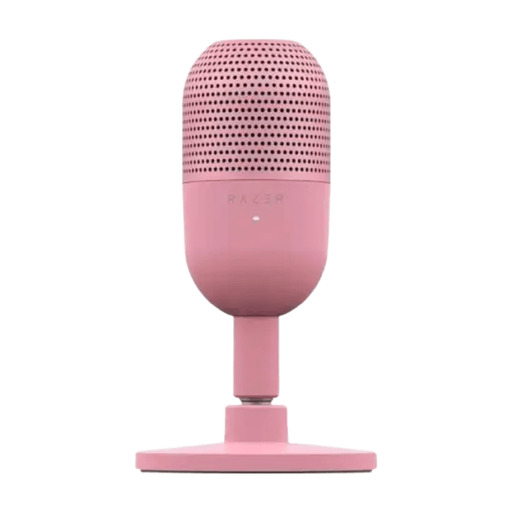
Razer Seiren V3 Mini Quartz USB microphone
A compact USB microphone for a desktop set-up, with tap-to-mute controls.
The product description lists a supercardioid pickup pattern and a tap-to-mute function.
View at Joybuy
Frequently asked questions
How do you set up a microphone for quiet and loud lines?
Record both extremes of your delivery and adjust the gain while listening back to the test recording. Sennheiser warns that the Profile’s LED may stay green even when quiet speech is being recorded too softly. For voice-over, RØDE recommends a distance of around 10–15 cm for the NT-USB Mini; don’t automatically use that distance for other models.
Do you need extra recording software for every USB microphone?
RØDE says no driver is needed for the basic connection of the NT-USB Mini, but you do need to select the microphone as the audio input and use a recording programme. Check the connection and system requirements for your own model and device.
What cooling-off period and warranty apply to an online purchase in the Netherlands?
According to the Dutch government, distance purchases from a business are often covered by a 14-day cooling-off period; check the terms of the specific purchase. ACM ConsuWijzer explains that statutory warranty applies alongside any manufacturer’s warranty and depends on what you could reasonably expect from the product with normal use. This does not mean there is a fixed two-year warranty period in the Netherlands.
Can you publish a recording that includes identifiable voices of other people?
If you publish other people’s identifiable personal data online, privacy rules may apply. The Dutch Data Protection Authority says consent is required in most cases, while also noting that other possible legal bases under the GDPR and exceptions may apply. This does not mean that recording or publishing only your own voice always requires consent.


