
Voice-over artist looking to reduce unwanted echo
Your main priority is to keep the trailer narration clear in a room with noticeable reflections. You can speak close to the microphone and improve its positioning first.


If unwanted echo is an issue, a directional dynamic USB microphone is a sensible starting point if you can speak close to the microphone and stay in a fixed position. A microphone won’t fix the room’s acoustics, Shure emphasises. A USB condenser microphone may be a better fit if you can control the room or deliberately want to retain some sense of space. Also compare your speaking position, headphone monitoring and what comes with the microphone.
Your main priority is to keep the trailer narration clear in a room with noticeable reflections. You can speak close to the microphone and improve its positioning first.
Your voice shifts between quieter and more powerful passages. You want to monitor your recording through headphones and maintain a consistent speaking position.
You may want to preserve some of the natural reverberation and can use test recordings to check that the words remain clear.
First, decide how close you can speak to the microphone and how consistently you can hold your position. A directional microphone can emphasise your voice directly, but it won’t remove reflected speech. Shure points out that a microphone does not improve the room’s acoustics.
| What to consider | What to look for | Who is this important for? |
|---|---|---|
| Clarity in a reverberant room | Check the microphone’s pickup pattern and speaking direction; make a test recording in the actual location. | If I’m recording a single main voice, I want to speak close to the microphone and keep the words clear. Around 36% of consumers say reducing unwanted echo is their main buying priority. |
| Control over your voice | Check whether the exact model has a headphone output, and listen to both quieter and more powerful passages. | When my voice varies in volume, I want to check what’s being recorded as I speak. Around 29% of consumers prioritise control over expressive speech. |
| Connection and mounting | Compare USB with USB/XLR, and check whether the supplied stand or arm lets you achieve your preferred speaking position. | If I want to plug in straight away and position the microphone properly, I look at both the connection and what’s included in the package. Around 21% of consumers say easy connection and setup are their main buying priority. |
| Desired sense of space | Record the same passage from different positions and compare how clear it sounds. | If I deliberately want to retain some room sound, I need to balance it against the clarity of the words. Around 14% of consumers prioritise capturing the atmosphere of a space. |
For the RØDE PodMic USB, RØDE recommends a speaking distance of around 5–10 cm. This guidance applies to that specific model; it isn’t a standard distance for every microphone. Try out your chosen position in the room where you’ll record the trailer.
Reflected speech may still be audible, even with a directional microphone; the microphone won’t change the room’s acoustics.
First, record a short passage in the actual location. Then assess the microphone position and recording spot.
Allow time for test recordings and adjusting the recording spot.
You can use USB to record directly to a computer. To record to a computer via XLR, you’ll need suitable extra equipment, such as an interface or mixer.
Choose based on the connection you want to use now, and check the cables and connections for the exact model.
A later XLR setup for computer recording may require an interface or mixer.
A desktop stand and an arm don’t necessarily offer the same flexibility for positioning the microphone close to your mouth.
Check what’s included with the exact version, and make sure the mounting lets you speak comfortably from a consistent position.
Depending on your setup, you may need a suitable separate arm or stand.
RØDE offers models for both close-miked speech and USB condenser recording.
The AT2020USB-X and AT2040USB offer different approaches to voice recording.
The AM8T is a USB/XLR kit with an arm; the K688 is a separate USB/XLR model.
The Q2U is a USB/XLR option for anyone looking to get started with the listed accessories.
The Yeti is worth considering if you want to assess different pickup patterns or software effects.
The MV7+ is a USB/XLR option with level control and digital processing features.
These USB microphones are options to compare for voice recordings. Check each model’s pickup pattern and the most suitable speaking position for your room.
 No image available
The listed cardioid pattern makes this an option to test for voice recording in your space; use a test recording to assess how much echo remains audible.
USB condenser microphone; cardioid pickup pattern.
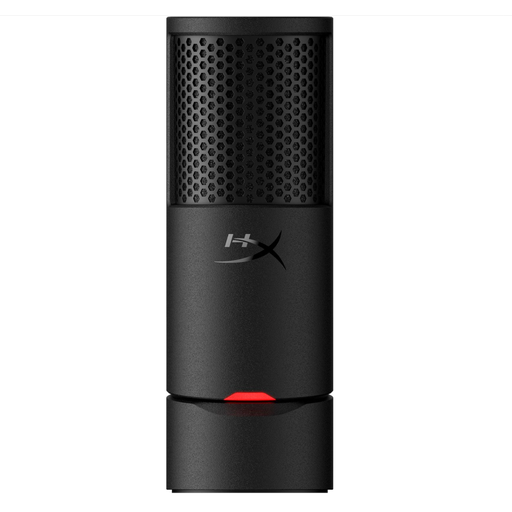 No image available
The listed cardioid pickup pattern makes this a candidate to test for a voice in front of the microphone; listen in your own room to check how much echo remains.
USB microphone; cardioid pickup pattern.
 No image available
The USB connection suits a direct USB setup; make a test recording to assess how the microphone sounds in your room.
USB microphone; tap-to-mute control.
No, a microphone won’t fix the room’s acoustics. Shure explains that the microphone alone cannot effectively separate direct speech from reflected speech. Start with a test recording from a shorter distance and adjust your recording spot if needed.
Point the microphone towards your mouth and keep your speaking position consistent. For the PodMic USB, RØDE recommends around 5–10 cm; that distance doesn’t automatically apply to other models. During a test recording, listen through headphones for echo and plosive sounds.
Not if you connect the microphone directly to a compatible device via USB. For computer recording via XLR, you’ll need a suitable interface or mixer. Also check which cables and connections are included with your chosen model.
First, consider whether the recording contains personal data and what legal basis applies to publication. The Dutch Data Protection Authority states that organisations need a legal basis under the GDPR to publish personal data, and that consent is required in most cases for online publication. Exceptions or other legal bases may apply; the assessment depends on the circumstances.