Who are these microphones suitable for?

Reader in a reverberant room

You’re recording a single voice without a dedicated studio and want your news to remain clear and easy to understand. Shure explains that microphone placement affects the balance between direct speech and room reflections.

Creator of quick solo bulletins

You want to record via USB without a separate audio interface and monitor your own voice. Check the connection, compatibility and included setup for the exact model; Samson and Audio-Technica, for example, describe USB models supplied with a desk stand.

Creator who records regularly

You want to monitor the sound during repeat sessions and perhaps switch to an XLR setup later. RØDE and Shure describe models with USB and XLR connections; check which features are available with each connection on the model you’re considering.

What should you look for when choosing?

Dynamic, connected directly via USB

Suitable when: clear speech is your priority in a reflective room and you can stay close to the microphone.

Trade-off: a focused recording won’t remove room reverberation; distance and placement still matter.

Dynamic, with USB/XLR and controls

Suitable when: you record often and want monitoring or adjustable USB processing.

Trade-off: manufacturer features don’t guarantee a recording free from reverberation; check the mounting options and software compatibility too.

USB condenser microphone

Suitable when: you can make the recording area quiet enough and assess reflections with a test recording.

Trade-off: in this situation, a condenser microphone may pick up more unwanted room noise; a USB connection won’t fix poor acoustics.

Factor to consider What should you check? Which consumers?
Clear speech in a reverberant room Check the polar pattern and whether you can position the microphone securely close to you. Make a test recording in the spot you plan to use. If I’m reading the news in a room with audible reflections, I want to keep my words clear and easy to understand. Around 36% of consumers say intelligibility despite room reverberation is their main concern when buying.
Quick recording via USB Compare the USB connection, compatibility with your device, required cable and included stand. If I want to record a bulletin quickly without a separate interface, I look for a direct USB connection and a suitable cable. Around 29% of consumers give an easy USB setup top priority.
Monitoring while reading Check whether the exact model offers headphone monitoring and what’s included to reduce plosive sounds. If I record regularly, I want to monitor my voice and plosive sounds while reading. Around 21% of consumers cite recording monitoring as their main concern when buying.
Expanding your setup later Check whether the model has both USB and XLR, and which interface, cables or features you’ll need for a future XLR setup. If I want to record via USB now but may use a mixer or interface later, having that extra connection option matters. Around 14% of consumers say expandability is their main concern when buying.

Common buying mistakes

  • Assuming every model in a range connects directly via USB

    A USB model and a model with XLR output only require different recording setups. Elgato distinguishes the USB condenser microphone Wave:3 from the XLR-only Wave DX.

    Check the output on the exact model and the connections your computer requires. For a model with XLR only, you’ll need a suitable interface and usually an XLR cable to record on a computer.

  • Expecting software to remove all room reverberation

    Shure says that a microphone cannot improve acoustics or completely separate direct speech from reflections.

    Make a short test recording where you plan to record, then assess the result with and without any processing.

    You may still need to choose a different recording spot or adjust your setup.

  • Not considering speaking distance and mounting

    For the PodMic USB, RØDE recommends a speaking distance of around 5–10 cm and warns that a greater distance can make the signal sound quiet.

    Check the included accessories and try to maintain a comfortable, consistent position while reading.

    You may need a suitable arm or stand if the included setup doesn’t let you get close enough to the microphone.

Brands to consider

Samson

The Q2U is a dynamic USB/XLR voice microphone supplied with a desk stand, windscreen and cables.

  • Samson lists a cardioid polar pattern and direct headphone monitoring.
  • The manufacturer’s claim about use in untreated rooms isn’t an independent measurement for your recording space; placement still matters.

Audio-Technica

According to Audio-Technica Netherlands, the ATR2100x-USB is a dynamic USB/XLR handheld microphone supplied with cables and a desk stand, and is suitable for uses such as voice-overs.

  • Audio-Technica describes a cardioid polar pattern and a headphone output for monitoring.
  • Check the USB connection and whether the handheld microphone is comfortable to use close up with the included setup.

RØDE

The PodMic USB is a dynamic voice microphone with USB-C/XLR, monitoring and an external pop filter included.

  • RØDE lists internal filtering and a shock-mounted construction as model specifications.
  • These features don’t guarantee a recording free from reverberation; for this model, RØDE recommends a speaking distance of around 5–10 cm.

Shure

According to Shure, the MV7+ combines dynamic voice recording, USB-C/XLR, headphone monitoring and app-adjustable processing.

  • Shure lists voice isolation and real-time noise reduction as features of this model.
  • That doesn’t independently confirm how it will perform in your untreated room; check app and device compatibility too.

Elgato

The Wave:3 MK.2 is a cardioid USB-C condenser microphone with a headphone socket and desk stand included.

  • Elgato lists USB-C and system requirements for this model.
  • Assess reflections with a test recording in the spot you plan to use. Don’t confuse the USB condenser microphone Wave:3 with the XLR-only Wave DX.

USB microphones at Joybuy

These models are USB microphones for voice recordings. In an untreated room, pay particular attention to placement, polar pattern and whether the connection suits your recording device.
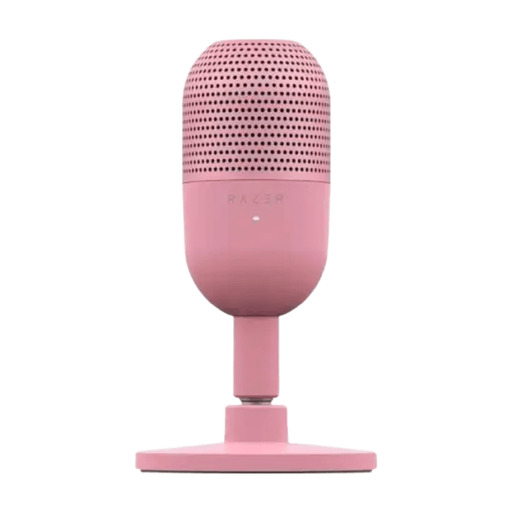
Razer Seiren V3 Mini Quartz USB microphone

Razer Seiren V3 Mini Quartz USB microphone

The compact USB setup and voice-focused recording make it a good fit for recording a solo bulletin at your desk; try it out in your own room.

The product description lists plug-and-play USB, a supercardioid polar pattern and tap-to-mute controls.

View at Joybuy
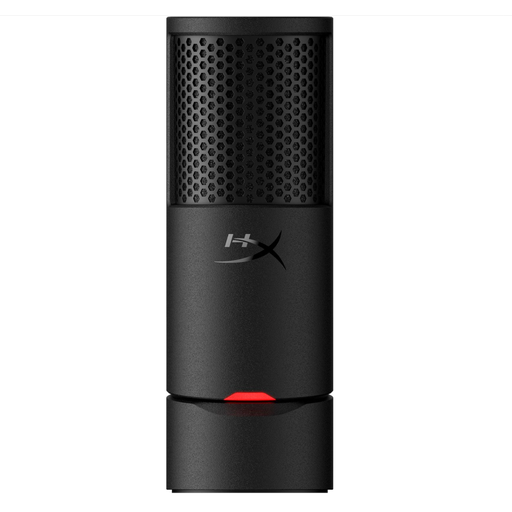
HyperX SoloCast 2 Black USB condenser microphone

HyperX SoloCast 2 Black USB condenser microphone

The USB connection and cardioid polar pattern are useful when recording a solo bulletin; in a reflective room, assess how the recording sounds in your chosen spot.

The product description lists a condenser capsule, built-in pop filter, shock absorption and mute controls. The USB connection is described as USB-C or USB-A; check which cable and port are compatible with your device.

View at Joybuy

Frequently asked questions

Will noise reduction fix the reverberation in my room?

Don’t count on it: according to Shure, a microphone cannot improve acoustics or completely separate direct speech from reflections. Position the microphone suitably close and assess a test recording in the room where you’ll be recording.

How should I set up a PodMic USB if my recording sounds quiet?

For the PodMic USB, RØDE recommends a distance of around 5–10 cm, with the top of the microphone facing your mouth. Then check the USB input level; this model-specific guidance doesn’t automatically apply to every microphone.

What should I check before connecting a USB microphone to my computer?

Compare the required USB port, cable and supported operating systems with the specifications for the exact model. Elgato, for example, lists model-specific system requirements for the Wave:3 MK.2; these don’t automatically apply to other USB microphones.

What returns and warranty rights apply to an online purchase in the Netherlands?

When buying from a business at a distance, you’ll often have 14 days to change your mind, subject to exceptions explained by the Dutch Government. You’re also entitled to a product that is fit for purpose. According to the Dutch Government, there is no fixed statutory warranty period in the Netherlands; if a product is faulty, contact the seller.

What does a CE mark mean for a USB microphone?

According to Business.gov.nl, a CE mark isn’t a quality mark or an assessment of recording quality. The applicable requirements depend on the product; the manufacturer declares that it meets the relevant EU requirements.
