
Storyteller working alongside others
You record your travel stories on your own while other people work nearby. Positioning the mic carefully and keeping your voice clear matter more than having a microphone that picks up the whole table.


If other people are working nearby, a carefully positioned dynamic cardioid USB microphone is a sensible choice when you can speak close to the mic; it won’t make a shared space quiet. If you usually record somewhere quiet and want a compact setup, a cardioid USB condenser microphone could be a good fit. Whichever you choose, check the connection, headphone monitoring and included accessories.
You record your travel stories on your own while other people work nearby. Positioning the mic carefully and keeping your voice clear matter more than having a microphone that picks up the whole table.
You regularly set up and pack away your recording space, and want a suitable USB connection, a manageable desk stand and as few loose parts as possible.
You want to hear what’s being recorded through headphones as you speak, and be able to adjust the level before carrying on.
Choose this if: you’re recording on your own, can sit close to the microphone and want to reduce sound coming from other directions.
The trade-off: a directional pickup pattern won’t block out the voices of people nearby; also check whether the exact version includes a desk stand and the cables you need.
Choose this if: you usually record somewhere quiet and value a compact desk setup or on-microphone controls.
The trade-off: this type also picks up sound within its recording area. Don’t place the microphone further away than necessary, and check which accessories are included with the version you’re considering.
| What to consider | What to check before buying | Who should consider this? |
|---|---|---|
| Clear solo voice recordings | Check the pickup pattern and whether you can position the microphone close to your mouth. | If I’m recording on my own at a shared desk, I want the microphone to focus on my voice without expecting nearby voices to disappear. Around 40% of consumers put background noise first when choosing. |
| Quick to set up and pack away | Check whether a desk stand is included and whether it will fit in the space available. | If I regularly change desks, I want to be able to set down the microphone quickly and take it with me again. Around 30% of consumers prioritise portability. |
| Check the recording as you go | Check whether headphone monitoring is available and what controls the model offers. | If I want to hear whether the level is right while I’m speaking, I look for direct monitoring through headphones. Around 20% of consumers put recording monitoring first. |
| Connection and complete set | Check the port on your recording device and which cables and mounting options are included with the exact version. | If I want to connect my microphone to a specific device, I want to know in advance which cable and connection I’ll need. Around 10% of consumers prioritise compatibility and what’s included. |
A microphone can’t distinguish between sounds you want and sounds you don’t. A cardioid pattern can help focus the recording towards your voice, but nearby voices may still be audible.
Think about where you’ll position the mic and make a test recording in the space where you plan to speak. Don’t judge by a noise-reduction feature’s name alone.
Greater distance can make your voice less prominent compared with background noise. For voice-over recordings with the NT-USB Mini, RØDE recommends a distance of around 10–15 cm from your mouth.
Plan to position the mic close to your mouth, then check that the setup works at your desk with a test recording.
What’s included can vary by model or bundle. For example, Sennheiser distinguishes between a Profile Tabletop Set and a Streaming Set.
Before buying, compare the contents of the set with the space, connections and mounting options you need.
If the version you choose doesn’t include a suitable mount or cable, you may need to buy one separately.
These brands offer models suited to different recording spaces and preferences. The features mentioned apply to the product ranges and versions described.
The Q2U combines a dynamic cardioid microphone with USB and XLR connections for voice recording and a portable desk setup.
The ATR2100x-USB is a dynamic cardioid microphone with USB and XLR connections for voice recording.
The NT-USB Mini is a compact cardioid USB condenser microphone with a detachable desk stand.
The Profile is a cardioid USB condenser microphone for anyone who values on-microphone controls.
The SoloCast 2 is a compact cardioid USB condenser microphone for a simple desk setup.
This selection includes USB desk microphones for spoken travel diaries, with a focus on compact setups, directional voice recording and monitoring as you speak.
 Image unavailable
The listed cardioid pickup and headphone monitoring could suit a compact voice-recording setup where you want to listen as you speak.
The product name mentions a cardioid pattern and low-latency monitoring. The term ‘noise cancellation’ doesn’t guarantee that other people’s voices will stay out of your recording.
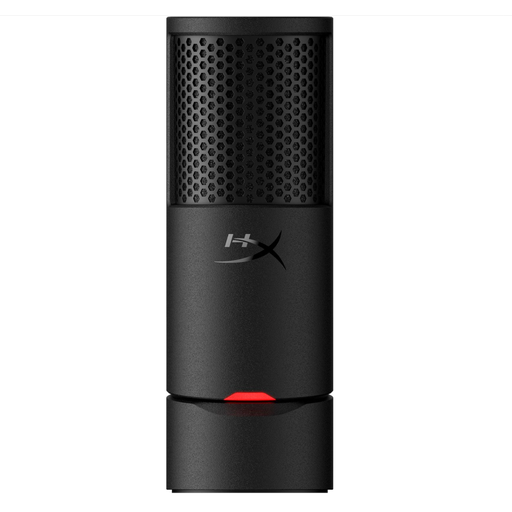 Image unavailable
The compact USB setup with an adjustable stand could be a good fit if you regularly move your microphone to a different desk.
This model has a cardioid pattern, an adjustable stand, mute control and a USB-C-to-USB-A connection. The pickup pattern doesn’t guarantee that other people’s voices will stay out of your recording.
 Image unavailable
The compact USB design could suit a changeable desk setup where space for recording equipment is limited.
The product name describes an ultra-compact USB microphone; the product description mentions a supercardioid pattern and tap-to-mute control. A directional pickup pattern doesn’t guarantee that other people’s voices will disappear from your recording.
No, that isn’t guaranteed. A cardioid pattern is more sensitive at the front than at the sides and rear, but Shure says a microphone also picks up sound within its recording area. Speak close to the mic, point it away from the unwanted sound source and make a test recording.
For voice-over recording, RØDE recommends a distance of around 10–15 cm from your mouth. Make a test recording to check whether this positioning works at your desk; sounds nearby may still be picked up.
It depends on the model and version. Samson lists a desk stand and USB and XLR cables with the Q2U; Sennheiser offers a Profile Tabletop Set and a Streaming Set with an arm. Check what’s included with the version you want to buy.
According to ACM ConsuWijzer, the seller is responsible if a product doesn’t meet what you could reasonably expect. In the Netherlands, there is no fixed period for the statutory guarantee; a manufacturer’s warranty does not replace it.
For a standard online purchase from a business, the Dutch government says you’ll often have 14 days to change your mind. Check the applicable terms and any exceptions for your purchase; the rules described for distance selling don’t apply to purchases from a private individual.
A sound recording in which someone can be identified may count as personal data. According to the Dutch Data Protection Authority, you’ll usually need permission to publish other people’s personal data. The Authority describes a limited exception for personal or household use only; whether it applies depends on who can be heard and how you publish the recording.