Who might find this useful?

Voice-over artist with a wide vocal range

You switch between quiet lines and powerful announcements, and want to avoid distortion on peaks. Set the recording level using your loudest line, rather than your average speaking voice. The Audacity guide recommends checking the level during the loudest part.

Creator recording in a reverberant room

You’re recording outside a treated studio and want to assess how the direct voice compares with the sound of the room. Shure explains that a microphone can’t improve the acoustics.

Theatre-maker recording themselves

You want to hear your voice and, if needed, your computer audio while recording. Check that the connections, cables and included stand or arm suit your workspace.

What should you look for when buying?

What to consider What to look for Who should prioritise this?
Loud passages without clipping Check whether you can adjust the input level and whether your software displays a level meter. Test your loudest line first. If I whisper and then record a powerful announcement, I want to avoid distortion on the peaks. Around 36% of consumers say this is their main concern when buying.
Clear vocals in the room Make a test recording in the space you plan to use and listen to how speaking distance, placement and audible reflections affect the sound. If I’m recording in a reverberant room, I want to know how much of the room’s sound will end up in the recording. Around 29% of consumers say room sound is their main concern when buying.
Monitoring while recording Check whether the model has a headphone socket and, if you want to mix in computer audio, a mix control. If I want to hear myself during a take, it helps me assess my delivery and placement straight away. Around 21% of consumers put direct monitoring at the top of their list.
A setup that suits your space Check the included stand or arm, pop filter, cable and device connection for the exact model. If I want to record straight from my usual spot, the components and connections need to suit my workspace. Around 14% of consumers say ease of setup is their main concern when buying.

Common buying mistakes

  • Assuming automatic level control means you don’t need to test

    A level-control feature doesn’t prove that every loud passage will be recorded without clipping. The Audacity guide warns that clipping can’t be undone afterwards.

    Record your loudest line and check the level meter before recording the full trailer.

  • Focusing only on the polar pattern and forgetting about the room

    A microphone can’t improve the acoustics. So if a room adds reverberation, you may still hear it even with a directional microphone.

    Compare test recordings at your intended speaking distance in the room where you plan to record the trailer.

    Recording somewhere else or changing your setup may take extra preparation time.

  • Assuming every version comes with the same accessories

    What’s included can vary by model or kit. For example, Sennheiser lists a desktop stand with the Profile set and an arm with the Profile Streaming Set.

    Check the contents of the exact version before ordering.

    If you need a different placement, check whether you’ll also need a stand, arm or pop filter.

Brands to consider

RØDE

RØDE describes the NT-USB+ as a cardioid USB condenser microphone for uses including voice-overs, with headphone monitoring, a pop filter and a desktop stand.

  • The included pop filter and desktop stand listed by the manufacturer suit a desk-based setup.
  • RØDE describes the recording as clear, but that doesn’t prove the microphone will make a reverberant room suitable. Also check which features are available through supported RØDE software.

Shure

The MV7+ is a dynamic microphone with USB-C and XLR, designed for close-up voice recording and, if needed, use in an XLR setup.

  • Shure lists automatic level control and Voice Isolation as features of the MV7+.
  • These manufacturer descriptions don’t guarantee that loud passages will never clip or that room reverberation will disappear. Assess the results with a test recording.

Audio-Technica

The ATR2100x-USB is a dynamic cardioid handheld microphone with USB-C and XLR outputs. Audio-Technica lists voice-overs as one of its uses.

  • The two outputs give you the choice of a USB or XLR connection.
  • Check that the handheld design and included desktop setup suit your usual speaking position. The polar pattern is no substitute for suitable room acoustics.

Sennheiser

The Profile USB is a cardioid condenser microphone with controls for gain, monitor mix and headphone volume.

  • The controls on the microphone can be useful if you record on your own.
  • The contents differ between the desktop set and the separate Streaming Set with arm. Check your chosen set and device compatibility; the specifications don’t guarantee a good recording in every room.

Microphones and kits on Joybuy

This selection includes USB audio and wireless microphone systems for voice recording. Check the connections and stated use for each product to see whether it suits your recording setup.
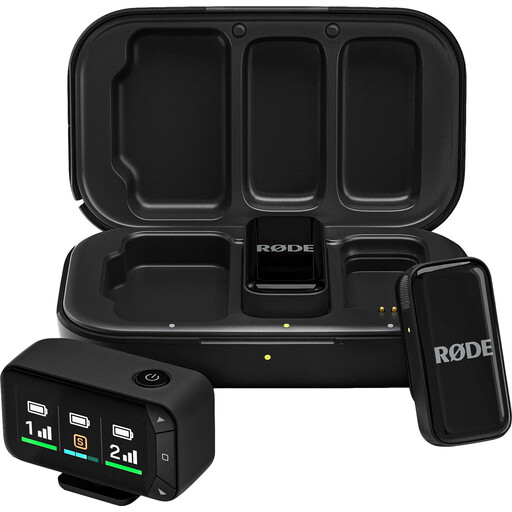
RØDE Wireless Micro compact wireless microphone kit with camera receiver

RØDE Wireless Micro Compact Wireless Microphone Camera Kit

The product listing says the USB-C receiver can be used as a USB audio device with a computer.

The kit includes two transmitters with built-in microphones and a camera receiver; both transmitters can record at the same time. The product name also mentions a smartphone receiver and charging case.

Joybuy
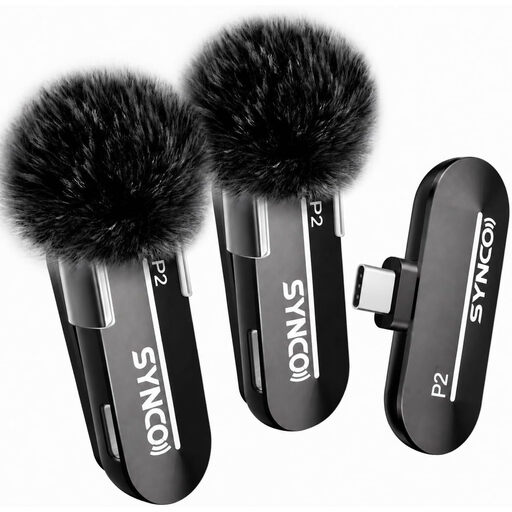
SYNCO P2XT USB-C wireless microphone

SYNCO P2XT USB-C Wireless Microphone

The product title describes a USB-C wireless microphone; the description mentions monitoring during use.

The description lists a Type-C receiver, real-time audio monitoring and charging while in use. Check that the receiver is compatible with your recording device.

Joybuy
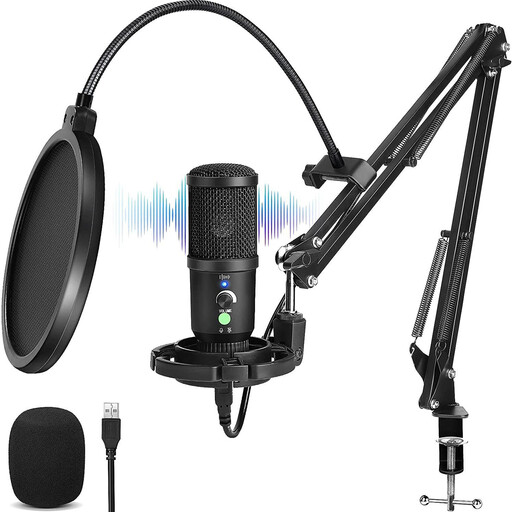
USB condenser microphone with cardioid pickup pattern

USB condenser microphone with cardioid pickup pattern

The product description mentions a gain control and headphone monitoring while recording.

Listed features include a cardioid pickup pattern and zero-latency monitoring. The accessories described include a scissor arm, shock mount and pop filter.

Joybuy
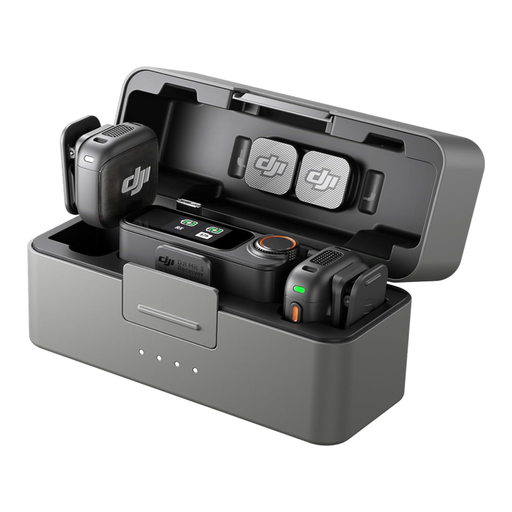
DJI Mic 3 kit with two transmitters, one receiver and charging case

DJI Mic 3 2 TX + 1 RX + Charging Case

The product description lists computers as compatible devices for the receiver.

According to the product listing, the kit includes two transmitters with built-in microphones, one receiver and a charging case. Check that the connections are compatible with your recording device.

Joybuy

Frequently asked questions

How do I set up an expressive recording without distortion?

Start by recording your loudest section and watching the input meter. Lower the recording level if the meter reaches the top; according to the Audacity guide, clipping can’t be undone after recording.

Can a directional microphone help with reverberation?

Placement and the polar pattern can help capture more direct speech, but Shure says a microphone can’t improve the room’s acoustics. So listen to a test recording in the space where you plan to record the trailer.

What should I check about setup and what’s included?

Before buying, check your device’s connection, the system requirements and the contents of the exact kit. Position the microphone securely and make a short test recording using your chosen recording and headphone settings. For example, Sennheiser distinguishes between a desktop set and a Streaming Set with an arm.

What returns period and warranty apply to online purchases?

When you buy online from a business as a consumer, you’re often entitled to a 14-day cooling-off period, according to the Dutch government; check which terms apply to your purchase. The Dutch government also distinguishes between statutory and additional warranties, and states that the seller must provide a solution if a product is faulty.

Can I use existing music or text in a published theatre trailer?

Not without permission. According to the Dutch government, you may only use other people’s copyright-protected texts and music with the creator’s permission. You can’t distribute or publish a private copy made for personal use; arrange the rights to third-party material separately from buying your microphone.
