
Solo practice in a shared room
You want to record a story in the evening, when other sounds may be picked up too. You can speak close to a directional microphone and try out different positions.


For solo practice in a quiet room, a compact, directional USB microphone that’s easy to set up is a sensible starting point. If you want to check your pronunciation as you go, look for direct headphone monitoring. In a noisy environment, a directional microphone for close-up speech may be worth considering, but it won’t guarantee a silent recording. If there are two storytellers, choose the polar pattern and set-up to suit their positions.
You want to record a story in the evening, when other sounds may be picked up too. You can speak close to a directional microphone and try out different positions.
You usually practise alone and want to hear your voice back straight away, then start recording without a complicated set-up.
You sometimes record two voices and want to adjust how the microphone picks up sound from different directions.
First, decide whether you’ll mainly practise alone or record dialogue too. Then consider the microphone’s directionality, monitoring options and the connection that suits your set-up.
| What to consider | What to look for | Who this matters to |
|---|---|---|
| Clear solo speech | Check the polar pattern and whether you can position the microphone close to you. | If I practise alone in a shared room in the evening, I want to be able to direct my voice clearly and test different set-ups. Around 36% of consumers say clear solo speech is their main consideration. |
| Listening back straight away | Check for a headphone output and controls for the monitoring volume. | If I want to check my pronunciation and vocal level as I tell a story, being able to listen back straight away is important. Around 29% of consumers give this need top priority. |
| Easy set-up | Check the connection, the cable included and whether a stand is provided. | For regular practice, I want to connect the microphone quickly and position it somewhere convenient. Around 21% of consumers mainly look for a simple set-up, whether fixed or portable. |
| Switching between solo and dialogue | Check whether you can switch the polar pattern and test both speaking positions. | If I sometimes record with a second storyteller, I want to know whether the microphone can handle both positions. Around 14% of consumers say dialogue practice is their main consideration. |
A directional microphone won’t guarantee that you can’t hear housemates, ventilation or room echo. Your recording also depends on the room and the microphone’s position.
First, try a suitable speaking position and make a test recording to see what gets picked up in your space.
RØDE lists the original NT-USB as discontinued and describes different features for the NT-USB Mini. These model names don’t refer to one interchangeable product.
Compare the full model name and the included accessories before choosing a product.
According to JBL, the JBL Quantum Stream Talk has one supercardioid polar pattern, while the Quantum Stream Studio has four selectable patterns. The Talk and Studio are different models.
Decide whether both storytellers will record at the same time from different positions, and test the set-up beforehand.
The NT-USB Mini is an option for a compact solo set-up with monitoring.
The AT2040USB is a directional dynamic USB microphone for close-up speech from one person.
The Profile USB Microphone is designed for desk-based practice, with controls on the microphone.
The Quantum Stream Studio is designed for switching between solo and multiple voices; the Quantum Stream Talk is designed for one voice.
The Seiren V3 Mini is an option for a compact USB desk set-up.
These Joybuy picks are suited to USB audio recording for solo practice and situations with two speakers. Check the polar pattern, connection and included accessories for each version.
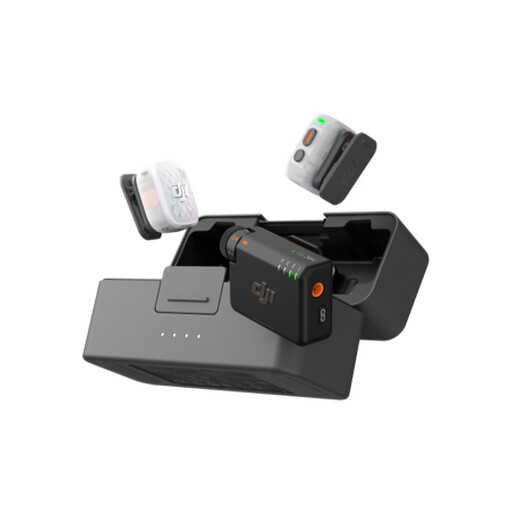 No image available
The listed set with two transmitters could suit a recording with two storytellers.
The product name lists 2 TX + 1 RX and a charging case.
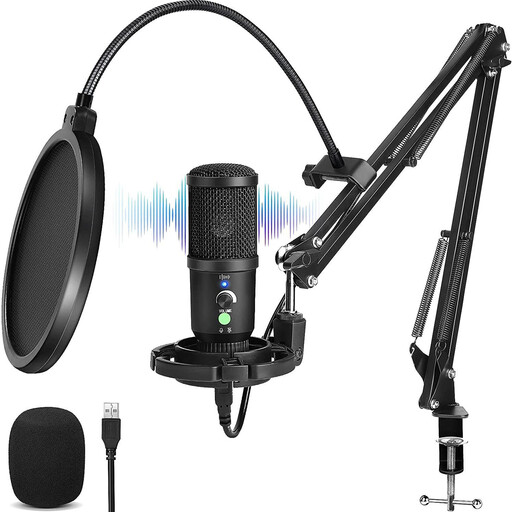 No image available
A cardioid USB microphone could be an option for solo speech at a desk; positioning still matters.
The product name lists a USB condenser microphone and a cardioid polar pattern.
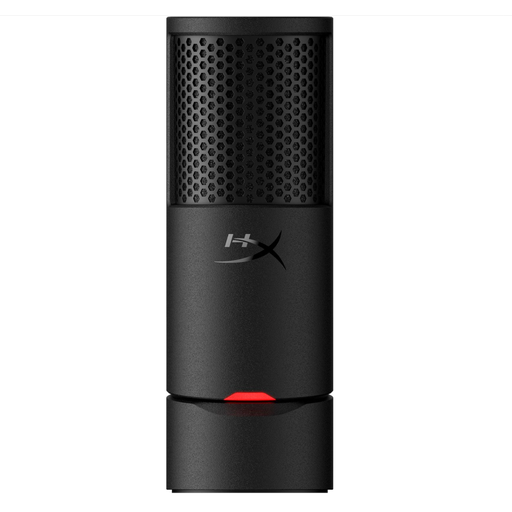 No image available
This USB microphone could suit solo practice; check whether you can position it at your preferred speaking distance.
The product name lists a cardioid polar pattern and a black finish.
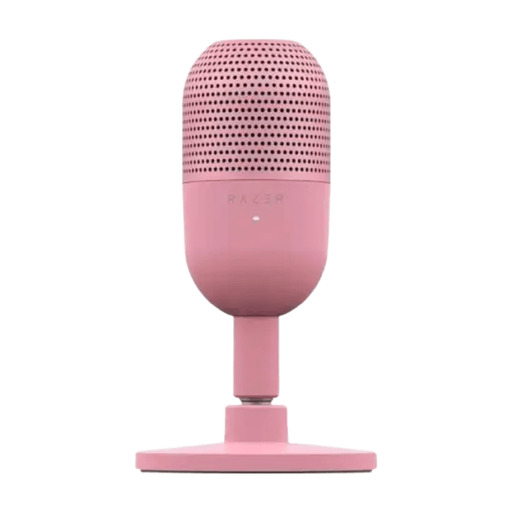 No image available
This compact USB version could suit solo practice at a desk.
The product name describes an ultra-compact USB microphone with tap-to-mute controls.
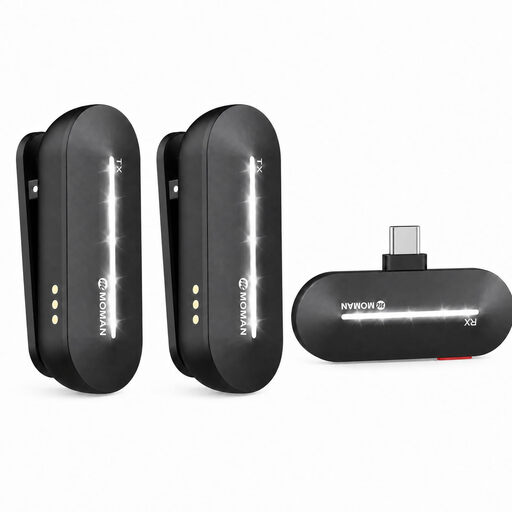 No image available
The set with two transmitters could suit a recording with two speakers, provided it’s compatible with your device and set-up.
The product name lists USB-C, 2TX+1RX and a range of 150 m. The omnidirectional microphones pick up sound from all around, so they’re less suited to limiting background noise during solo practice.
Select the USB microphone as the input device in your device and recording software settings, then record a short passage. RØDE describes this step for the NT-USB Mini; listen back to the test recording before starting a longer practice session.
A pop filter is designed to reduce bursts of air caused by sounds such as ‘p’ and ‘b’. RØDE lists a built-in filter for the NT-USB Mini; for other models, check whether a filter is included or whether you need one.
Before buying, check the connection and included cable for the exact version. For online consumer purchases in the Netherlands, there’s generally a statutory 14-day cooling-off period after delivery, subject to exceptions, as explained by ACM ConsuWijzer. Your statutory guarantee applies alongside any seller’s guarantee.
According to the Dutch Data Protection Authority, processing carried out solely for personal or household use falls outside the GDPR. A recognisable audio recording may count as personal data; if you share it outside that private context, you’ll need to check which privacy rules apply. This isn’t blanket permission to make recordings of other people public.