
Storyteller speaking from a fixed position
You want to record clear speech and can position the microphone close to the speaker and point it towards them. RØDE recommends a speaking distance of around 5–10 cm for the PodMic USB.


Choose a directional USB microphone if one storyteller will be speaking from a fixed position. If participants will be gathered around one microphone, a switchable omnidirectional mode is more useful. If you also want to capture the atmosphere of the room, look for a recorder with stereo patterns. No recording pattern will automatically eliminate echo or large differences in speaking distance.
You want to record clear speech and can position the microphone close to the speaker and point it towards them. RØDE recommends a speaking distance of around 5–10 cm for the PodMic USB.
You want to record responses from people gathered around one microphone, taking their seating positions and speaking distances into account. Logitech G and JLab describe microphones with both cardioid and omnidirectional modes.
You want to capture the atmosphere of the room as well as the storytelling, and be able to select different recording patterns. Zoom describes the H2essential as offering several selectable patterns and the ability to be used as a USB microphone.
First, decide whether your session is focused on one storyteller, several participants or the acoustic atmosphere of the room. Then choose a pattern and set-up to suit the recording.
| What to consider | What to look for | Who is this most important for? |
|---|---|---|
| Clarity when recording one storyteller | Check the directional pattern, recommended speaking distance, mounting options and USB connection. Make a test recording in the intended position. | If I’m recording one storyteller from a fixed position, I want to capture their voice clearly and directionally. This is the main priority for around 37% of consumers. |
| Several speakers | Check whether an omnidirectional mode is available and test the microphone from the actual seating positions. | When participants are seated around the microphone, I want to know whether every voice will be picked up clearly. Around 27% of consumers want to record several speakers. |
| Atmosphere of the rehearsal room | In the same room, compare a directional test recording with a stereo or wider recording mode. | If the room is part of the story, I want to capture its atmosphere as well as the voice. This is the main consideration for around 18% of consumers. |
| Easy connection and monitoring | Check the port and cable, the supplied stand, the mute control and whether you can play back the test recording. | For a smooth session, I want to connect the microphone easily and check that it’s recording. Around 18% of consumers focus mainly on connection and controls. |
Echo is caused by sound reflecting around the room. Shure notes that a microphone cannot improve a room’s acoustics.
Make a test recording at the intended speaking distance and listen specifically for echo.
A directional pattern picks up sound from the front more strongly. Even with a shared omnidirectional microphone, you need to consider seating positions and speaking distances. Shure highlights the importance of choosing and positioning a microphone when several sound sources share one.
Choose a pattern to suit the seating arrangement and test every voice before the session.
The Zoom H2n and H2essential are separate models with different recording options. Don’t assume they have the same features based on the model name alone.
Check the full model name and the USB and recording features of the exact version you’re considering.
The Yeti Nano is a USB desktop microphone with cardioid and omnidirectional modes for switching between solo and group use.
The Talk GO offers cardioid and omnidirectional recording in a compact USB set-up.
The PodMic USB is designed for a storyteller who speaks close to the microphone and may also want to use XLR.
The H2essential is a recorder that can also be used as a USB microphone.
The SoloCast 2 is a directional USB microphone for a simple single-speaker set-up.
These product picks focus on directional voice recording or wireless lavalier set-ups for one or two speakers. Check that the connection and microphone placement suit your session.
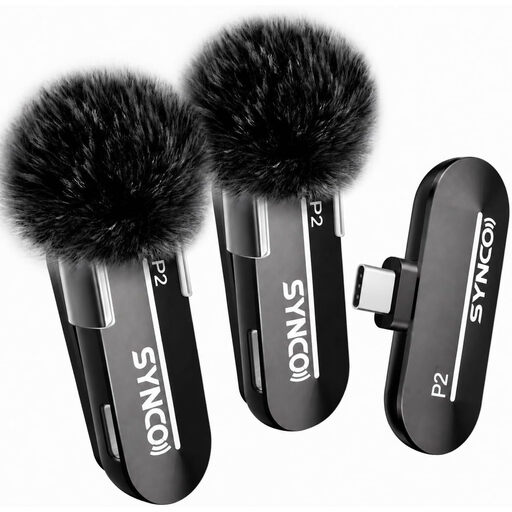 Image unavailable
The two transmitters and one receiver suit a recording set-up with two speakers.
The product name lists USB-C and 2TX+1RX; the product description specifies an omnidirectional recording pattern.
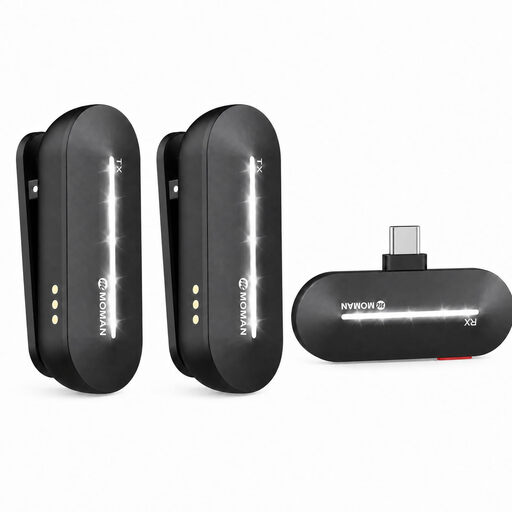 Image unavailable
The two transmitters and one receiver suit a wireless lavalier set-up with two speakers.
The product name lists USB-C, 2TX+1RX and a 150 m range.
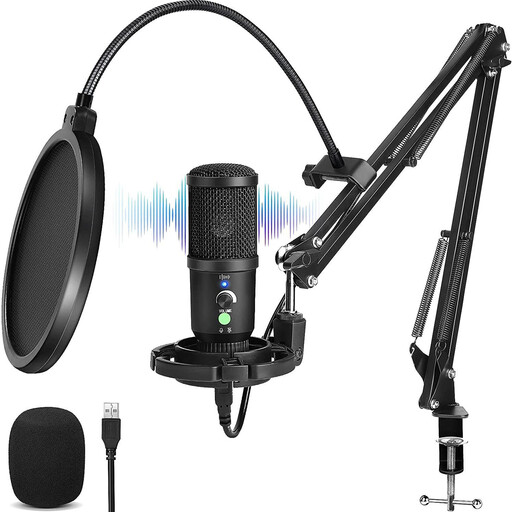 Image unavailable
Suited to a fixed speaking position where you can point the microphone towards one storyteller.
The product description lists a cardioid pattern, gain control, mute button and headphone monitoring.
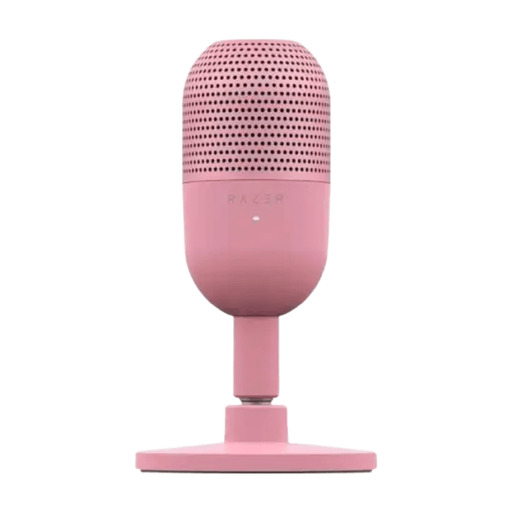 Image unavailable
This compact USB microphone suits a directional recording set-up with one storyteller.
The product title mentions tap-to-mute; the product description specifies a supercardioid pattern.
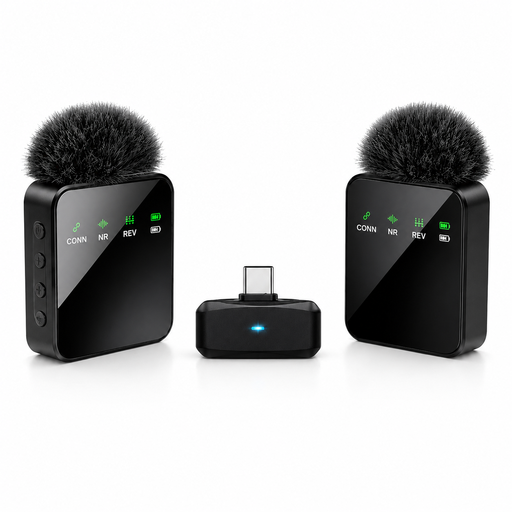 Image unavailable
The two microphones suit a recording set-up where two speakers wear their microphones close to them.
The product description lists a Type-C interface and a battery life of 3–6 hours.
Not necessarily. An omnidirectional pattern picks up sound from all directions, but positioning and distance still matter when several people share one microphone. Test the actual seating positions and listen for differences in voice levels and table noise.
First, make a test recording with the storyteller closer to the microphone. Shure explains that a microphone cannot improve a room’s acoustics or automatically separate reflected sound from the voice.
Not for the direct USB connection described: the PodMic USB can connect digitally to a computer. However, check the port, cable and recording software in your own set-up. You’ll need analogue recording equipment to use the XLR output.
For a consumer purchase in the Netherlands, the seller must provide an appropriate solution if a product is faulty, according to the Dutch government. The Netherlands has no fixed statutory guarantee period; any manufacturer’s warranty is in addition to this.
According to the Dutch Data Protection Authority, you generally need permission to publish other people’s personal data online. There is an exception for use solely for personal or household purposes within a limited group. An identifiable voice may be information about an identifiable person. When processing is covered by the GDPR, you need a valid legal basis; consent is one possible basis. Without knowing the purpose, audience and circumstances, the rules don’t provide a general answer for every recording.