What should you look for when buying?
Start with a consistent speaking position and the ability to monitor your voice. Then check the connection, stand and features you’ll actually use.
| What to consider |
What to look for when buying |
Who will find this most important? |
| Clarity in your recording space |
Check the speaking side, polar pattern and positioning options. Make a test recording in your usual spot. |
If I practise in a room with household noise, I want to hear my words clearly without expecting a polar pattern to eliminate all background sounds. Around 36% of consumers prioritise clarity in their own recording space. |
| Monitoring and repeat takes |
Check whether there’s a headphone output and direct monitoring, and whether the gain or mix controls suit the way you work. |
When recording several takes in a row, I want to hear my voice back and notice changes to the settings. Around 29% of consumers prioritise checking repeat takes. |
| Connection and setup |
Check the connection on the exact model, the included cable, the stand and the devices it supports. |
If I want to start from the same desk position each time, I don’t want to have to set up lots of equipment. Around 21% of consumers prioritise a simple, consistent setup. |
| Complete recording setup |
Compare what’s in the box with the connections you already have and the setup you want. Choose extra features only if you’ll use them. |
I want to avoid extra parts and features I don’t need. Around 14% of consumers focus mainly on a simple, complete setup. |
Joybuy product picks
This selection of Joybuy products for voice recording ranges from USB desktop microphones to clip-on and wireless models. For each product, check that the connection is compatible with your recording device and regular speaking setup.
 No image available
USB condenser microphone with cardioid pattern
The product title mentions zero-latency monitoring, which may be useful if you want to listen back to takes straight away.
The title specifies a cardioid recording pattern. Check the positioning and sound in your own room with a test recording.
View at Joybuy
 No image available
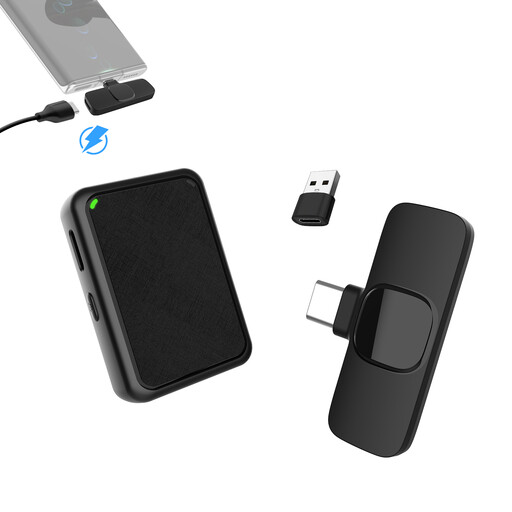
Moman MB1C clip-on microphone, 1TX+1RX, USB-C
This clip-on model is designed for use with a phone. Before buying, check that the iPhone and USB-C specifications listed match your exact device.
The product title specifies iPhone 18/17/16, 1TX+1RX and USB-C.
View at Joybuy
 No image available
Razer Seiren V3 Mini Quartz
Its compact USB design may suit a permanent desktop setup. Check that the connection is compatible with your recording device.
The product title specifies USB, a compact design and tap-to-mute.
View at Joybuy
 No image available
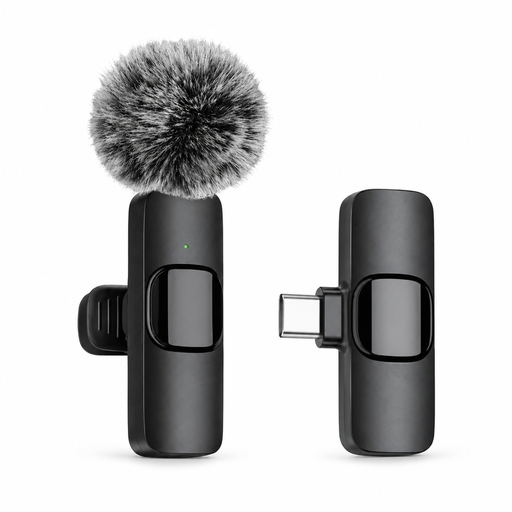
Verbex K9-Black wireless mini lavalier microphone
The product title describes a wireless lavalier microphone with a Type-C interface. Before buying, check that the interface works with your recording device.
View at Joybuy
Frequently asked questions
How can you keep repeated storytelling practice consistent?
Use the same speaking side, distance, room and settings each time, and listen back to a short test recording before starting a series of takes. RØDE recommends trying different positions to suit the microphone and room; one distance won’t suit every setup.
Can you hear your voice without distracting delay?
Yes, with a model that offers direct headphone monitoring, when you connect headphones to the microphone. Check whether the exact model also has a separate volume control or monitor mix; these features vary.
Who can help if a product is faulty, and can you change your mind about an online purchase?
According to ACM ConsuWijzer, the seller is responsible for providing an appropriate solution under the statutory guarantee if a consumer product is faulty. For online purchases, you generally have 14 days from delivery to change your mind, subject to legal exceptions. Check these rights separately from any commercial returns promises.
Can you publish a recording of an existing story?
Private use and sharing or making a work available to the public are not the same thing: the Rijksoverheid makes this distinction in relation to private copying. If you want to publish a recording of someone else’s copyright-protected story, check in advance what permission or usage rights you need. Buying a microphone doesn’t grant you those rights.
What if other people can be identified in your recording?
That’s different from recording only your own practice voice. If you collect or use personal data in a context covered by the GDPR, the Autoriteit Persoonsgegevens says you need a valid legal basis for processing it. Consent is one possible legal basis.


