
Solo commentator in an echoey room
Primarily wants their voice to remain clear, and can place the microphone nearby or adjust the recording location.


If you’re speaking alone and can keep the microphone close to your mouth, a directional USB microphone is a practical starting point; a dynamic cardioid model is one option to compare. Shure stresses that a microphone won’t improve the room’s acoustics, while RØDE warns that placing a microphone too far away can make a recording sound more reverberant. So, speaking distance and the position of reflective surfaces still matter.
Primarily wants their voice to remain clear, and can place the microphone nearby or adjust the recording location.
Wants to hear straight away whether a loud passage is distorting or the room is coming through too much, so looks for headphone monitoring and easy-to-use controls.
Sometimes records through a computer and sometimes with other equipment. Checks that the connections, cables and stand suit both ways of working.
| What to consider | What should you look for? | Who is this most important for? |
|---|---|---|
| Clarity in an echoey room | Check the pickup pattern and whether a boom arm or stand can keep the microphone close to your mouth. Make a test recording in the room you intend to use. | If I mainly want a clear solo voice and the echo is still audible, I prioritise recording up close. Around 42% of consumers put speech clarity despite room echo first. |
| Monitoring while recording | Check for a headphone socket and level controls, and find out which features work over USB. | For an energetic commentary, I want to hear straight away whether the voice level or room sound is an issue, so I can assess my recording. Around 25% of consumers prioritise direct control of voice and recording levels. |
| Connecting to equipment | Compare the USB connection, included cables and compatibility with your devices. Consider whether you’ll actually use an XLR input. | If I switch between a computer and another recording set-up, I want to know in advance which connections and cables I’ll need. Around 17% of consumers prioritise connection flexibility. |
| Everything you need for a complete set-up | Check whether a boom arm or stand, pop filter and cables are included with the specific version, and whether they’ll suit your desk and device. | If I want to be ready to record without missing parts, I compare what’s included with the specific version. Around 16% of consumers prioritise a complete starter set-up. |
Reducing constant background noise isn’t the same as reducing reflections of your own voice. A feature designed for one type of sound doesn’t prove that it will remove room echo.
Compare a close-up test recording with one made from your usual position, and listen separately for vocal clarity and echo.
Greater distance can make reflected speech more noticeable. A desk stand won’t necessarily bring the microphone close enough to your mouth.
Before buying, check that the included mount lets you position the microphone where you want to speak.
According to FIFINE, certain buttons and RGB features on the FIFINE AM8T are only available over USB.
Check which features are available with each connection, and choose XLR flexibility only if that set-up suits the way you’ll use it.
The ATR2100x-USB is a dynamic cardioid handheld microphone with USB-C and XLR, designed for close-up recording of a single voice.
The Q2U is a dynamic USB/XLR microphone with cardioid pickup, a desktop tripod, windscreen and cables.
The PodMic USB is a dynamic USB-C/XLR microphone for a fixed commentary position, with the microphone close to the speaker.
According to Shure, the MV7+ combines a dynamic vocal microphone with USB-C, XLR, headphone monitoring and adjustable features.
The AM8T is a dynamic USB/XLR kit with a boom arm; the K688 is a separate USB/XLR model.
These USB microphones are options to compare for spoken commentary where you can position the microphone directionally and close to you.
 No image available
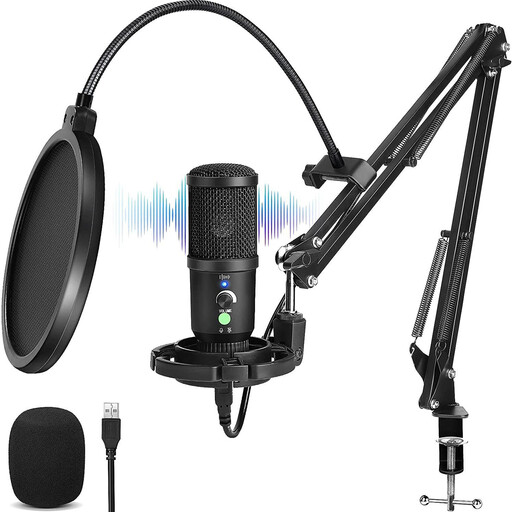
The boom arm may help you position the microphone closer to your mouth; check that it fits your desk.
USB connection and cardioid pickup pattern.
The product description mentions latency-free headphone monitoring.
 No image available
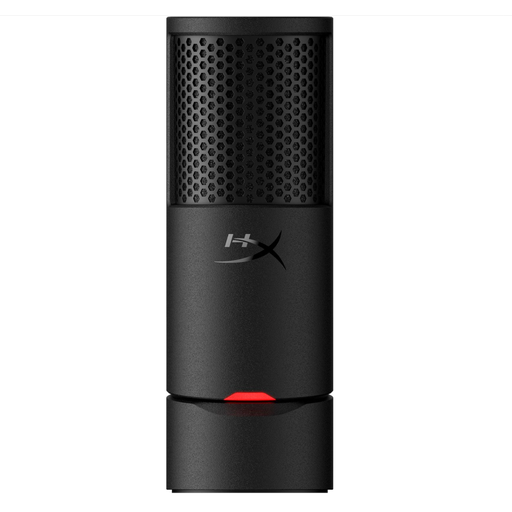
The base and boom-arm mount give you the option of placing the microphone on your desk or attaching it to an arm; check which position is close enough.
USB connection and cardioid pickup pattern.
The description mentions a built-in shock mount, pop filter and mute button.
 No image available
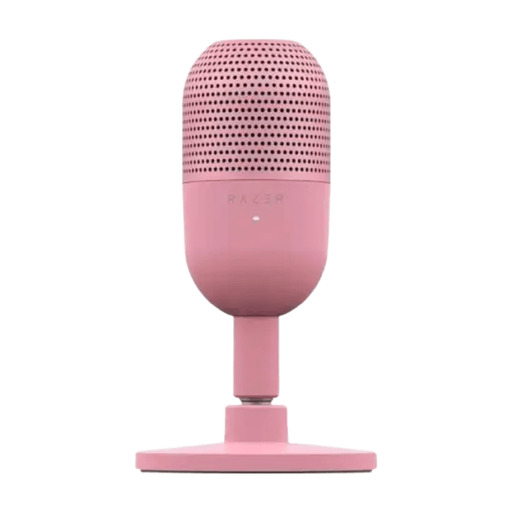
Its compact size may suit a small desk set-up; check that you can position the microphone at the distance you want.
USB connection and supercardioid pickup pattern.
The product description mentions tap-to-mute control.
No, a microphone won’t remove echo from the room. Recording up close can improve the balance between your direct voice and its reflections. Assess a test recording, and also consider reflective surfaces and where you’re recording.
Point the front of the microphone towards your mouth and choose a short speaking distance you can maintain throughout the commentary. RØDE generally recommends 2–6 inches from the grille for dynamic vocal microphones; this is general guidance from the manufacturer, not a fixed distance for every model. Record a test passage and listen back with headphones.
Make sure each speaker stays close enough to a microphone. For recordings with several people, RØDE recommends separate, close-positioned microphones and as few reflective surfaces as possible. Putting one microphone in the middle of the table won’t automatically solve echo.
Check whether the specific version includes the boom arm or stand, cables and any other parts you need. For a consumer purchase in the Netherlands, the seller is responsible for the statutory guarantee if a product is faulty. Online consumer purchases generally come with a 14-day cooling-off period after delivery, subject to statutory exceptions.
That depends on whether the product is covered by EU rules that require CE marking. Check the product information and applicable EU declaration of conformity for the specific version. A CE marking doesn’t mean a microphone reduces room echo. Shure has published a declaration of conformity for the MV7+ variants named; this doesn’t automatically apply to other versions.