Who might this choice suit?

Narrator with a soft voice

You want to record quieter passages clearly and monitor the levels during a test recording, rather than simply turning the voice up a lot afterwards. Shure, RØDE and Audio-Technica describe recording characteristics that may help you weigh up your options.

Home narrator in a room with audible noise

You record in a space where background noise or reflections may be picked up. Testing different microphone positions can help you judge how your voice and the room sound together. Shure discusses microphone placement in its recording guide.

Narrator who wants to get started straight away

You want to record via USB and know in advance which stand, cable, headphone socket and controls come with the version you choose. Information from RØDE, Audio-Technica and Sennheiser shows that included accessories can vary by model or bundle.

What should you look for when choosing?

Dynamic USB microphone

May suit you if: you can consistently position the microphone close to you and want to take room noise into account when choosing.

Consider: close positioning calls for a stable setup and care with plosives and changes in vocal tone. Test it with your own script.

USB condenser microphone

May suit you if: you record in a quiet room and want to use the microphone on a desk.

Consider: sound from a noisy or echoey room may be distracting in your recording. Compare locations and listen to a test recording first.

What to consider What should you check? Who should pay particular attention?
Clarity Test the distance and recording level with both soft and louder lines, then listen through headphones. When I record a historical monologue softly, I want quiet words to come through clearly. Around 36% of this group of consumers prioritise clarity.
Room noise Compare the voice and the room at different distances and in different positions. When my room is audible, I want to see whether a different position improves the sound in the recording. Around 29% of this group of consumers focus mainly on room noise.
Controls and monitoring Check the connection to your device and the position of the headphone and level controls. For a long solo recording, I want to be able to monitor the sound and keep key settings within easy reach. Around 21% of this group of consumers prioritise ease of recording.
Complete setup Compare the contents of the exact bundle with the stand, cable and pop protection you need. If my recording space needs a specific stand or arm, I want to know what’s already in the box. Around 14% of this group of consumers prioritise flexibility in their setup.

Common pitfalls

  • Assuming a higher microphone level will fix room noise

    The distance from the microphone and the room’s acoustics can both affect how much unwanted sound is picked up. Simply turning up the level does not address these factors.

    First, try a different position and listen to both soft and louder lines. Then decide on a microphone type or any processing you might need.

  • Assuming every version includes the same accessories

    Bundles can differ in the stand, arm, cable or pop protection they include. A missing accessory may affect your setup and how close you can comfortably speak to the microphone.

    Check the contents of the exact version, along with the available USB connection and the space on your desk.

    Depending on the version you choose, you may need a separate stand, arm, compatible cable or pop protection.

  • Assuming a noise-reduction claim guarantees a quiet recording in your room

    A manufacturer’s feature does not replace assessing your own voice, room and microphone position. How these features work depends on the model.

    Think of features such as Shure’s Denoiser and Auto Level as options available on that model, and compare them with a test recording without heavy processing.

Brands to compare

RØDE

The NT-USB+ is a USB-C condenser microphone designed for a desk setup.

  • RØDE lists a cardioid capsule, headphone monitoring, a detachable pop filter and a desktop stand.
  • The audio quality description is a manufacturer claim. Make a test recording in your own room to assess how much room noise you can hear.

Shure

The MV7+ is a dynamic microphone with USB-C and XLR, designed for close-up recording with on-mic controls.

  • Shure lists a headphone socket, automatic level adjustment and software features.
  • Voice isolation and noise reduction are claims made by Shure; they do not mean that distracting sounds will disappear in every room. The standard version reviewed does not list an included stand.

Audio-Technica

The ATR2100x-USB is a dynamic USB/XLR microphone with direct monitoring.

  • Audio-Technica Europe lists USB-C, XLR, a headphone socket, cables and a desktop stand.
  • Check current availability with the retailer you plan to order from. Stock information from one sales channel does not necessarily reflect availability elsewhere.

Sennheiser

The Profile USB Microphone is a USB-C condenser microphone with on-mic controls for desk recording.

  • For the version described, Sennheiser lists gain, mix and headphone volume controls, a mute function and a desktop stand.
  • According to the manual, the Profile Streaming Set has different contents, including an arm. Check which version is being offered.

USB microphones at Joybuy

This selection features USB microphones for recording spoken text at a desk. Compare the controls and included accessories with your own recording space, and make a test recording before you choose.
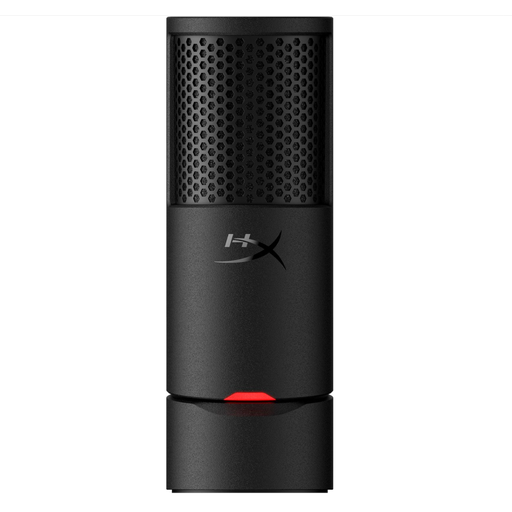
HyperX SoloCast 2 USB gaming microphone

HyperX SoloCast 2 USB gaming microphone

This USB microphone could be an option for recording spoken text at a desk. Make a test recording to see whether its position works for your voice and room.

The product description lists a cardioid pickup pattern, mute control, built-in shock mount and pop filter, and a compact adjustable stand.

View at Joybuy
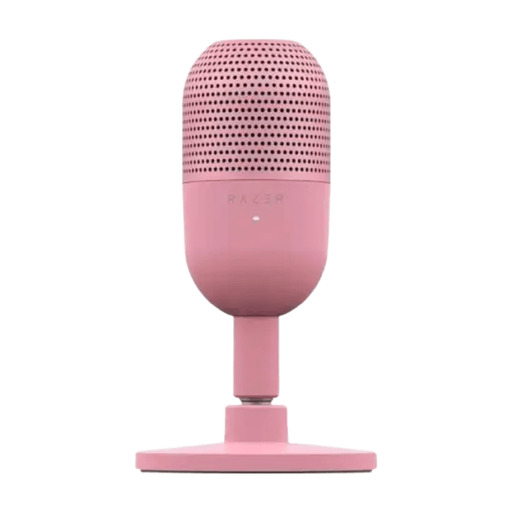
Razer Seiren V3 Mini Quartz ultra-compact USB microphone

Razer Seiren V3 Mini Quartz ultra-compact USB microphone

This compact USB microphone is worth comparing for desk recording of spoken text. Test it in the room where you plan to record your monologue.

The product description lists a supercardioid pickup pattern and tap-to-mute control.

View at Joybuy

Frequently asked questions

How should I set the level for a soft voice that sometimes gets louder?

Make a test recording with a soft line and the loudest line you expect to say, then check the recording meter. Audacity advises lowering the recording level if a test at a normal speaking volume reaches the yellow or red area between −9 dB and 0 dB, to prevent clipping. Also listen through headphones.

Will moving the microphone help if I can hear the room?

Yes. Trying different distances and positions can show how much of your voice and the room the microphone picks up. For unwanted room sound, Shure’s recording guide recommends trying closer placement or better isolation. There is no single ideal distance for every voice and room.

What do I need to get started besides the microphone?

Compare the exact bundle with the USB port on your recording device and the setup you want. RØDE lists a cable, desktop stand and pop filter among the accessories included with the NT-USB+. The Sennheiser Profile manual distinguishes between a set with a desktop stand and a Streaming Set with an arm. Make a short test recording and save a copy.

What are my rights when shopping online in the Netherlands?

For an online product purchase, you generally have a statutory cooling-off period of up to 14 days after delivery, with some exceptions. ACM ConsuWijzer also explains that you have a legal right to a remedy if a product does not, under normal use, meet what you could reasonably expect. The period is not the same fixed length for every microphone.

Can I use a historical text or music in a monologue I publish?

A historical subject does not automatically make a text or music recording free of copyright. The Dutch government states that you need permission to use other people’s copyright-protected texts or music. A private copy for personal use cannot automatically be shared or made public; check the rights to the specific material before publishing.
