Start by recording a short test in the room where you plan to voice the theatre trailer: as Shure explains, a microphone can’t remove echo from a room. In a quiet space, a cardioid USB condenser microphone could be a good fit. If there’s background noise and the narrator can speak close to the mic, consider a dynamic microphone for close-up voice recording. Listen back on headphones to check that the soft voice is clear and easy to assess alongside the music.
Who is this choice relevant to?
Director working with a soft-spoken narrator
You want to record a clear, natural voice and need to assess the mic position and recording level in your own space. Shure explains why microphone distance and placement matter; RØDE lists a pop filter as an accessory for the NT-USB+.
Creator without a quiet recording space
You want to hear how much echo, fan noise or desk vibration will end up in the recording before you start. Shure emphasises that a microphone won’t improve the room’s acoustics; Sound On Sound reported desk vibrations in a test set-up using the RØDE NT-USB+.
Editor mixing voice with music
You want to monitor the recording and assess the balance between the microphone and computer audio. Audio-Technica and Sennheiser describe mix controls on the models mentioned here; Sound On Sound recommends monitoring as you record.
What should you look for when buying?
Cardioid USB condenser microphone
A good fit when: the room is quiet enough and you can position the microphone directionally at a fixed distance.
Keep in mind: fan noise and vibrations can also be picked up in the recording; Sound On Sound noticed this with the NT-USB+ in its own test set-up.
Dynamic USB microphone for close-up voice recording
A good fit when: the room is less quiet and the narrator can comfortably stay close to the microphone. Shure describes the MV7+ as a dynamic USB microphone for close-up use.
Keep in mind: keep your distance from the microphone and speaking direction consistent between takes.
| What to consider |
What to look for |
Who should pay particular attention? |
| Recording a soft voice clearly |
Check the recording gain, polar pattern and whether the microphone can be positioned comfortably at a fixed distance; test it with the softest line. |
If I’m recording a soft-spoken narrator, I want to assess the voice clearly without overlooking the room’s acoustics. Around 36% of consumers prioritise clear, intelligible soft vocals. |
| Reducing echo and background noise |
Make a test recording in the actual room and listen for echo, fan noise and desk vibrations; see if you can try a different position. |
If my recording space isn’t quiet, I want to know what background noise will still be audible in the recording. Around 29% of consumers prioritise managing ambient noise and echo. |
| Monitoring voice and music |
Check for a headphone output and, if you want to adjust the balance, a monitor mix that works with your recording software. |
If I’m mixing voice with music, I want to be able to assess both signals as I listen. Around 21% of consumers prioritise monitoring during recording and editing. |
| Easy set-up |
Check the connection, included cable and stand, and whether the set-up works with your computer or tablet. |
If I want to get started without complicated equipment, I want to know in advance what’s included with the version I’ve chosen and how it connects. Around 14% of consumers prioritise a simple starter set-up. |
Things to watch out for when buying
-
Confusing noise reduction with a solution for echo
Echo is already part of the recording. Shure explains that a microphone can’t improve the acoustics of the room it’s in.
Record the same line in the room you plan to use, then listen on headphones to check how clear the voice is and how much echo you can hear.
Recording somewhere else may require extra time or set-up equipment.
-
Assuming a desk stand will eliminate vibrations
In its test set-up, Sound On Sound picked up desk vibrations through the included stand with the RØDE NT-USB+; the same result won’t necessarily apply to every set-up.
Test tapping and movement during a trial recording. Then decide whether you need a different position or mounting option.
A suitable microphone arm or alternative mount may require extra equipment.
-
Looking only at the USB connection
Included accessories and controls vary by model; the connection alone won’t tell you whether the rest of the set-up is suitable.
Before buying, check the product version, cable, stand and connection against your computer or tablet.
You may need a compatible cable or extra set-up equipment.
Brands worth considering
RØDE
The NT-USB+ is a cardioid USB condenser microphone supplied with a pop filter and desk stand, making it suitable for a compact voice-over set-up.
- RØDE says the microphone has a high-gain preamp and a headphone output.
- In its own test set-up, Sound On Sound picked up fan noise and desk vibrations. Positioning still matters.
Shure
The MV7+ is a dynamic microphone with USB-C and XLR connections, for anyone who wants to record close to the mic or use different connections.
- Shure lists automatic level adjustment and digital processing.
- These features haven’t been independently assessed here for a specific soft voice or echoey room.
Audio-Technica
The AT2020USB-X is a cardioid USB condenser microphone with controls for monitoring as you record.
- According to Audio-Technica, the model has a headphone output, mix control, mute button and desk stand.
- Make a test recording in your own space before drawing conclusions about the recorded sound based on these features.
Sennheiser
The Profile USB is a cardioid USB-C condenser microphone with controls for gain, monitor mix and headphone volume.
- Sennheiser specifies controls on the microphone and an included desk stand.
- The best position and the room noise depend on your set-up.
USB microphones on Joybuy
These Joybuy products are USB microphones for recording vocals at a desk. Compare their polar patterns, controls and connections with your voice, room and recording equipment.
 No image available
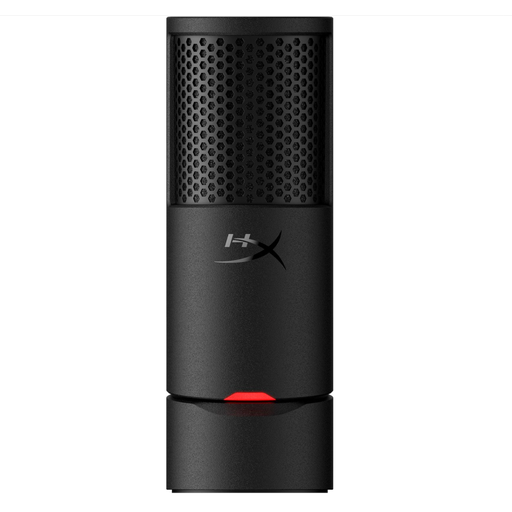
HyperX SoloCast 2 cardioid USB microphone, black
An option for USB voice recording if you’re looking for a cardioid condenser microphone for a desk set-up.
The product description lists a condenser capsule, shock mount, pop filter, mute control and adjustable stand. It connects via USB-C to USB-A; software-based audio adjustments are also mentioned.
View at Joybuy
 No image available
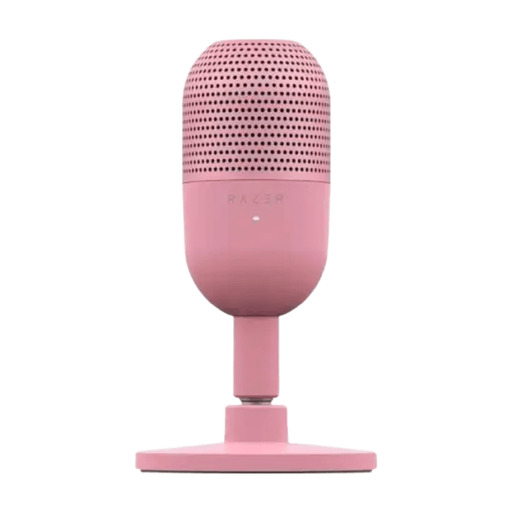
Razer Seiren V3 Mini Quartz USB microphone
A compact USB microphone for recording vocals at a desk; make a test recording to see how it sounds in your space.
The product description lists a supercardioid polar pattern, USB connection and tap-to-mute control.
View at Joybuy
Frequently asked questions
Should I mainly turn up the gain if the narrator speaks softly?
Don’t automatically turn up the gain without making a test recording first. Position the microphone carefully at a comfortable, fixed distance, then listen to the voice, echo and background noise together. Shure points out that a microphone can’t fix a room’s acoustics.
How can I monitor the voice while trailer music is playing?
A headphone output and monitor mix can help you assess the microphone and computer audio as you listen. Audio-Technica says the AT2020USB-X has a mix control; Sennheiser lists this control for the Profile USB. Check how it works with your own recording software.
What should I look for when buying a USB microphone online in the Netherlands?
Check which cable and stand come with the version you’ve chosen, and whether the connection is compatible with your equipment. If a product is faulty, the Dutch government says the seller is your point of contact for a solution. Many online purchases come with a 14-day cooling-off period, although exceptions may apply.
Can I use a recognisable voice in a public theatre trailer without permission?
Don’t assume that you can. The Dutch Data Protection Authority considers recognisable voice recordings to be personal data; processing them requires a legal basis under the GDPR. The appropriate legal basis and arrangements depend on the circumstances. Consent is one possible legal basis, but not the only one.


