
Reader with a cluttered desk
You want space for your book and any notes. Choosing between a laptop clip, desktop stand and boom arm determines how much desk space the microphone takes up.


Choose a microphone setup that leaves your book clear and keeps your voice well directed: a laptop clip frees up desk space, a compact desktop stand needs a spot in front of your book, and a boom arm will only work if you can attach it securely. Then check that the connection and controls suit your recording device, and decide whether you want to hear yourself while practising.
You want space for your book and any notes. Choosing between a laptop clip, desktop stand and boom arm determines how much desk space the microphone takes up.
You want to record your voice clearly, even with other sounds in the room. Check the microphone’s polar pattern and keep speaking towards it as you read; the polar pattern alone won’t guarantee a noise-free recording.
You want to check your delivery and recording levels. Make sure the headphone connection and controls are compatible with the device you use to record.
| What to consider | What should you check? | Who is this important for? |
|---|---|---|
| Space for your book and notes | Compare the space taken up by the base with a laptop clip or boom arm mount. Also check where the microphone will sit in relation to your reading position. | If I want to keep my book open in front of me, I look for a setup that leaves the page clear. Around 33% of consumers prioritise space for their book and notes. |
| Focused solo speech while reading | Check the polar pattern and whether you can position the microphone in the direction you’ll be speaking. Make a test recording with your book in its usual place. | When I’m looking between the text and the microphone, I want my voice to come through clearly. Around 27% of consumers prioritise focused solo speech. |
| Being able to hear yourself | Check whether the model has a headphone output and direct monitoring. If you listen back afterwards on your computer, direct monitoring may be less important. | If I want to check my delivery while practising, I look for headphone monitoring. Around 20% of consumers prioritise listening back to their recordings. |
| Connection and controls | Compare the port on your computer or tablet with the supplied cable. Also consider whether you need a mute button or adjustable gain while practising. | If I want to get started without connection problems and use the controls while practising, I check the cable and buttons. Around 20% of consumers prioritise connection and controls. |
A compact microphone can still have a desktop base, and a boom arm needs a suitable place to attach. So the complete setup may still take up space you need for your book.
Compare the base, clip or boom arm mount with your desk layout, and check what’s included with the version you’ve chosen.
If the setup gets in the way of your book, you may need a different base, arm or mount.
A polar pattern describes the directions from which a microphone picks up sound. Your recording also depends on microphone placement and the direction you speak in.
Practise with your book in its usual place and listen back to the recording before deciding whether the setup works in your room.
RØDE supplies a USB-C-to-USB-A cable with the NT-USB Mini. If your device only has USB-C, you’ll need a suitable alternative cable or adapter.
Before ordering, compare the port on your recording device with both ends of the supplied cable.
If the supplied cable won’t fit your device, you may need a different cable or adapter.
A stated manufacturer’s warranty doesn’t automatically cover all your rights as a consumer buying from a retailer in the Netherlands. ACM ConsuWijzer distinguishes between warranties and statutory rights.
Keep your proof of purchase and product information. If there’s a fault, contact the retailer and consult ACM ConsuWijzer’s information on statutory guarantees.
The Go Mic is a USB option with a laptop clip, ideal if you want to keep desk space free for your book.
The NT-USB Mini combines a compact, detachable desktop stand with the option to mount it on a stand or boom arm.
The Seiren V3 Mini is a compact USB desktop microphone with a mute sensor, ideal if you want to mute it quickly while practising.
The Profile USB Microphone is designed for desktop use, with controls for recording level and monitoring.
These products suit a compact setup for reading from a book, with space on your desk, muting and direct monitoring in mind.
 No image available
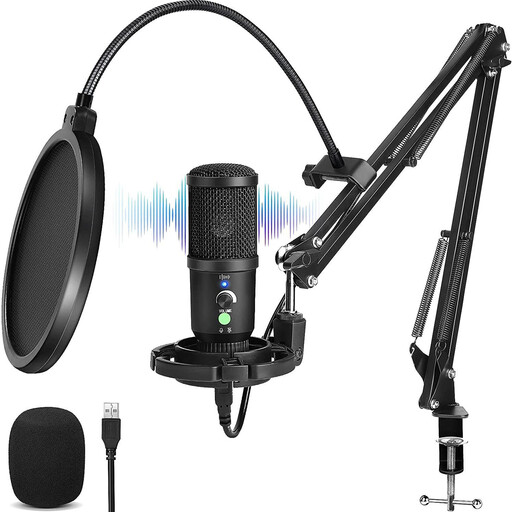
Could suit you if you can attach a boom arm to your desk and want to listen back to your delivery through headphones as you record.
The product description mentions a cardioid pickup pattern, an included scissor arm stand, a headphone output and a mute button. Check that the arm mount is suitable for your desk.
 No image available
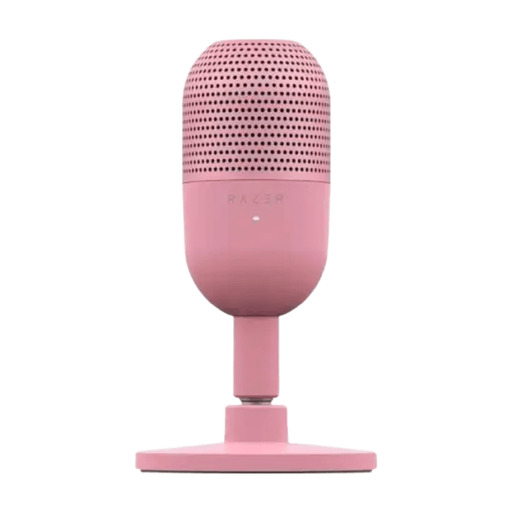
Could suit you if you’re looking for a compact desktop microphone that you can quickly mute while practising.
Razer specifies a supercardioid pickup pattern and a tap-to-mute sensor. Pay attention to the direction you speak in; don’t assume it will eliminate room noise. Also check whether the version you choose has the headphone monitoring you need.
First, make room for your open book and record a test in your usual reading position. For voice-over use with the NT-USB Mini, RØDE recommends positioning it around 10–15 cm from your mouth. This advice applies to this model and isn’t a general requirement for USB microphones.
Not with the supplied USB-C-to-USB-A cable alone. RØDE recommends a USB-C-to-USB-C cable for a USB-C input; also check that your device supports the microphone.
For most online consumer purchases in the Netherlands, you generally have a statutory 14-day cooling-off period from the day after delivery. ACM ConsuWijzer explains the conditions and exceptions for unpacking and trying out a product. Check this information and the retailer’s returns policy before testing the microphone.
No. A stated manufacturer’s or retailer’s warranty isn’t the same as the statutory guarantee in the Netherlands. ACM ConsuWijzer explains that the retailer may be responsible for providing an appropriate solution if a product breaks sooner than you could reasonably expect under normal use. This doesn’t mean there’s one fixed, general two-year period.
A recording for your own use isn’t the same as making it available to the public. The Dutch Government says you may copy copyright-protected material for your own use, but you can’t necessarily distribute or publish it. Before publishing, check which text you’re using and whether you need permission or can rely on an applicable exception; it depends on the extract and how you use it.