If you’re recording in a room that isn’t particularly quiet, start by comparing dynamic USB microphones that you can position close to your mouth. In a quiet room, a cardioid USB condenser microphone with controls on the desk could also be a good fit. For a long recording, check for a headphone output, level or gain control, and a stable setup. Make a test recording too: none of these features will make a noisy room quiet by itself.
Who is this for?
Solo narrator in a noisy room
If you’re recording long spoken explanations without a completely quiet space, a dynamic USB microphone could be worth comparing, provided you can speak close to it in a consistent position. Shure, RØDE and Audio-Technica describe dynamic USB models for speech recording. Test one in your own room to see how it sounds.
Narrator who monitors takes as they record
If you want to hear your voice back and adjust the level during a long recording, compare the headphone monitoring and available controls on each model. Shure, RØDE, Audio-Technica and Sennheiser describe different connections and control options.
Creator with a quiet desk setup
If you want to get started without a separate audio interface, look for a supplied stand, accessible controls and a stable microphone position. Audio-Technica and Sennheiser describe models supplied with a desk stand; always check the specific version you’re considering.
What should you look for when choosing?
Dynamic USB microphone for close-up speech
A good fit if: you’re mainly recording one voice and the room isn’t completely quiet. Keep the microphone close to the speaker in a consistent position, then listen back to a test recording.
Keep in mind: a consistent, close position calls for a suitable stand or arm. Shure describes noise processing for the MV7+, but that doesn’t guarantee a quiet recording in every room.
USB condenser microphone with desk controls
A good fit if: you have a quiet recording space and want to adjust gain, mute and the balance between your voice and computer audio directly during long takes. Sennheiser’s Profile USB has these controls, a headphone output and a supplied desk stand.
Keep in mind: room noise and positioning still matter. The standard Profile USB has a USB connection; the dynamic models mentioned also offer XLR.
| What to consider |
What to check before buying |
Who is this most relevant to? |
| Clear speech despite room noise |
Check the microphone type, polar pattern and mounting options. Make a test recording in your intended setup before starting a long take. |
If I’m recording in a room that isn’t completely quiet, I want to know whether my voice will remain clear at the chosen distance. Around 33% of consumers put room noise first. |
| Monitoring and making adjustments |
Check the headphone output, volume control and gain or mute controls on the exact model. |
During a long recording, I want to be able to check my voice and adjust the level if needed, rather than discovering problems afterwards. Around 27% of consumers prioritise live monitoring. |
| A stable desk setup |
Check what’s in the box, the type of mount and the space available on your desk. |
I want to be able to put the microphone in the same suitable position every time, so my speaking distance doesn’t keep changing during the explanation. Stable positioning is the main concern for around 20% of consumers. |
| Easy connection |
Check the USB connection, supplied cable and compatibility with your recording device. Don’t mistake an XLR-only model for a USB version. |
If I want to record directly via USB, I want to know in advance which cable and connection my setup requires. Around 20% of consumers prioritise an easy connection. |
Common pitfalls
-
Mistaking a related model name for a USB model
Shure describes the MV7X as XLR-only, while the MV7 and MV7+ offer both USB and XLR. A model with a name very similar to a USB version may therefore have a different connection.
Check the full model name and connection on the product page, not just the brand or appearance.
You may need an audio interface to connect an XLR-only model to your recording device.
-
Assuming every version includes a microphone arm
A supplied desk stand isn’t the same as a microphone arm. Sennheiser describes the standard Profile USB as coming with a desk stand and the Streaming Set as a different version. Shure also lists different versions of the MV7+.
Compare what’s in the box with the setup you want for long recording sessions.
You may need to buy a suitable stand or arm separately for a different setup.
-
Assuming noise processing guarantees a quiet recording
Shure describes noise processing for the MV7+, but the manufacturer’s claim doesn’t prove that it will sound quiet in every room.
Before starting a long take, make a test recording with the room noise and speaking distance you’ll have in your actual setup.
Brands to compare for this choice
Shure
The MV7+ is worth comparing if you want to record speech close to the microphone and are looking for USB-C, XLR, headphone monitoring and adjustable processing.
- Shure lists Auto Level, a 3.5 mm headphone output and MOTIV Mix for the MV7+.
- The noise processing mentioned is a claim made by Shure. Also check the app’s system requirements and what’s included with the version you choose.
RØDE
The PodMic USB is a dynamic microphone for speech, with direct USB recording and an XLR connection for a possible alternative setup.
- RØDE describes direct headphone monitoring, an integrated swivel mount and pop filters.
- Check whether a suitable stand or arm is included with the version you’re considering and works with your setup.
Audio-Technica
The ATR2100x-USB is a dynamic USB/XLR option supplied with a folding desk stand.
- Audio-Technica lists direct headphone monitoring and, according to the product specifications, supplies two USB cables and an XLR cable.
- These are product specifications, not an independent sound test. Check that the supplied cables work with your recording device.
Sennheiser
The Profile USB is designed for a desk setup where you want to adjust gain, mix, mute and headphone controls directly.
- Sennheiser describes the standard Profile USB as having a cardioid condenser capsule, a headphone output and a desk stand.
- The standard Profile USB uses USB; the Streaming Set with an arm is a different version.
Joybuy microphones
This Joybuy selection includes USB microphones for desk recording and control during long takes. Check each model’s connection, positioning and suitability for the room noise in your setup.
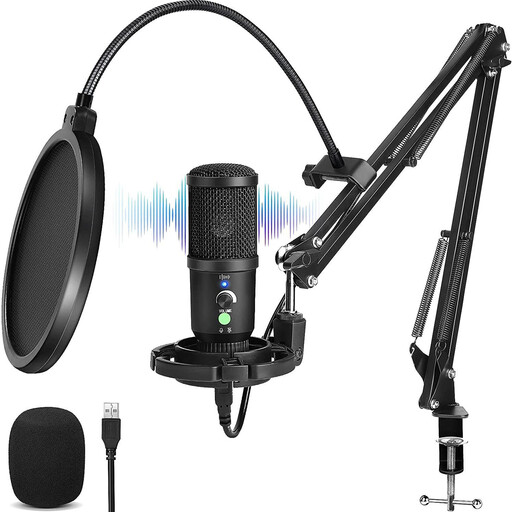 No image available
Cardioid USB condenser microphone
A good fit if you’re looking for a cardioid USB condenser microphone and want to monitor your recording directly as you go. The product name also mentions latency-free monitoring.
View at Joybuy
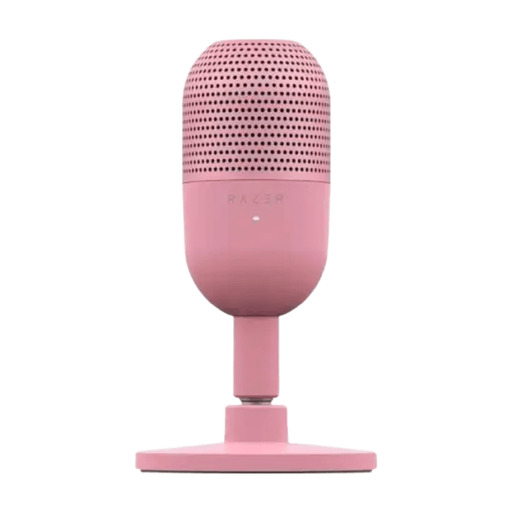 No image available
Razer SEIRÉN V3 MINI Quartz USB microphone
A good fit if you’re looking for a compact USB microphone with a direct mute control. The product name mentions tap-to-mute.
View at Joybuy
Frequently asked questions
Should I choose a dynamic or USB condenser microphone for a long take?
If you’re recording close to a fixed microphone in a room that isn’t completely quiet, start by comparing dynamic microphones for speech. If you have a quiet desk setup and want direct control, compare a condenser model such as the Profile USB too. Either way, make a test recording in the room where you’ll be recording.
How should I set up the microphone before recording for a long stretch?
Position the microphone securely and listen back to a test passage with both normal and louder speech. Connect wired headphones if your chosen model offers direct monitoring. If you’re using the Shure MV7+ with MOTIV Mix, check in advance that your device meets the compatibility requirements specified by Shure.
What extra purchases and aftercare should I check?
Check what’s in the box: Audio-Technica lists a desk stand with the ATR2100x-USB, as does Sennheiser for the standard Profile USB. For a different setup, check whether you’ll need a suitable arm or stand. For online consumer purchases in the Netherlands, ACM ConsuWijzer states that you generally have a statutory 14-day cooling-off period after delivery, subject to exceptions. The statutory guarantee is separate from any manufacturer’s guarantee.
Can I publish a science explainer featuring a recognisable guest voice?
If you process or publicly share other people’s personal data, you must consider the applicable legal basis under the GDPR. The Dutch Data Protection Authority describes consent as one possible legal basis and also notes exceptions and special circumstances. The circumstances, including the purpose and format of publication, determine what assessment is needed.
Is a CE marking, by itself, an independent approval?
No. According to the European Union, the CE marking indicates that the manufacturer considers the product to meet the applicable EU product rules; the rules and obligations that apply depend on the product. The marking is not an independent assessment of speech quality.


