Choose based on your space and how you’ll deliver the announcement: speaking close to the microphone in a reverberant room calls for different considerations than capturing vocal nuances in a quiet space. Test the loudest section, then listen back to the recording. A USB microphone is no substitute for an evacuation alarm system if one is required.
Who is this relevant to?
Recording in a noisy space
You want to speak close to the microphone and minimise background noise or reverberation as much as possible. Audio-Technica and Shure describe models for recording speech at close range, but a microphone won’t improve the room’s acoustics.
Recording with significant vocal variations
You deliver some sections more quietly and others more emphatically. You want to check the loudest words without losing sight of the quieter passages. Shure and Elgato list level-control features on specific models.
Recording in a quiet space
You want to capture the nuances in your voice and monitor the sound as you record. RØDE describes monitoring for the NT-USB+; mic placement and checking the final playback are still important.
What should you look for when buying?
First, consider where you’ll be recording and how far you’ll be from the microphone. Then check how you’ll record and listen back to louder sections.
| What to consider |
What should you look for? |
Who is this important for? |
| Clarity in the room |
Check the polar pattern and whether you can position the microphone close to you. Make a test recording where you plan to speak. |
If you’re recording in a noisy or reverberant space, you’ll want the instructions to remain clear. Around 36% of consumers say clarity in the recording space is their main buying concern. |
| Varying vocal volume |
Test both quiet and emphatic sentences. Check the level-control features on the exact model you’re considering, and don’t rely on automatic features alone. |
If your delivery includes both quiet and powerful passages, you’ll want to assess both properly. Around 29% of consumers are most concerned about changes in vocal volume. |
| Checking your recording |
Check whether there’s a headphone socket and how monitoring works. Listen back to a test recording before you record the final script. |
If you want to spot mistakes as you record, being able to listen back straight away is important. Around 21% of consumers say checking their recording is their main buying concern. |
| Simple set-up |
Check which cables and accessories are included with the version you’re buying, and whether it’s compatible with your device. Choose USB/XLR only if you also want to use the XLR connection. |
If you want to get started without unnecessary extras, the connection and included accessories matter. Around 14% of consumers prioritise a simple set-up. |
Common mistakes
-
Expecting a directional microphone to remove reverberation on its own
A cardioid polar pattern won’t improve a room’s acoustics. Reflected speech can still affect clarity.
Try a suitable distance and a quieter recording space. Assess the result with a test recording.
-
Testing only at a normal speaking volume
A loudly delivered passage can distort even if the rest of the recording sounds fine. Audacity notes that distortion in a recording can’t be undone afterwards.
Record the loudest words too, check the recording meter and listen back to the file. Don’t rely solely on automatic level control.
-
Confusing a recording with an approved safety system
A USB microphone records sound, but it doesn’t demonstrate that a system meets the requirements for an evacuation alarm. According to the Information Point for the Living Environment, Bbl rules apply to fire safety systems where relevant.
Establish separately whether the announcement is intended for a regulated alarm system. If it is, have the proposed use assessed.
Brands to compare
Audio-Technica
Audio-Technica describes the ATR2100x-USB as a dynamic cardioid handheld microphone with USB and XLR outputs, designed for uses including voice-overs and close-miked speech.
- Audio-Technica lists direct headphone monitoring, along with included cables and a desktop tripod stand.
- The microphone won’t remove room reverberation on its own. Check that a handheld microphone and stand suit the way you want to record.
Shure
Shure describes the MV7+ as designed for close-miked vocals, with USB-C and XLR connections.
- Shure lists Auto Level, voice isolation and headphone monitoring as features of this model.
- These are manufacturer specifications and claims, not the results of an independent performance test. Check compatibility with your device and any app you may need.
RØDE
RØDE describes the NT-USB+ as a cardioid USB condenser microphone for uses including voice-overs in a controlled recording environment.
- RØDE lists direct monitoring, a removable pop filter and a desktop tripod stand.
- A product claim about sound quality doesn’t tell you how clear your recording will be in your room or through the playback system you intend to use.
Elgato
Elgato describes the Wave:3 MK.2 as a cardioid USB condenser microphone with controls and processing for voice recording.
- Elgato lists Auto Gain, Clipguard 2.0, a headphone socket and Wave Link integration.
- These features are manufacturer claims and don’t replace a test recording. Check how the processing sounds with both your quiet and loud passages.
Joybuy products
These products are designed for recording speech over USB, including wireless sets with a USB-C receiver. With a wireless set, check that the receiver connects to the device you want to record with.
 No image available
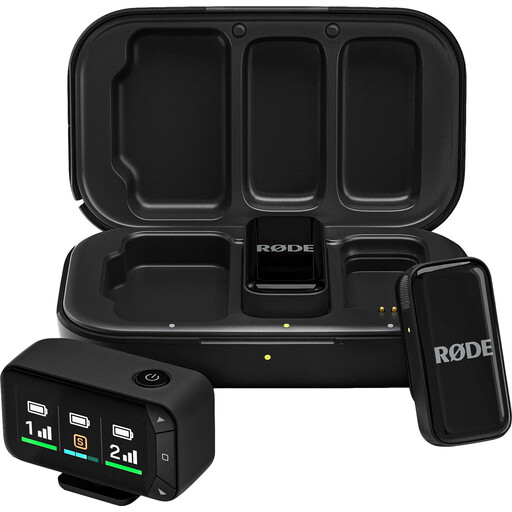
RØDE Wireless Micro Camera Kit, 2 microphones, camera and USB-C receivers, charging case, black
For an announcement with two speakers, the product information says both transmitters can record at the same time.
The set includes two transmitters, a camera receiver, a USB-C receiver and a charging case. According to the product information, the USB-C receiver can also be used as a USB audio device with a computer.
View product at Joybuy
 No image available
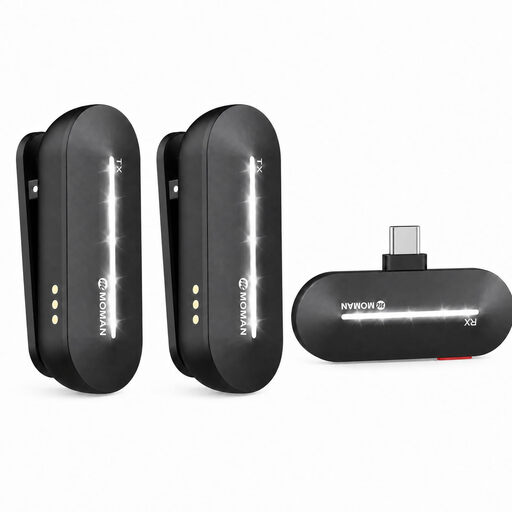
Moman M1CXT wireless lavalier microphone, USB-C, 2TX+1RX
This set is suitable for USB-C recording with two transmitters; the product description mentions uses including presentations and interviews.
The description lists real-time monitoring and a range of up to 150 m in open areas.
View product at Joybuy
 No image available
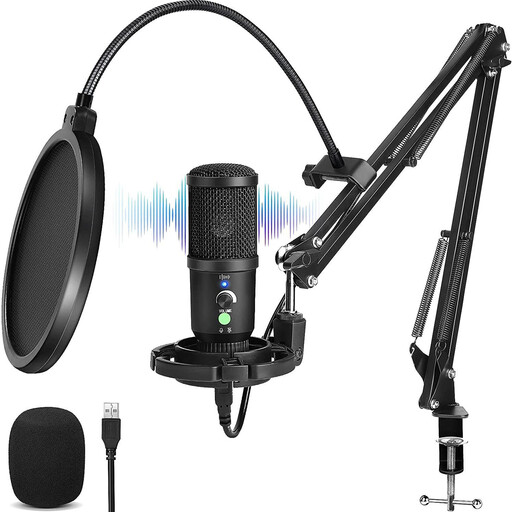
USB condenser microphone, cardioid
The product description mentions vocal recording and monitoring through a headphone output.
It also lists a gain control, mute button, pop filter and adjustable boom arm stand.
View product at Joybuy
 No image available
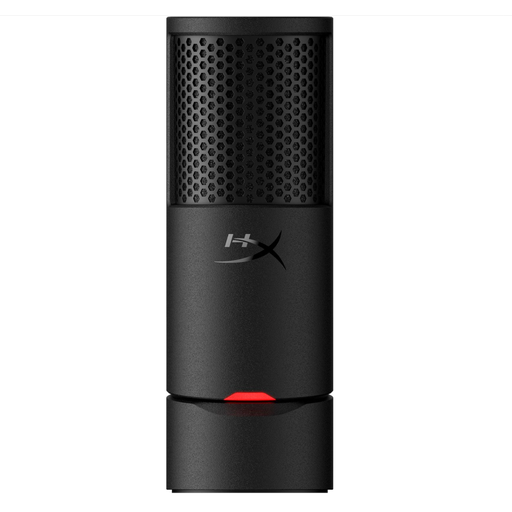
HyperX SoloCast 2, USB gaming microphone, black
The product title describes a USB microphone with a cardioid polar pattern.
The product information lists a built-in pop filter, shock mount and mute control.
View product at Joybuy
 No image available
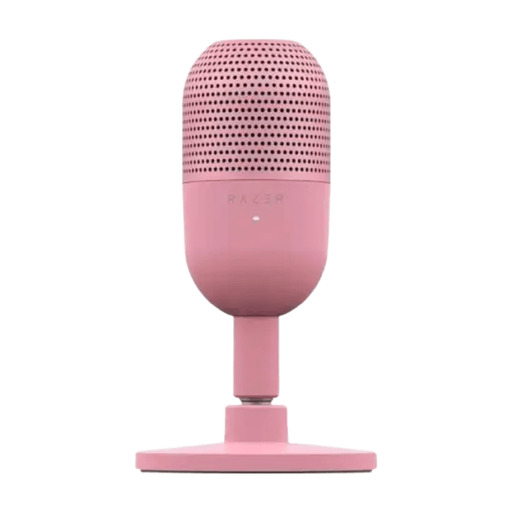
Razer Seiren V3 Mini Quartz, USB microphone
The product title describes a supercardioid polar pattern for USB recording.
The product information lists a tap-to-mute function.
View product at Joybuy
Frequently asked questions
How can you test whether an expressively delivered announcement distorts?
Record the loudest passage from the distance you intend to use and check the recording meter. Audacity recommends a maximum peak of around −6 dB; this is recording advice, not a legal requirement. Then listen back to the full script.
Can a USB microphone replace a required evacuation alarm system?
No. A microphone used to record a file is not itself an evacuation alarm system. Whether a building needs such a system depends on the building and the applicable Bbl rules. The Information Point for the Living Environment sets out requirements for evacuation alarm systems in new buildings under NEN 2575; have the use of a recording in an alarm system assessed separately.
Can a cardioid microphone make a reverberant room suitable for a safety announcement?
Not on its own. Shure explains that a microphone can’t improve a room’s acoustics. Try a quiet location and a suitable distance from the microphone, then assess how clear the recording is through the playback system you intend to use.
Can you use someone else’s voice or existing music in the recording?
According to the Dutch Data Protection Authority, a recording that makes someone identifiable may contain personal data; processing it requires an applicable legal basis under the GDPR. Consent is one possible legal basis. For copyrighted music or text, the Dutch government says you need the creator’s permission, subject to any applicable exceptions.


