What should you look for?
If clear speech matters most in a reverberant room, first test a dynamic USB microphone at close range. Only choose a condenser model after making a test recording at the distance you plan to use for your monologue.
Dynamic USB microphone at close range
Suitable when: you can maintain roughly the same short speaking distance throughout the monologue and clear speech is your priority.
Bear in mind: speaking close to the microphone calls for a suitable stand or arm and a consistent speaking position; it won’t remove room reverberation on its own.
Cardioid USB condenser microphone
Suitable when: you want to assess vocal detail and room sound together in a quieter or more controlled setup.
Bear in mind: make a test recording at your intended distance; a cardioid polar pattern won’t eliminate room reflections either.
| Concern |
What to look for |
Who is this important for? |
| Clear speech despite reverberation |
Check whether you can speak close to the microphone and whether it has a USB output that works with your recording device. |
If my words need to stay clear in a recording despite audible reflections, I want to be able to position the microphone close to me and point it in the right direction. Consumers who prioritise clear speech despite reverberation account for around 42%. |
| Vocal detail and room sound |
Make a test recording at your preferred distance and compare how much reflection remains audible. |
For a historical monologue, I want to preserve dynamics and atmosphere without losing clarity. Around 25% of consumers give vocal detail the highest priority in this context. |
| Recording and listening back directly |
Check whether the model has a headphone output and which cables or stands are included. |
If I’m recording on my own, I want to be able to listen back to my voice during a test and get started without a separate audio interface. Around 17% of consumers prioritise easy recording. |
| Re-use and expandability |
Check whether the exact model has both USB and XLR connections and whether your current USB setup is complete. |
I want to be able to record via USB now and possibly use XLR later. Around 16% of consumers prioritise expandability. |
USB microphones at Joybuy
This selection of Joybuy products includes USB microphones for speech recording, including cardioid and condenser models. Use a test recording to check how they sound in your room.
 Image unavailable
USB condenser microphone with cardioid pattern
A USB condenser microphone to consider if you want to assess vocal detail and the sound of the room with a test recording.
The product name specifies USB and a cardioid pattern; this doesn’t mean that room reverberation will disappear.
View at Joybuy
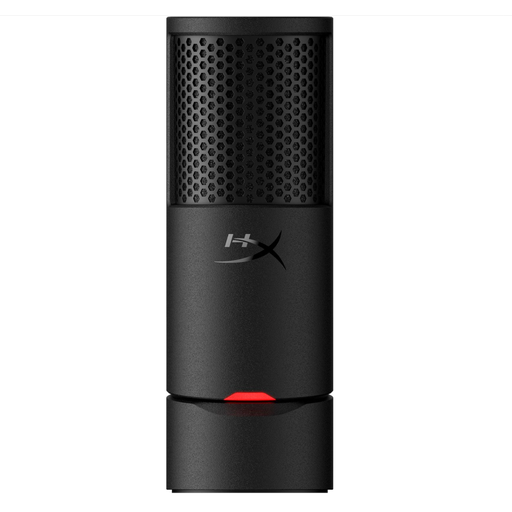 Image unavailable
HyperX SoloCast 2 USB Gaming Microphone, Black
A USB microphone to consider for a standalone speech-recording setup. First, make a test recording in the room where you plan to record your monologue.
The product name specifies USB and a cardioid pattern. That pattern doesn’t guarantee protection against room reverberation.
View at Joybuy
 Image unavailable
Razer Seiren V3 Mini Quartz USB microphone
A compact USB microphone to consider if you’re looking for a simple desk setup. Make a test recording to check that your voice remains clear in your room.
The product name specifies tap-to-mute. The stated USB connection makes this model suitable for comparison as a USB option.
View at Joybuy
Frequently asked questions
Can a more expensive USB microphone remove reverberation from your room?
No, not on its own. Shure explains that a microphone cannot improve a room’s acoustics. Make a test recording with the microphone closer to the speaker and check whether the words sound clearer. Digital processing is a model-specific feature and doesn’t prove that reflections will disappear.
How do you make a test recording with the RØDE PodMic USB?
For this specific model, RØDE recommends positioning the microphone around 5–10 cm from your mouth, with the top facing towards you. Then set the USB input level and listen back to a short recording. This distance isn’t general guidance for other models.
Why can you hear an echo when your computer plays the recording through speakers?
Sound from the speakers can feed back into the microphone, in addition to any room reverberation. RØDE Support recommends using headphones during a test to help distinguish feedback and echo caused by your setup.
What rights do you have when buying a microphone online in the Netherlands?
For many consumer purchases made at a distance, there is a 14-day cooling-off period, subject to statutory exceptions, according to the Dutch government. Products must also be of satisfactory quality; if there’s a fault, the retailer is your point of contact. There is no single fixed statutory warranty period for all products in the Netherlands.
What product regulations must a USB microphone meet in the Netherlands?
Electrical and electronic equipment sold in the Netherlands must comply with the applicable European rules. Business.gov.nl outlines requirements including electrical safety and electromagnetic compatibility and, where applicable, CE marking. This alone doesn’t mean that a specific version on offer has been checked individually.


