If you practise alone at a small desk, look for a compact directional USB microphone and check that you can position it comfortably. For two players sitting opposite each other, a switchable bidirectional pickup pattern is a better starting point. If you want to hear yourself as you speak, check for a headphone output and direct monitoring too. These recommendations are based on product specifications, not on measured comparisons of sound quality in a rehearsal room.
Who is this for?
Solo player in a small room
You want to listen back to your lines and articulation without using up much desk space. Product information from Razer, RØDE and Samson gives you useful details for comparing positioning, pickup patterns and USB connections.
Two players at a table
You want to record both roles, so you’ll arrange your seating to suit the pickup pattern rather than assuming a microphone aimed at one speaker will work for both. JBL describes different pattern settings for various seating positions.
Player who wants to listen back straight away
You want to hear yourself through wired headphones while recording, so you’ll check the monitoring function and the cables you need. RØDE, Samson and Audio-Technica list these connection or monitoring features for specific models.
What should you look for when choosing?
When practising Dutch theatre dialogue in a compact setup, the main things to consider are how you speak, where you sit and whether you want to listen back as you go.
| What to consider |
What should you look for? |
Who is this important for? |
| Clear solo recordings |
Check the pickup pattern and whether the stand or arm lets you maintain a consistent, close speaking position. |
If I practise alone in a room that isn’t completely quiet, I want to be able to assess my lines clearly. Around 33% of consumers prioritise clarity in solo recordings. |
| Compact, easy-to-store setup |
Consider how much room the microphone, stand and cable will take up. Also check that the supplied cable fits your computer’s port. |
When I use my desk for other things too, I want to be able to set up and put away the microphone quickly. Around 27% of consumers prioritise a compact design and easy storage. |
| Recording two roles |
Decide whether you’ll sit opposite or next to each other, then check that the specific model has the pickup pattern you need. |
When we practise dialogue together, I don’t want one player to be left outside the pickup area. Around 20% of consumers prioritise recording both roles. |
| Listening back in real time |
Check whether the model has a headphone output and direct monitoring, and look at the software settings too. |
When I want to check my pronunciation as I speak, I want to hear my voice through headphones straight away. Around 20% of consumers prioritise live self-monitoring. |
Things to bear in mind when buying
-
Choosing a small model without considering the whole setup
A compact microphone may still need room for a stand, arm and cable. The RØDE NT-USB Mini comes with a USB-C-to-USB-A cable; for a computer with USB-C only, the manufacturer specifies a USB-C-to-USB-C cable.
Before buying, check your computer’s ports, the cable supplied and where you plan to position the microphone.
-
Using a pickup pattern designed for one voice for every dialogue
JBL describes a bidirectional mode on the Quantum Stream Studio for players sitting opposite each other. A microphone with a pattern aimed at one voice won’t necessarily pick up both players from different directions.
First decide where the players will sit, then check which pattern settings the specific model offers.
-
Assuming every USB microphone has direct monitoring
A USB connection alone doesn’t tell you whether you can hear your voice through headphones while recording. Check the features of the specific model and bear the software settings in mind.
Look for both a headphone output and a clearly described direct monitoring function. For the relevant setup, RØDE recommends turning off software playback of the recording track while recording to prevent hearing the audio twice.
Brands to consider
RØDE
The NT-USB Mini is designed for a compact USB desk setup with direct monitoring.
- According to RØDE, this model has a removable stand, cardioid pickup, a built-in pop filter and a headphone output.
- The supplied cable is USB-C-to-USB-A. For a computer with USB-C only, RØDE specifies a separate USB-C-to-USB-C cable.
Razer
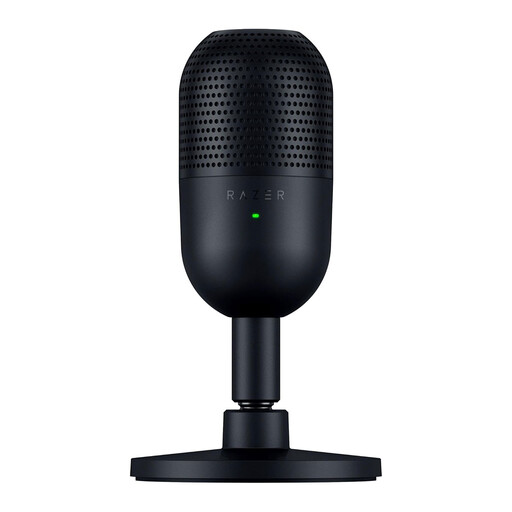
The Seiren V3 Mini is designed for a compact USB setup with one speaker.
- Razer lists a supercardioid pickup pattern, a tilting stand and tap-to-mute controls for this model.
- A pickup pattern aimed at one voice doesn’t necessarily mean it will record two players clearly from different directions.
JBL
The Quantum Stream Talk is designed for one voice, while the Quantum Stream Studio offers a choice of patterns for different seating positions.
- According to JBL, the Talk has one supercardioid mode and headphone controls. The Studio has four selectable patterns, including bidirectional.
- The Studio’s extra pattern options need to suit the space available on your table. JBL describes use cases; this isn’t an independent comparison of sound quality.
Samson
The Q2U is designed for close-up solo recording when both USB and the option of an XLR connection are useful.
- Samson lists a dynamic cardioid microphone with USB and XLR, direct monitoring, a windscreen and a desktop stand.
- To use the XLR connection, you’ll need a compatible input. The extra output has little practical use if you only practise via USB.
Audio-Technica
According to the manufacturer, the ATR2100x-USB combines a handheld microphone design with USB recording and a separate XLR output.
- Audio-Technica lists direct headphone monitoring, two types of USB cable, an XLR cable and a folding desktop stand for this model.
- The XLR output requires a suitable input and adds little if you only want to practise via USB.
USB microphones and microphone systems at Joybuy
This selection includes USB microphones for solo practice and a USB-C lavalier setup with two transmitters.
 No image available
Razer Seiren V3 Mini - Black
Suitable for solo practice at a desk; the product description highlights its compact size.
USB microphone with a supercardioid pickup pattern and tap-to-mute controls.
View at Joybuy
 No image available
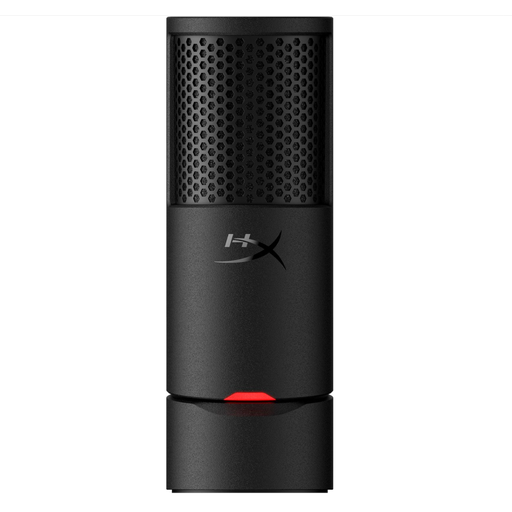
HyperX SoloCast 2
The product description mentions a compact, adjustable stand for desktop use.
USB microphone with cardioid pickup and a mute button; the title specifies the colour Black.
View at Joybuy
 No image available
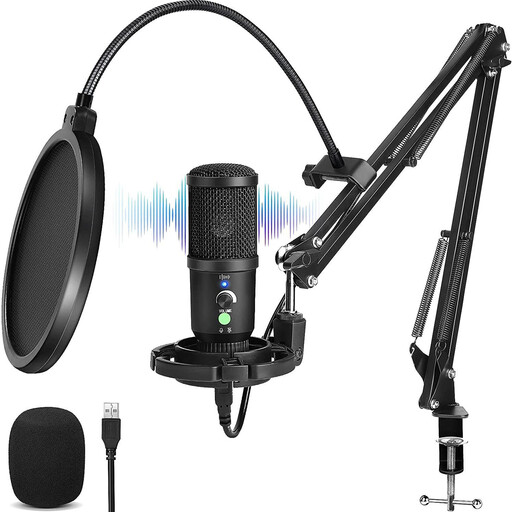
USB condenser microphone with cardioid pattern
The product description mentions a headphone output for direct monitoring while recording.
USB connection, cardioid pickup pattern, gain control and mute function.
View at Joybuy
 No image available
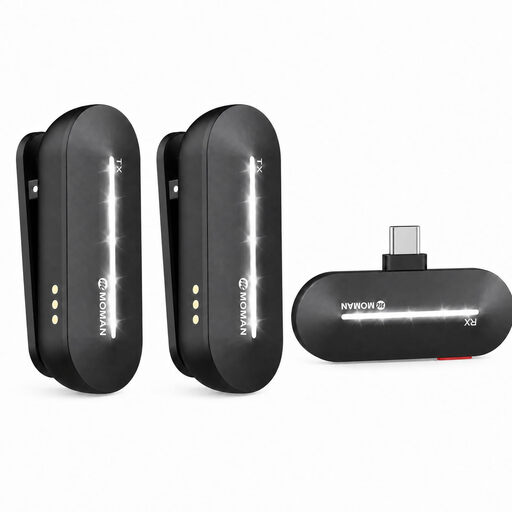
Moman M1CXT Wireless Lavalier Microphone, USB-C, 2TX+1RX
The product name specifies two transmitters and one receiver for a USB-C setup; check that the receiver is compatible with your recording device.
Wireless lavalier system with a USB-C connection.
View at Joybuy
Frequently asked questions
Can I record two players sitting opposite each other with one directional USB microphone?
Not necessarily. Razer describes the Seiren V3 Mini, and JBL the Quantum Stream Talk, as models designed for one voice. For players sitting opposite each other, JBL specifically recommends the bidirectional mode on the Quantum Stream Studio. Try positioning it at the distance you’ll actually be speaking from.
How can I avoid an echo when monitoring my voice through the microphone?
For direct monitoring with the USB microphone setup described, RØDE recommends turning off software playback of the recording track while recording. Turn it back on afterwards to listen to your recording.
What are my rights if a microphone bought online disappoints or breaks too soon?
For an online consumer purchase in the Netherlands, you generally have a 14-day cooling-off period after delivery, subject to legal exceptions. Separately, a product must meet what you could reasonably expect under normal use. ACM ConsuWijzer states that if a product is faulty, the seller must provide an appropriate remedy free of charge; a manufacturer’s guarantee does not replace your statutory rights.
Does a CE logo mean a USB microphone has been approved for recording quality?
No. The Netherlands Enterprise Agency describes CE as a conformity mark for applicable EU requirements, not as a quality mark or guarantee of safety. The rules that apply depend on the device; the mark does not assess how clearly it records theatre dialogue.


