Who is this guide for?

Solo performer who listens back to their lines

You rehearse in one fixed position and want to hear word endings, articulation and changes in tempo. The distance from the microphone and the direction you speak in are important considerations, as RØDE and Shure also explain.

Performer in a reverberant rehearsal room

You can position the microphone close by, but test recordings pick up reflections or other room noise. Shure emphasises that a microphone cannot effectively separate direct speech from reflected sound.

Two performers at one rehearsal table

You want to record two voices from different directions without having to move the fixed setup each time. The question is how much room noise you can tolerate; Logitech describes the Yeti Nano as having both cardioid and omnidirectional settings.

What should you look for when choosing?

Directional USB condenser microphone

Suitable for: one performer speaking close to a fixed desk or boom-arm setup. RØDE and Audio-Technica describe cardioid models with desk stands and headphone outputs.

Trade-off: a second performer positioned away from the front may be recorded less evenly; a directional pattern does not eliminate room reverberation.

Dynamic USB microphone for close-up recording

Suitable for: one performer who can stay close to the microphone while recording. Samson describes the Q2U as a dynamic cardioid microphone with USB and an included desk stand.

Trade-off: if performers stand further away or often change position, make a test recording from where they will actually be; reflections will still depend on distance and the room.

Switchable USB microphone for solo and duo rehearsals

Suitable for: alternating between solo and group performances in the same setup. Logitech describes the Yeti Nano as having cardioid and omnidirectional settings.

Trade-off: the omnidirectional setting picks up sound from all around, including room noise. Test both settings with the performers in their usual positions.

Compact directional USB microphone with mute button

Suitable for: a small, fixed desk setup where you need to mute quickly. Razer lists a supercardioid pattern and tap-to-mute for the Seiren V3 Mini.

Trade-off: a narrowly focused pickup pattern means you need to pay attention to the microphone’s orientation if you turn to the side while performing; check the specific model and accessories.

What to consider What to look for when buying Who is this most important for?
Clarity of solo lines Check the front and pickup pattern, the position of the stand and a test recording at your intended speaking distance. If I speak alone in one fixed position, I want to hear my words and performance choices clearly when I listen back. Around 33% of consumers prioritise clarity for solo lines.
Room sound and background noise Record the same lines from your planned position and listen for reverberation; check whether you can position the microphone directionally. In a room with noticeable reflections, I want to know how my voice sounds from the place where I actually rehearse. Around 27% of consumers give reducing room sound and background noise top priority.
Two voices with one microphone Check whether the exact model can switch between pickup patterns, and compare both voices from their performance positions. If two of us rehearse at the same table, I want to record both voices without having to move the setup each time. Around 20% of consumers prioritise recording two performers.
Setup and instant playback Check the included cable, connection to your computer, stand and whether it has a headphone output. For a fixed rehearsal spot, I want to know in advance how to connect the microphone and listen back to my recording. Around 20% of consumers give ease of setup and live monitoring top priority.

Pitfalls to avoid

  • Confusing a directional pattern with eliminating room reverberation

    Even a directional microphone cannot remove reflections from a recording by itself. An unsuitable distance or orientation can still affect what you hear on playback.

    First, record a short scene from your planned position and listen specifically for word endings and reflections.

    Allow time to adjust the fixed microphone position or the room.

  • Relying on a directional solo microphone alone for a duo

    The second performer may be outside the microphone’s sensitive front area. A pattern that picks up sound from all around may capture more room noise instead.

    Compare the voices from their actual performance positions, and only choose a switchable pattern if its trade-offs suit the room.

  • Comparing the microphone body alone

    Connections and included accessories vary by model and version. As a result, the setup may work differently from what you expect based on the microphone alone.

    Before buying, check the exact contents of the box, connections and components you need for your setup and playback preferences.

Brands to consider

RØDE

RØDE describes the NT-USB Mini as a compact cardioid USB condenser microphone for uses including dialogue. It comes with a removable magnetic desk stand, built-in pop filter and headphone output.

  • The directional pickup and desk stand are well suited to solo lines delivered from one fixed position.
  • The performer needs to stay in front of the microphone; its pickup pattern will not eliminate room reverberation.

Audio-Technica

Audio-Technica describes the ATR2500x-USB as a side-address cardioid USB condenser microphone with a desk stand and headphone output.

  • The manufacturer lists USB-C to USB-C and USB-C to USB-A cables.
  • Check which version and cables are included; a high maximum sample rate does not, by itself, guarantee clearer speech in a reverberant room.

Samson

Samson describes the Q2U as a dynamic cardioid microphone with USB and XLR connections, a headphone output and an included desk stand.

  • The listed connections and desk stand suit a setup for recording solo lines at close range.
  • Samson’s claim about use in untreated rooms is no guarantee against reverberation; test the recording if you are standing further away from the microphone.

Logitech G

According to Logitech G, the Yeti Nano offers both cardioid and omnidirectional settings, for recording from the front or all around the microphone.

  • The different settings are useful if you alternate between solo rehearsals and practising with a second performer.
  • The omnidirectional setting also picks up room noise. Logitech G says G HUB is required for the software effects mentioned; software is no substitute for suitable positioning.

Razer

Razer describes the Seiren V3 Mini as a compact USB condenser microphone with a supercardioid pattern and tap-to-mute.

  • Its compact size and mute control make it a useful option for a small, fixed desk setup.
  • A narrowly focused pickup pattern is not designed to record performers evenly from all around one microphone; pay attention to its orientation while performing.

Products available at Joybuy

This selection includes fixed USB microphones and wireless lavalier microphones for recording voices. For each model, check that the connection and wearing style suit your fixed rehearsal spot and the recording of solo or duo lines.
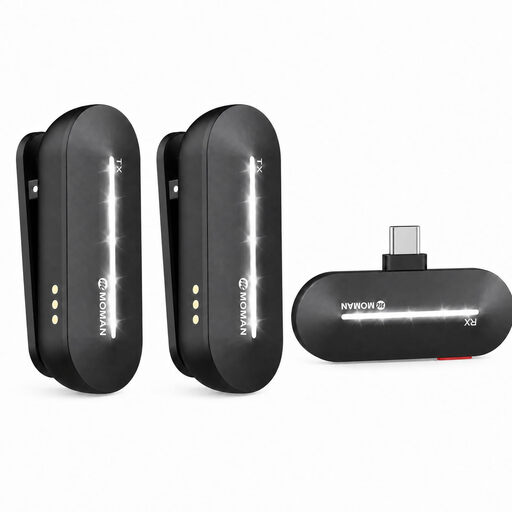
Moman M1CXT wireless lavalier microphone with USB-C

Moman M1CXT wireless lavalier microphone, USB-C, 2TX+1RX

A wireless lavalier setup to consider if two performers want more freedom to move than they would have with a single fixed desk microphone.

The product description lists two transmitters and one receiver (2TX+1RX), omnidirectional microphones and a monitoring port on the receiver. Check that the USB-C connection is compatible with your recording device.

View at Joybuy
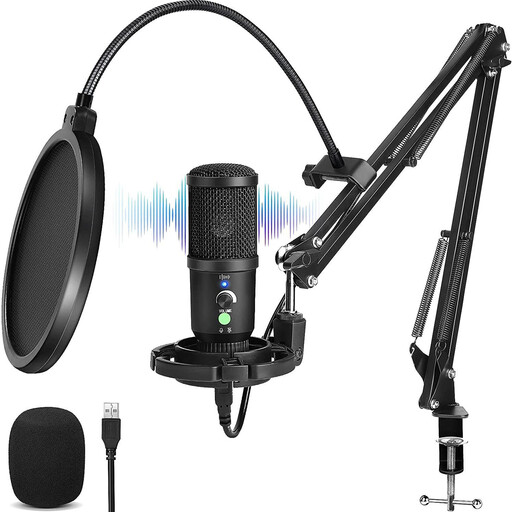
Cardioid USB condenser microphone with boom arm stand

Cardioid USB condenser microphone with boom arm stand

A directional desk or boom-arm setup could suit solo lines delivered from one fixed position, as long as the performer stays in front of the microphone.

The product description lists cardioid pickup, a boom arm stand and headphone monitoring. Check the connection to your computer and which components are included.

View at Joybuy
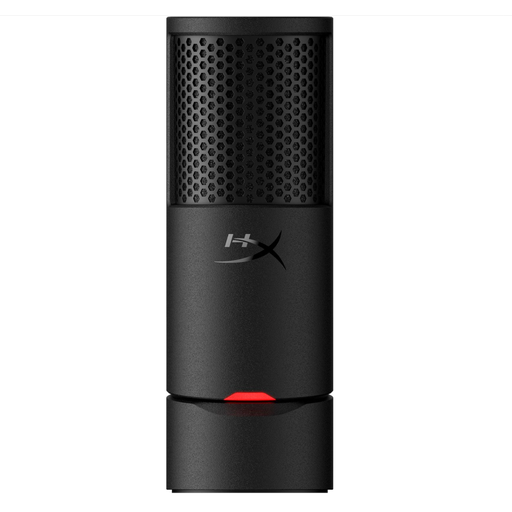
HyperX SoloCast 2 cardioid USB microphone, black

HyperX SoloCast 2 cardioid USB microphone, black

Its cardioid pickup makes this model worth comparing for solo lines when the performer stays at a fixed desk position.

The product description lists a mute control, built-in pop filter, shock absorption and a compact, adjustable stand with a stable base. Check that the setup gives you your preferred speaking height.

View at Joybuy
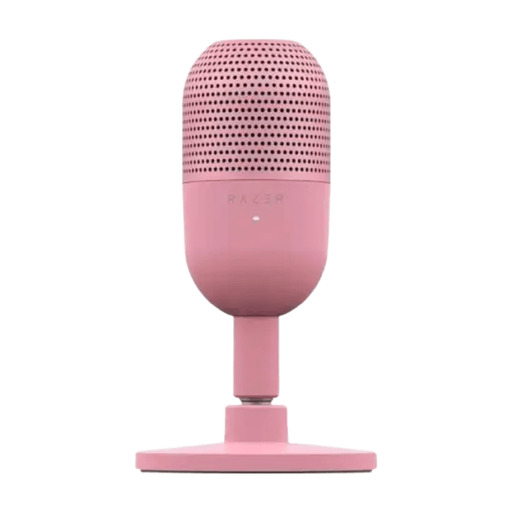
Razer Seiren V3 Mini Quartz compact USB microphone

Razer Seiren V3 Mini Quartz

A compact, directional USB microphone to compare for solo lines delivered from one fixed desk position.

The product description lists a supercardioid pattern and tap-to-mute. Position the microphone carefully if you turn to the side during a scene.

View at Joybuy
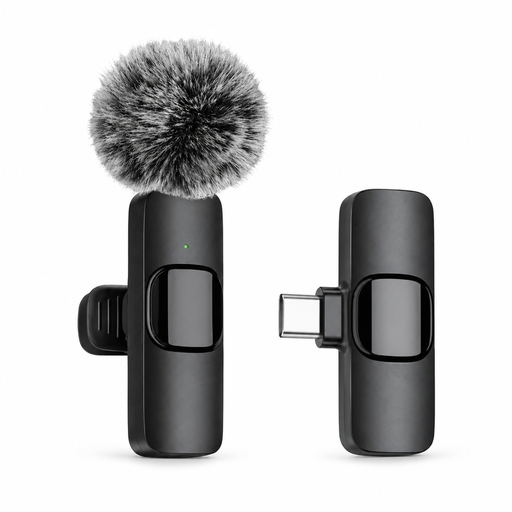
Verbex K9-Black wireless mini lavalier microphone with Type-C

Verbex K9-Black wireless mini lavalier microphone, Type-C

A wireless lavalier is a different setup from a fixed desk microphone; consider this model only if a wearable microphone suits your rehearsal.

The product name lists a Type-C connection and recording use. Check the connection and intended positioning for your recording device and scene.

View at Joybuy

Frequently asked questions

Can you put a microphone at the back of a reverberant rehearsal room to pick up all the lines?

No, increasing the distance will not solve reverberation. Shure explains that a microphone cannot effectively separate direct speech from reflections; make a test recording from the planned distance and first assess the position and the room.

How should you position a directional USB microphone?

Point the front towards the performer and check the manual to see which side is the front on your model. Shure describes a directional pickup area at the front; make a short recording from your usual rehearsal spot and listen back to it.

Do you need extra recording equipment to record on a computer?

Not necessarily: according to their manufacturers, the USB models mentioned are designed to connect to a compatible computer. Check the cable and included stand for each version; you will need headphones if you want to monitor the recording.

What are your rights if a microphone bought online is unsuitable or faulty?

ACM ConsuWijzer says that online purchases generally come with a statutory cooling-off period of up to 14 days after delivery, subject to exceptions. Your statutory guarantee is separate from any manufacturer’s guarantee: if a product is faulty, the seller must put things right free of charge, according to ACM ConsuWijzer.

Can you share a recording of a protected Dutch play script?

Do not assume you are free to share the recording. The Dutch government distinguishes between making a copy for personal use and distributing or making copyrighted work available to the public; obtain permission before sharing your recording.
