To record the whole band as a reminder, choose a stereo microphone set up securely and listen to a test recording from the spot you have in mind. For a single vocal or instrument, a directional USB microphone is better suited to that focus, but it won’t automatically capture the sound of the whole band. If you want to record without a computer, check that your chosen model can also record on its own. For loud rehearsals, bear the specified sound pressure limit in mind.
Who is this choice relevant for?
Band member who wants to capture the whole rehearsal
You want to set up a microphone, keep playing and listen back to arrangements and missed cues later. Stereo playback and placement matter more than isolating a vocal; Shure and Zoom describe stereo recording options.
Player in a loud rehearsal room
You want to assess drum and amplifier peaks without overlooking a model-specific sound pressure limit or audible distortion. Zoom specifies a maximum of 120 dB SPL for the H1essential’s built-in microphones.
Songwriter who mainly wants to capture one part
You want to record vocals or one instrument with focus, and check what the microphone is picking up as you play. Audio-Technica and RØDE describe directional USB microphones with headphone monitoring.
What should you look for in a USB microphone for rehearsals?
Stereo USB microphone
Best for: you want to hear the band and the spatial balance as a whole, using a compatible connected device.
Trade-off: stereo won’t give you separately adjustable instrument tracks; placement and the room still have an impact.
Directional USB microphone
Best for: a vocal line or one instrument matters more than an even recording of the whole band.
Trade-off: a cardioid polar pattern won’t automatically make a reverberant room suitable for recording the whole band.
Standalone recorder with USB microphone function
Best for: you sometimes want to record without a computer and use the recorder as a USB microphone at other times.
Trade-off: check the required memory card, power supply and setup; any specified sound pressure limit still applies.
| What to consider |
What should you check? |
Who is this important for? |
| Band sound and placement |
Check the stereo or mono modes and stand mounting; make a test recording where you’ll be playing. |
If I want to keep playing and listen back to the band balance later, microphone placement matters. Around 33% of consumers prioritise band balance and hands-free placement. |
| Loud sound sources |
Check the maximum sound pressure level for the exact model and listen back to the loudest section. |
With loud drums or amplifiers, I want to know whether the recording will remain usable where I play. Around 27% of consumers say loud peaks are their main concern. |
| Recording without a computer |
Check whether the model can record on its own and what storage and power it needs. |
If I want to start recording without a connected computer or phone, the recording needs to be saved without that connection. Around 20% of consumers prioritise standalone recording. |
| Focusing on one vocal or instrument |
Check the recording direction, mounting and headphone monitoring; test it from the distance you’ll use. |
When one vocal part or instrument is the main focus, I want to be able to capture that source clearly. Around 20% of consumers choose to focus on one source rather than record the band evenly. |
Common buying mistakes
-
Assuming a wide recording pattern will solve reverberation
The balance between direct sound and reflections also depends on the distance and the room. So a stereo mode won’t automatically make a reverberant rehearsal room sound clear.
Test the microphone in the spot you intend to use before settling on your setup. If necessary, try changing its position first and listen again.
-
Confusing 32-bit float with unlimited handling capacity
Zoom specifies a maximum of 120 dB SPL for the H1essential’s built-in microphones. The recording format doesn’t increase this model-specific sound pressure limit.
Check the limit for the exact model and listen back to a recording made during the loudest part of a rehearsal.
-
Assuming every USB microphone can record on its own
A USB microphone function and recording without a connected device are different features. Standalone recording may also require suitable storage and a power supply.
Decide in advance whether you’ll record via a computer or phone, or whether you also want to start recording without a host device. Then check what you’ll need for your chosen setup.
Brands to consider
Shure
The MV88+ Stereo USB is designed for adjustable mono and stereo recording via a compatible connected device.
- Shure lists several recording modes and headphone monitoring.
- Check device compatibility and placement; one position isn’t guaranteed to capture every part of the band evenly.
Zoom
The H1essential combines built-in X/Y stereo microphones, a standalone recorder and a USB microphone function.
- Zoom specifies a maximum of 120 dB SPL for the built-in microphones and describes simultaneous USB and card recording.
- Check the required memory card, power supply and setup. 32-bit float recording doesn’t increase the acoustic sound pressure limit.
Audio-Technica
The AT2020USB-X is an option if you mainly want to focus on one vocal or instrument.
- Audio-Technica lists a cardioid recording pattern, direct monitoring and an included desktop stand.
- This isn’t a stereo microphone for capturing a wide band sound.
RØDE
The NT-USB+ is a directional USB-C option for vocals or a chosen instrument.
- RØDE lists cardioid recording, headphone monitoring and a desktop stand.
- These model specifications don’t prove that it will record a whole group evenly.
Logitech
The Yeti is a USB microphone with several recording modes and on-microphone controls.
- Logitech’s Dutch product information lists a gain control and headphone output.
- Try the microphone in your own rehearsal room and listen back to the recording before relying on that setup.
Joybuy products for hands-free vocal and part recording
The products shown are mainly suited to hands-free vocal or individual part recording. Not all of them are designed to capture an entire rehearsal room in stereo, so check that the recording format suits what you want to hear back.
 No image available
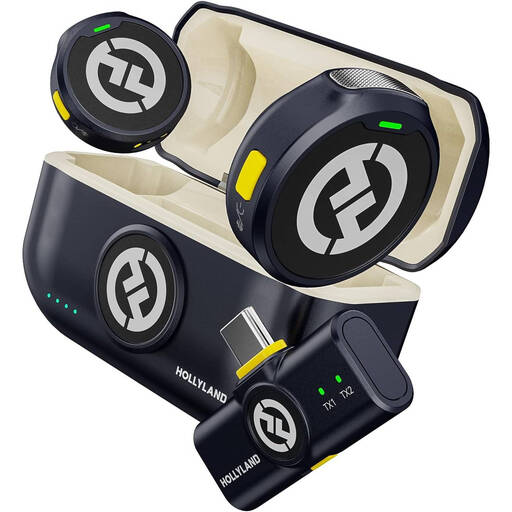
Lark M2 wireless USB-C microphone
An option if you want to record vocals hands-free while playing; check that the USB-C receiver connects to the device you want to record with.
View at Joybuy
 No image available
USB condenser microphone with cardioid pattern
Well suited to focused vocal recording when you want to monitor as you play; check that the boom arm and monitoring work with your setup.
The product name mentions a cardioid pattern and zero-latency monitoring.
View at Joybuy
 No image available
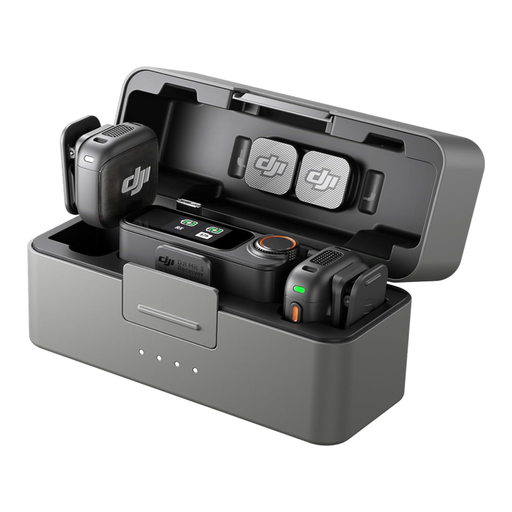
DJI Mic 3: 2 TX + 1 RX + Charging Case
Worth considering if you want to record two separate vocals or parts; before buying, check that the described computer connection works with your recording device.
The product name lists two transmitters, one receiver and a charging case.
View at Joybuy
 No image available
Razer Seiren V3 Mini Quartz USB microphone
A compact USB option for hands-free recording of a vocal-focused part; check whether a fixed desktop setup suits where you play.
The product name mentions a tap-to-mute function.
View at Joybuy
Frequently asked questions
Do I always need a computer to use a USB microphone?
The USB microphone function requires a compatible connected recording device. If you also want to record without that kind of connection, choose a recorder that can record on its own. Zoom describes the H1essential as supporting both memory card recording and use as a USB microphone.
Where should I put the microphone before rehearsal starts?
Set up the microphone securely and listen to a short test recording from that exact spot. Shure explains how placement affects the balance between direct sound and reflections; Zoom recommends using a stand with the H1essential rather than placing the recorder directly on a table.
Does 32-bit float prevent all distortion from loud drums?
No. Zoom lists 32-bit float recording for the H1essential, but also specifies a maximum of 120 dB SPL for the built-in microphones. So check the sound pressure limit too, and listen to a test recording made in your rehearsal space.
Is a directional USB microphone suitable for recording the whole band?
A directional microphone is best suited to situations where one vocal or instrument takes priority. A stereo microphone is a different option for recording the whole group; test the placement, as a directional pattern won’t automatically eliminate reverberation.
Can I share a rehearsal recording without permission?
Not necessarily. The Dutch Government (Rijksoverheid) says that a private copy of copyright-protected music for personal use must not be distributed or made public. If you process identifiable personal data for purposes beyond purely personal or household use, you may also need a lawful basis under the GDPR; discuss sharing with everyone involved first.


