For a quiet room and a voice with plenty of nuance, a USB condenser microphone with headphone monitoring and easy-to-reach gain or mix controls is a good fit. If you speak close to the microphone in a less quiet space, consider a dynamic USB model too. Neither option will remove kitchen noise on its own: make a test recording at your intended distance, using both your quietest and loudest lines, and check the connection.
Who is this advice for?
Narrators who want to preserve vocal nuance
Do you record your recipe script in a quiet room and want to listen back to soft instructions and enthusiastic passages so you can adjust them? Information from RØDE, Sennheiser and Shure can help you assess monitoring and microphone placement.
Recording near kitchen noise
If ventilation, appliances or other sounds are audible in your recording, pay attention to how close you are to the microphone and where you place it. Shure explains what its noise function can and cannot do when dealing with continuous noise.
Narrators with wide volume variations
If you alternate emphatic exclamations with calm explanations, level control and listening back to your recording are important considerations. Elgato and Shure describe controls for varying vocal levels on specific models.
What should you look for when buying?
Start by choosing a microphone that suits your recording environment and speaking style. Then check the controls and what you need for a complete setup.
| Consideration |
What to look for |
Who is this important for? |
| Vocal nuance and monitoring |
Check for a headphone output, direct monitoring and easy-to-reach gain or mix controls. |
If I want to assess soft instructions and lively lines as I record, I’ll focus on monitoring and controls. Around 31% of consumers put vocal nuance first. |
| Background noise |
Check whether you can position the microphone close to you and point it away from the distracting sound source. |
If I’m recording near ventilation or kitchen appliances, I want my voice to come through clearly in the recording. Around 25% of consumers put background noise first. |
| Varying speaking volume |
Check what gain controls or automatic level functions are available, and test your loudest line too. |
When I’m recording both calm explanations and loud exclamations, I want to hear how both sound beforehand and adjust the level if needed. Around 25% of consumers put controlling volume peaks first. |
| Complete setup |
Check which cable and stand are included, and whether the connection is compatible with your recording device. |
If I want to get started without too much research, having a suitable cable and a practical stand matters. Around 19% of consumers put ease of setup first. |
Buying pitfalls
-
Assuming noise reduction will remove all kitchen sounds
Shure says the MV7+ noise function can tackle continuous sounds, but it does not remove individual clicks or other voices.
Make a test recording with the sounds you get in your space, and position the microphone so your voice is picked up relatively strongly.
You may spend extra time recording again or looking for a quieter place.
-
Assuming a USB connection means you have a complete, compatible setup
The included cable and stand vary by model and package. RØDE lists a USB-C-to-USB-A cable with the NT-USB Mini; the listed box contents for the Shure MV7+ sold on its own do not include a stand.
For the exact version, check your device’s port, the included cable and your preferred microphone position.
You may need a different cable, adapter or stand for your setup.
-
Using automatic level control without testing a loud line
Automatic functions are no substitute for listening back to your own recording. A quiet test line won’t show you how an emphatic exclamation will sound.
Record both your quietest and loudest expected lines at your intended speaking distance, then check the result before recording the whole script.
Testing and possibly recording again may take extra preparation time.
Brands to consider
Shure
According to Shure, the MV7+ is a dynamic USB-C/XLR microphone for close-mic recording, with Auto Level and headphone monitoring.
- Shure describes the MV7+ as a model for close-mic use and lists Auto Level as a feature.
- According to Shure, the noise function does not remove individual clicks or other voices. The listed box contents for the MV7+ sold on its own do not include a stand.
Sennheiser
According to Sennheiser, the Profile USB Microphone has gain, mix and headphone volume controls on the microphone itself.
- The manufacturer lists a table stand and USB-C cable in the standard package.
- The Profile Streaming Set is a different version and includes an arm. Check which set you’re choosing and whether the connection is compatible.
Elgato
The Wave:3 MK.2 is a condenser microphone for computer recording, with adjustable audio processing.
- Elgato lists Auto Gain and Clipguard 2.0 for this model.
- These are features specified by the manufacturer, not a guarantee that every loud passage will sound good. Speak into the front of this side-address microphone, not the top.
RØDE
The NT-USB Mini is a compact USB condenser microphone with direct headphone monitoring.
- RØDE lists a detachable stand and an included USB-C-to-USB-A cable.
- If your device only has USB-C, check which cable you need before connecting the microphone.
HyperX
According to HyperX, the QuadCast 2 S is a USB condenser microphone with a stand and shock mount.
- HyperX lists four selectable recording patterns and RGB lighting for this model.
- For a solo narrator, extra patterns or lighting are mainly useful if you plan to use those features yourself.
USB microphones at Joybuy
These product options are designed for voice recording via USB, and include both desktop and wireless lavalier models. Check each model’s connection and the components you need for your setup.
 No image available
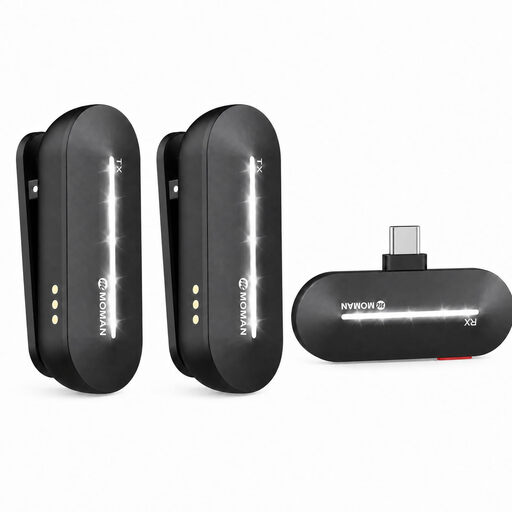
Moman M1CXT wireless lavalier microphone, USB-C
For voice recording with a compatible USB-C device; the product information describes a wireless lavalier system with a USB-C receiver.
The title lists 2TX+1RX and a range of 150m.
View at Joybuy
 No image available
USB condenser microphone with cardioid pattern
For desktop recording when you want to adjust the gain and monitor your voice through headphones.
The product description lists a cardioid pattern, gain control, latency-free headphone monitoring and an included boom arm stand.
View at Joybuy
 No image available
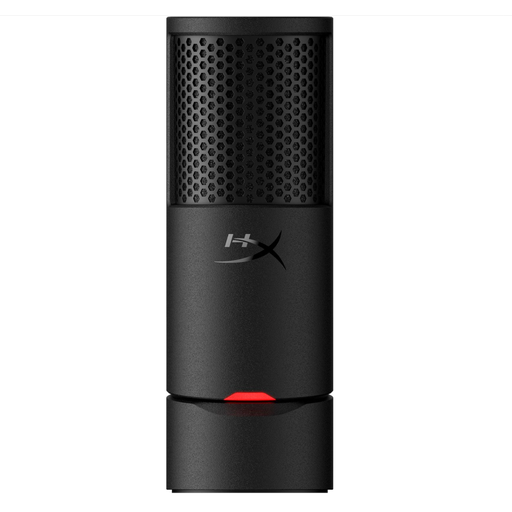
HyperX SoloCast 2 USB microphone, black
For USB desktop recording, with control via a mute button.
The product description lists a cardioid pattern, an integrated shock mount and pop filter, a sturdy stand and plug-and-play USB.
View at Joybuy
 No image available
Razer Seiren V3 Mini Quartz USB microphone
A compact USB microphone for voice recording, with tap-to-mute controls.
The product description lists a supercardioid pattern and USB plug-and-play.
View at Joybuy
 No image available
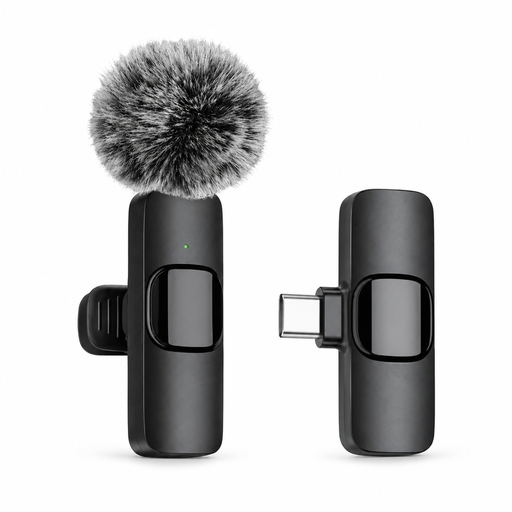
Verbex K9-Black wireless mini lavalier microphone, Type-C
For voice recording with a wireless lavalier microphone; check that the Type-C interface is compatible with your recording device.
The product title lists a Type-C interface.
View at Joybuy
Frequently asked questions
Should I record the narration while I’m cooking?
No, you don’t have to. If you mainly want to record your voice, you can record the script separately in a quieter room. If you do record near cooking sounds, try speaking closer to the microphone and point it away from the distracting source; this won’t guarantee a quiet recording.
How can I prevent distortion on an enthusiastic line?
First, record a test line using the loudest delivery you expect, check the input level and listen back. According to Elgato and Shure, Auto Gain or Auto Level can help with varying vocal levels, but be sure to check your own recording too.
What do I need besides a USB microphone?
You’ll need a suitable recording device, a compatible data cable and a stable place to position the microphone. For direct monitoring, you’ll need wired headphones if the microphone has a headphone output. Check what’s in the box: the standard Sennheiser Profile package lists a table stand, while the listed box contents for the Shure MV7+ sold on its own do not include a stand.
What are my rights when shopping online in the Netherlands?
When a consumer buys online, there is generally a statutory 14-day cooling-off period after delivery, with some exceptions. ACM ConsuWijzer also explains that you have a legal guarantee if a product, under normal use, does not do what you could reasonably expect; this is not automatically a fixed two-year period.
Can I assume a USB microphone complies with EU rules?
No, not just because of the product category or a mention on this page. The European Commission says CE marking is only mandatory for products covered by harmonised EU rules that specifically require it. The rules that apply to a particular model, and whether it complies with them, must be established for each product.


