
Soft-spoken home narrator
You record longer travel guide scripts in a quiet room and want to monitor your voice as you record. Sennheiser, Shure and RØDE describe models or features suited to voice-overs and direct monitoring.


For a soft-spoken narration, a USB condenser microphone is a sensible choice in a quiet room, provided you can position it well and adjust the input level. A dynamic USB model may work if you can speak close to the microphone, but Shure specifically recommends a short speaking distance with the MV7+ for a quiet voice. Either way, it’s important to make a test recording and pay attention to echo and background noise.
You record longer travel guide scripts in a quiet room and want to monitor your voice as you record. Sennheiser, Shure and RØDE describe models or features suited to voice-overs and direct monitoring.
You can speak close to the microphone, but you also have to contend with ventilation, other noises or room echo. Shure stresses that a directional pickup pattern won’t remove all background noise.
You record on different computers or while travelling, and want to check in advance that the cable, connection and microphone position will work in each location. For example, RØDE lists a USB-C-to-USB-A cable as included with the NT-USB Mini.
Suitable for: a relatively quiet room where you can position the microphone well and want to monitor your quiet voice as you record.
Bear in mind: a condenser microphone may also pick up sounds in the room; check whether you can adjust the input level, too.
Suitable for: a recording setup where you can consistently stay close to the microphone and want to reduce sounds from the sides or behind.
Bear in mind: Shure recommends using the MV7+ very close to your mouth for a quiet voice; its directional pickup pattern won’t remove all background noise.
| What to consider | What to look for | Who is this important for? |
|---|---|---|
| Voice clarity | Check whether you can adjust the input level and position the microphone close to your mouth. Make a test recording at your normal speaking volume. | If I want to record a soft-spoken narration clearly without constantly adjusting the level afterwards, voice clarity is my top concern. Around 36% of consumers prioritise this. |
| Echo and background noise | Test the microphone in the intended location and listen separately for your voice, room echo and unwanted noise. A directional pickup pattern doesn’t remove all noise. | If there’s noise or echo where I record, I want to know what I can improve by adjusting the position and speaking distance. Around 29% of consumers prioritise controlling room noise. |
| Monitoring while recording | Check for a headphone output and direct monitoring. Also check whether the microphone lets you adjust the input level; a headphone control won’t do this by itself. | For longer narration recordings, I want to be able to check for plosives, my position and the recorded level straight away. Around 21% of consumers make monitoring while recording their top priority. |
| Connection and positioning | Compare the included cable with the port on your computer or tablet, and check that the stand or arm allows you to achieve the speaking distance you want. | If I record in different locations, I want to be able to set up the microphone without connection problems. Around 14% of consumers prioritise connection and positioning. |
Shure says that a directional pickup pattern won’t completely remove sounds in the recording area, and digital noise processing can’t handle every type of noise.
Record a test clip where you plan to speak, then listen separately for your voice, room echo and unwanted noise.
An unsuitable recording location can mean extra time spent making adjustments or recording again.
Shure describes the MV7+ as having low sensitivity and recommends a very short speaking distance for a quiet voice.
Before buying, check that you can position the microphone comfortably close to your mouth.
Finding a comfortable, stable position may take extra time to set up.
For the RØDE NT-USB Mini, the manufacturer lists a USB-C-to-USB-A cable as included, and a different cable for a device with a USB-C input.
Compare the microphone connection and included cable with the port on your recording device.
You may need a different cable or adapter for some connections.
The MV7+ is a dynamic USB microphone with an additional XLR output, designed to be used close to the speaker.
The Profile USB is a cardioid USB condenser microphone with gain, mix and headphone volume controls, designed for uses including voice-overs.
The AT2020USB-X is a cardioid USB condenser microphone with a desk stand, headphone output and mix control.
The NT-USB Mini is a compact USB condenser microphone with a detachable desk stand and headphone output.
The Wave:3 MK.2 is a USB condenser microphone with a cardioid pickup pattern, built-in pop filter and digital recording controls.
These product picks are USB microphones for voice recording. For a soft-spoken narration, focus on positioning, the pickup pattern and the controls that suit your recording location.
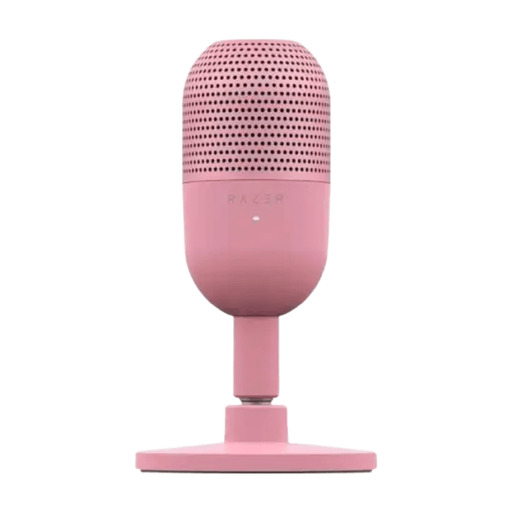 No image available
A compact USB microphone for anyone who wants an easy-to-reach mute function.
The product information lists a supercardioid pickup pattern and tap-to-mute controls.
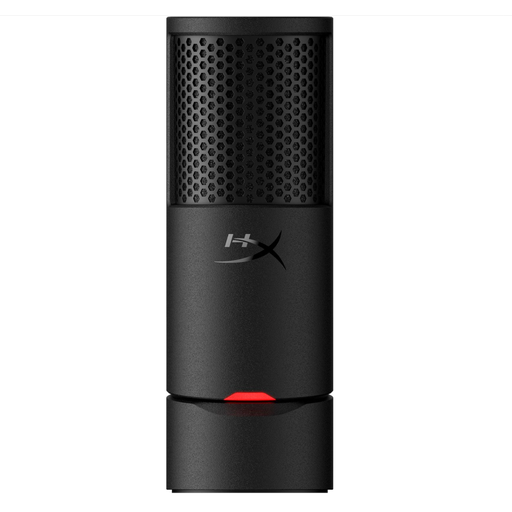 No image available
A USB microphone for anyone who wants to include a pop filter and adjustable stand in their desk recording setup.
The product information lists a cardioid pickup pattern, built-in pop filter, shock mount and adjustable stand. The included cable is USB-C-to-USB-A.
No. According to Shure, the MV7+ is designed for close-up use, and the level may be low if a quiet voice is recorded from further away. Choose this option if you can maintain a short speaking distance; in a quiet room, it’s also worth comparing a condenser microphone.
Point the front of a cardioid microphone towards your mouth, make a short test recording at your usual speaking volume, then listen for your voice, room echo and plosives. Next, select the microphone as the input device on your computer; RØDE describes this step for the NT-USB Mini.
Don’t count on it: according to Shure, a microphone can’t effectively separate direct voice from unwanted reflections. First adjust your speaking distance or recording location, then check the result with another test recording.
Compare the included cable with the ports on your recording device, and keep the instructions for the version you buy. According to the Netherlands Authority for Consumers and Markets, if a product is faulty, the seller must provide a solution; a manufacturer’s warranty does not replace your statutory rights.
According to the Netherlands Authority for Consumers and Markets, when you buy from a business online as a consumer, you usually have 14 days to change your mind, although some exceptions may apply. The authority also states that electronic devices placed on the EU market must have a CE marking. Check the information for the specific product and offer.