
Voice actor in an echoey room
If you record a single puppet voice at home and can stay close to a directional microphone, it’s worth considering how much room sound ends up in your recording. RØDE recommends close positioning for the PodMic USB.


In a noisy or echoey room, a directional dynamic USB microphone is often a better choice if you can speak close to it. In a quiet room, a directional condenser microphone may suit softer articulation. RØDE recommends speaking from around 5–10 cm away when using the PodMic USB. Record both soft and loud lines with each option while operating the puppet, then listen back through headphones.
If you record a single puppet voice at home and can stay close to a directional microphone, it’s worth considering how much room sound ends up in your recording. RØDE recommends close positioning for the PodMic USB.
If you switch between quiet lines and sudden exclamations in a single scene, you’ll want to keep an eye on the loudest passages. Elgato lists Auto Gain and Clipguard 2.0 as features of the Wave:3 MK.2.
If you record soft articulation in a quiet room, headphone monitoring and an easy-to-use mix control can help you listen as you record. Audio-Technica lists these features for the AT2020USB-X.
A good fit when: background noise or room echo is a concern and you can speak close to the microphone.
Bear in mind: you’ll need to stay close to the microphone while operating the puppet.
A good fit when: you want to assess soft articulation in a quiet room and can position the microphone carefully.
Bear in mind: product specifications don’t prove that a condenser microphone will sound more detailed with every voice; test it in your own room.
A good fit when: your voice quickly shifts from quiet to loud during a performance and you want help managing peaks in volume.
Bear in mind: automatic processing may not suit you if you prefer to control the dynamics yourself.
| What to consider | What to look for | Who is it most relevant to? |
|---|---|---|
| Room echo and background noise | Check the polar pattern and whether you can keep the microphone close to your mouth while performing with the puppet. | If your voice needs to stay clear in an echoey room while you operate the puppet, focus on how the recording sounds with your chosen positioning. Around 33% of consumers prioritise reducing room noise. |
| Sudden loud passages | Test the microphone with your loudest exclamation and check which level settings or processing options are available. | For scenes with laughter or a sudden exclamation, don’t rely on a test consisting only of a quiet line. Around 25% of consumers focus on these kinds of volume peaks. |
| Soft articulation and monitoring | Check whether it has a headphone output and useful mix or volume controls. | If quiet words need to remain clear, you’ll want to monitor your voice as you record. Around 25% of consumers give soft vocal details top priority. |
| Positioning while performing | Check which stand, arm and cable are included with the exact set, and whether they suit your workspace. | If the microphone mustn’t get in the way of your movements with the puppet, it’s worth considering how you can position it correctly. Around 17% of consumers focus on practical setup. |
The Audio-Technica AT2020USB-X’s stated 24-bit/96 kHz is a conversion specification. On its own, it doesn’t tell you how your voice will sound in your room.
Compare test recordings of both quiet and loud lines, and pay attention to microphone distance and positioning too.
Elgato documents differences in processing and specifications between the Wave:3 and the Wave:3 MK.2.
Check the full model name before assuming a feature is included with the microphone.
The Sennheiser Profile Streaming Set includes an arm; the standard Profile Set comes with a table stand.
Check what’s included in the exact bundle and whether the setup suits the place where you operate the puppet.
If you need an arm but it isn’t included in the set, you may need to find a separate positioning solution.
The PodMic USB is a dynamic USB and XLR microphone for close-miked speech. The NT-USB Mini is a different, more compact condenser model with a table stand.
The AT2020USB-X is a cardioid USB condenser microphone for anyone who wants to mix their voice with computer playback while recording.
The Wave:3 MK.2 is designed for creators who want to adjust level and voice processing on their USB microphone.
The Profile Streaming Set pairs a USB condenser microphone with an included arm for an adjustable desk setup.
The MV7+ is a dynamic USB microphone for close-miked speech.
These product picks are aimed at USB voice recording, with a focus on pickup patterns, monitoring and a practical desk setup.
 Image unavailable
A good fit if you want to monitor your voice as you record.
The product name specifies a cardioid pickup pattern and latency-free monitoring. The description mentions a gain control and an included arm, shock mount and pop filter.
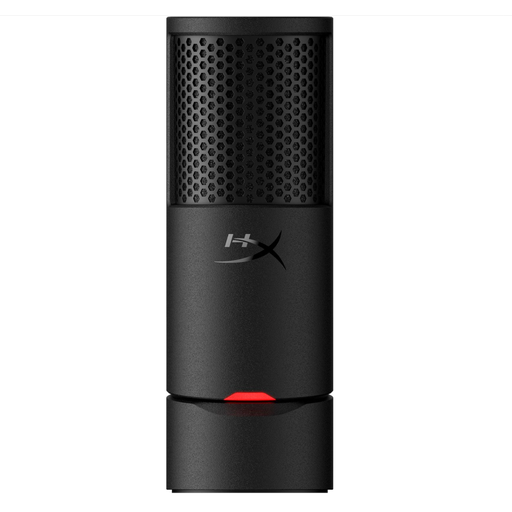 Image unavailable
A good fit if you’re looking for a cardioid USB microphone for a compact desk setup.
The product information lists a built-in pop filter and shock mount, a mute button with indicator, and a USB-C to USB-A connection. The stand can also be attached to stands or arms, according to the description.
 Image unavailable
A good fit if you’re looking for a small USB microphone that can be aimed at the speaker.
The product information lists a supercardioid pickup pattern, a compact footprint and tap-to-mute control.
In your own room, record both a quiet line and your loudest exclamation while operating the puppet. Adjust the position and input level if needed, then listen back. RØDE points out that positioning affects how much room sound you can hear.
That depends on the exact set and how you want to position it. RØDE says the PodMic USB comes with a pop filter; the Sennheiser Profile Streaming Set includes an arm, while the standard Profile Set comes with a table stand.
For your statutory guarantee, contact the seller. The Dutch government states that there is no fixed statutory guarantee period for all products in the Netherlands; what you can expect depends, among other things, on the product and the sales information.
Applicable European requirements apply to electrical and electronic equipment placed on the market. Ondernemersplein also explains manufacturers’ responsibilities for CE marking and an EU declaration of conformity. For a specific model, check the product documentation and sales information.
Not without permission. The Dutch government states that you need the creator’s permission to use copyright-protected text and music. Whether a particular character or voice is legally protected needs to be assessed separately.