At a shared desk, a microphone you can position close to your mouth is a sensible starting point, but a directional pickup pattern alone doesn’t guarantee a quiet recording. Then choose based on what you need: a dynamic model for focused voice recording, a compact model if space is limited, or direct headphone monitoring and controls if you often listen back to individual sounds. Make a test recording at your own workstation, and check the connection, stand and included cables before you buy.
Who is this choice relevant to?
Practising alongside other people
You record your own voice while other people are working or talking nearby. The microphone’s position and a test recording at your workstation will help you assess what makes it into the file. Audio-Technica describes the ATR2100x-USB as having a cardioid pickup pattern, while Shure describes the MV7+ as a microphone for close-up recording.
Listening back to your pronunciation
You compare short recordings and want to check your voice and recording level. RØDE describes direct headphone monitoring for the NT-USB Mini; Sennheiser lists a headphone output and controls for the Profile.
Working with limited desk space
You often set the microphone up, then put it away again. A compact setup, mute control and a cable that works with your device may all matter; RØDE and Razer describe compact desk-friendly models.
What should you look for when choosing?
A test recording in your own workspace is still important: Audio-Technica describes a cardioid pattern and Shure describes digital voice isolation, but these product features don’t show how much conversation at your desk will be picked up.
| What to consider |
What should you check? |
Who should prioritise this? |
| Other voices in the recording |
Check the pickup pattern and whether you can position the microphone close to your mouth; make a test recording with the usual background noise. |
If I’m speaking at a shared desk, I want to record my voice close up and hear first how much of other people’s voices gets picked up; around 36% of consumers put reducing background speech first. |
| Checking sound and recording level |
Check whether there’s a headphone output and whether you can adjust the recording level; listen back to the saved file too. |
When practising short sounds, I want to check my recording and level properly; around 29% of consumers give reliable sound monitoring top priority. |
| Desk space |
Check the dimensions, whether the stand is detachable and whether the setup will fit in the space you use. |
If I share a desk with others, I want to be able to put the microphone away easily after use; around 21% of consumers say limited desk space is their main concern. |
| Connection and cable |
Compare your device’s port with the included cable and check that your recording app recognises the microphone. |
If I want to get started with my own device without cable issues, I want to know in advance whether the connection will fit; around 14% of consumers prioritise easy connection. |
Common buying mistakes
-
Assuming a directional pickup pattern guarantees silence
A pickup pattern describes where a microphone picks up sound, but it doesn’t tell you how many voices near your desk will end up in the recording. Audio-Technica describes the ATR2100x-USB’s pickup pattern; this isn’t a measure of the sound environment at your workstation.
Point the microphone towards one speaker, move it closer if needed, and compare a test recording with the room’s usual activity.
-
Confusing the headphone mix with the saved recording
According to Sennheiser, you can mix microphone and computer audio in your headphones with the Sennheiser Profile. That listening balance doesn’t, by itself, tell you what the recording app saves.
Listen back to the actual saved practice clip before judging differences in sound.
-
Assuming every USB cable or version will fit
Cables and accessories vary between models and versions. For example, Sennheiser lists different contents for the Profile Set and Profile Streaming Set.
Compare your device’s port with the included cable, and check the exact set name and contents before you order.
Brands to consider
Audio-Technica
The ATR2100x-USB is a dynamic cardioid USB/XLR microphone for focused voice recording and headphone monitoring.
- Audio-Technica lists two USB cables and a folding desktop stand as included with the model.
- A pickup pattern doesn’t show how much conversation will be recorded in your shared workspace.
Shure
The MV7+ is a dynamic USB microphone with cardioid pickup and a digital processing path.
- Shure describes digital voice isolation and controls for adjusting the recording.
- Make a test recording to see whether the processing is suitable for comparing individual pronunciation sounds.
RØDE
The NT-USB Mini is a compact USB microphone with a detachable desktop stand and direct headphone monitoring.
- RØDE lists a built-in pop filter and an included USB-C-to-USB-A cable.
- Check that the included cable fits your device’s port.
Sennheiser
The Profile is a cardioid USB-C condenser microphone with controls for gain, mix, mute and headphone volume.
- Sennheiser lists a headphone output and desktop stand as included with the Profile Set.
- The contents differ from the Streaming Set with boom arm; check the exact set name.
Razer
The Seiren V3 Mini is a compact USB condenser microphone with tap-to-mute control.
- Razer describes its compact design and mute control; the white version is listed as supercardioid.
- These features don’t show how much background speech will be picked up in your setup.
USB microphones on Joybuy
These product picks are intended for voice recording at a shared desk and include USB microphones and a wireless USB-C lavalier option. Check each model’s connection and how you can position the microphone near your mouth.
 No image available
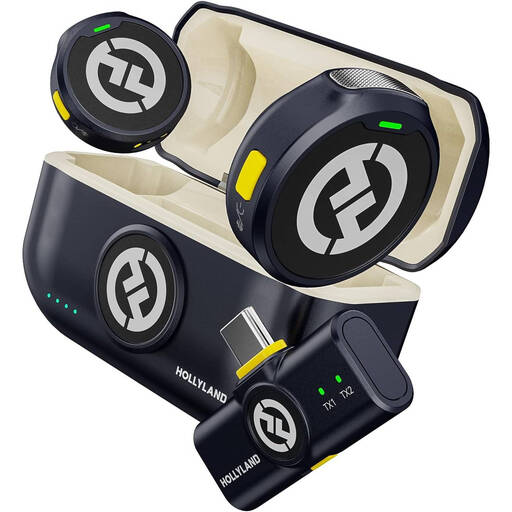
Lark M2 Wireless USB-C Microphone
A wireless lavalier option may suit you if you want to position the microphone close to your mouth; check that USB-C works with your device.
The product name lists a 300m range, noise cancellation and 30 hours of battery life.
Joybuy
 No image available
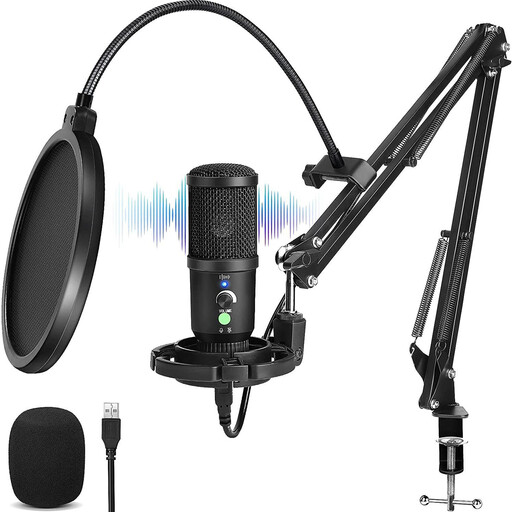
USB condenser microphone with cardioid pickup pattern
This option may suit you if you want to monitor your voice through headphones as you practise; check that the connections and controls work with your recording setup.
The product name lists a cardioid pickup pattern and zero-latency monitoring.
Joybuy
 No image available
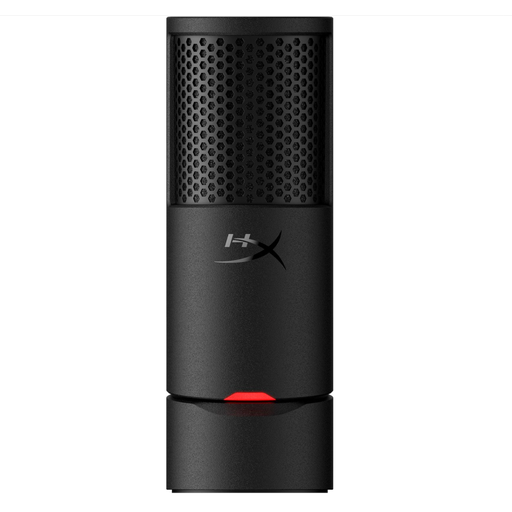
HyperX SoloCast 2 USB microphone, Black
A USB microphone with a cardioid pickup pattern may suit voice recording at your desk; check that the mute control and positioning work with your practice routine.
The product name lists a cardioid pickup pattern and the Black version.
Joybuy
 No image available
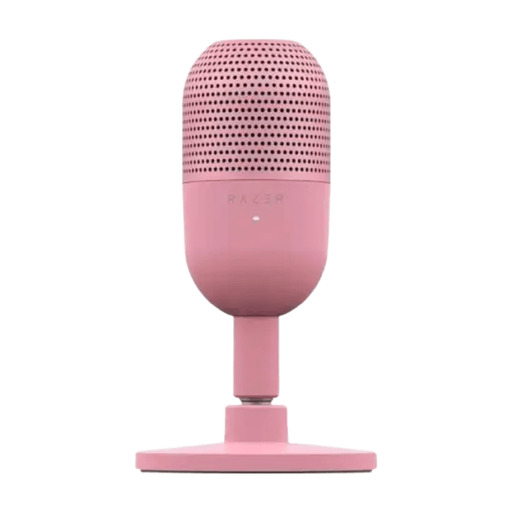
Razer Seiren V3 Mini, Quartz
This compact USB microphone may suit you if desk space is limited; check that its positioning and mute control work with the way you use it.
The product name lists an ultra-compact design and tap-to-mute.
Joybuy
Frequently asked questions
How can I check whether a recording is usable before doing a full practice session?
Record a short clip first and listen back to the saved file. Select the USB microphone as the input in your recording app, and test it while the room is being used as normal. If you use Audacity, its manual gives a peak of around −6 dB as a guideline for setting the level.
Can I listen to my voice through the microphone without noticeable delay?
It depends on the model. RØDE describes switchable direct monitoring for the NT-USB Mini, and Audio-Technica lists direct monitoring for the ATR2100x-USB. Connect headphones to the microphone and check the setting for your chosen model.
What if I’m not happy with a microphone I bought online, or it’s faulty?
For online purchases made by consumers in the Netherlands, a 14-day cooling-off period applies in many cases, with some exceptions. According to the Dutch government, there is no fixed statutory guarantee period for all products in the Netherlands. If a product is faulty, the seller is your point of contact for the statutory rights that apply to your situation.
Can I record other people’s voices at a shared desk?
It depends on the purpose, the circumstances and what you do with a recording in which people can be identified. The Dutch Data Protection Authority states that processing personal data requires a legal basis under the GDPR; consent is one possible basis, but it isn’t automatically the only one. Focus your practice recording on your own voice, and consider your workplace rules and any plans to share the recording separately before recording or distributing identifiable voices of others.


