Who is this choice relevant to?

Soft voice in an ordinary room

You want to record clear commentary where ventilation or room echo may be audible, and you can speak close to the microphone. Shure explains that a shorter distance from the microphone can make your voice stand out more against noise and reflections in the room.

Performer in a quiet room

You want to preserve differences in pronunciation and vocal tone, and you can keep the room quiet and position the microphone carefully.

Creator who monitors while recording

You switch between performing and commentary, and want to hear straight away whether soft words, breathing or plosive sounds are distracting.

What should you look for when choosing?

Dynamic USB microphone

Best for: softly spoken recordings made close to the microphone, especially if the room isn’t completely quiet. Shure describes the MV7+ as a dynamic USB microphone designed for close-mic use.

Bear in mind: positioning and speaking distance matter. Make a test recording to see whether automatic level control and the sound suit your delivery.

USB condenser microphone

Best for: a quiet recording space where you want to capture nuances in pronunciation and vocal tone. RØDE, Audio-Technica and Sennheiser describe condenser models with different control and monitoring features.

Bear in mind: Audio-Technica points out that a condenser microphone can also pick up subtle sounds in the room, so check your recording space first.

What to consider What should you check? Who is this important for?
Clarity Check whether you can position the microphone close to you and whether the stand allows it; make a test recording in the place you plan to use it. If I speak softly in a room with ventilation or echo, I want my words to be easy to understand. Around 36% of consumers give clarity against room noise their highest priority.
Vocal nuance Listen back to soft words and any unwanted room or mouth noises in a test recording. If I perform poetry in a quiet space, I want to preserve pronunciation and vocal tone. Around 29% of consumers make capturing these nuances their top priority.
Monitoring and controls Check whether there’s a headphone output for direct monitoring and which controls affect the microphone signal. If I switch between performing and commentary, I want to check soft passages and distracting sounds as I record. Around 21% of consumers prioritise direct monitoring and controls.
Connection and setup Compare the port on your recording device with the cable supplied, and check whether the version includes a desktop stand or boom arm. If I want to get started without extra setup, I need a suitable connection and a setup that works on my desk. Around 14% of consumers make this their most important consideration.

Common buying pitfalls

  • Choosing a sensitive condenser microphone to solve a noisy-room problem

    A condenser microphone can pick up small sounds from the room and your mouth, as well as details in a soft voice. So start with the room and microphone positioning, not just the microphone type.

    Make a test recording where you plan to speak and listen back before choosing a model.

    Allow extra time to make the room quieter or reposition the microphone.

  • Assuming the microphone’s USB-C connection will work with every device

    RØDE states that the NT-USB Mini comes with a USB-C-to-USB-A cable. So the connection on the microphone alone won’t tell you which cable will work with your computer or tablet.

    Compare your device’s port with the cable included with the exact version you’re buying.

    You may need to buy a separate cable to suit a different port.

  • Assuming every version includes a boom arm or shock mount

    Sennheiser describes different Profile versions, while Audio-Technica lists a shock mount for the AT2020USB-X as optional.

    Check which package you’re buying and consider whether the included stand lets you speak at a comfortable distance.

    You may need a separate arm or mount if the included setup doesn’t suit your desk or speaking position.

Brands to compare

Shure

The MV7+ is a dynamic USB/XLR microphone for close-mic voice recording, with automatic level control and a headphone output.

  • Shure says Auto Level Mode adjusts the gain based on factors including voice volume and distance.
  • The manufacturer states that the basic version doesn’t include a stand. Judge for yourself how the processing sounds during soft passages and pauses.

RØDE

The NT-USB Mini is a compact USB condenser microphone with a desktop stand, built-in pop filter and headphone connection.

  • RØDE describes direct monitoring and includes a USB-C-to-USB-A cable.
  • Check that the cable matches your recording device’s port. RØDE describes a different cable for devices with only a USB-C port.

Audio-Technica

The AT2020USB-X is a cardioid USB condenser microphone with headphone control, a mix control, mute function and desktop stand.

  • Audio-Technica lists direct monitoring and a USB-C-to-USB-A cable with an adapter as included.
  • A shock mount is optional according to the manufacturer; these features don’t prove that the microphone will sound better in every room.

Sennheiser

The Profile is a USB-C condenser microphone with gain, mix and headphone controls. It’s available as a desktop version or as a Streaming Set with a boom arm.

  • The manufacturer lists a headphone output and different package contents for each version.
  • Check which version you’ve chosen: the boom arm isn’t automatically included with the desktop version.

Joybuy products for voice recording

These Joybuy products are USB microphones for voice recording at a desk. Check that the features listed for each version suit your recording space.
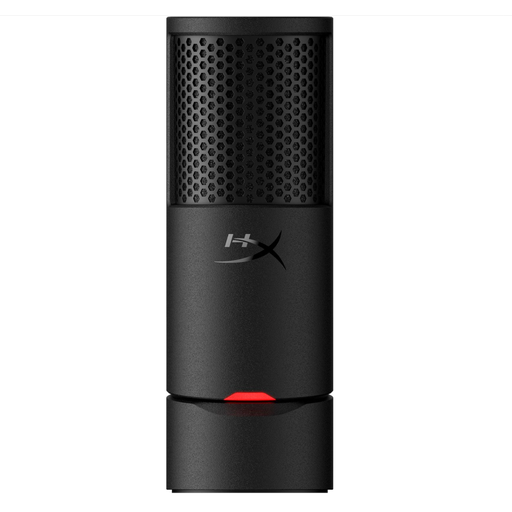
HyperX SoloCast 2 cardioid USB gaming microphone, black

HyperX SoloCast 2 cardioid USB gaming microphone, black

An option to consider if you’re looking for a cardioid USB microphone for a desktop setup. Make a test recording to see how softly spoken words sound in your room.

Features listed in the product name: USB, cardioid, black.

View at Joybuy

Razer Seiren V3 Mini Quartz, compact USB microphone with tap-to-mute control

Razer Seiren V3 Mini Quartz, compact USB microphone with tap-to-mute control

A compact USB microphone to consider if you want a mute control while recording. Check whether the controls and positioning suit your delivery.

Features listed in the product name: Quartz version, USB and tap-to-mute control.

View at Joybuy

Frequently asked questions

Will extra gain help if a soft voice sounds too quiet?

First, check the distance and recording space. Shure explains that positioning the microphone closer makes your voice stand out more against background noise and reflections. Then make a test recording to see whether the soft passages are clear without distracting background sounds.

Can I plug a USB microphone straight into my computer or tablet?

It depends on the model, the port and the cable included in the package you choose. RØDE states that the NT-USB Mini comes with a USB-C-to-USB-A cable and describes a different cable for a USB-C input. So check both your device and the package contents.

How can I stop a desktop setup from making my performance sound distant?

Position the microphone so you can speak from a comfortable, consistent distance, then make a test recording in the place you plan to use it. Shure explains that recording from closer up can make your voice stand out more against noise and reflections in the room.

What are my rights when buying a microphone online in the Netherlands?

Business.gov.nl explains that online consumer purchases generally come with a 14-day cooling-off period, subject to statutory exceptions. The product supplied must also match the agreement; a commercial manufacturer’s warranty doesn’t replace this legal protection. Before buying, check the seller, package contents and returns information.

Can I perform someone else’s entire poem and publish my commentary?

No. Adding commentary to a poem doesn’t automatically make performing it in full permissible. According to Auteursrecht.nl, a quotation must be relevant to the subject and you mustn’t reproduce more than is necessary. Check the rights to the specific poem before publishing your recording.
