What should you look for?
Start by asking whether the fan needs to stay on while you perform. Then check that your voice remains clear without the settings affecting quiet words or pauses.
Dynamic USB microphone
A good fit if: the fan needs to stay on and you can speak close to the microphone.
Bear in mind: you’ll need to maintain a steady position while performing; a directional pickup pattern won’t remove fan noise completely.
USB condenser microphone
A good fit if: you can switch off the fan, move it or make the space quiet enough.
Bear in mind: RØDE says a condenser microphone may pick up more background noise in a noisy environment. Careful placement and a test recording are still important.
| What to consider |
What to look for |
Especially important if |
| Fan noise |
Compare the pickup pattern and placement options; test with the fan set to the level you’ll use while recording. |
I need to leave the fan on but still want my voice to come through clearly, so I prioritise limiting background noise; around 36% of consumers put speech clarity first. |
| Quiet words and pauses |
Listen through headphones to quiet lines, line endings and pauses, both with and without noise processing. |
I want quiet words and pauses to sound natural, even if that means some background noise remains audible; around 29% of consumers prioritise preserving a soft delivery. |
| Connection and placement |
Check that your recording device supports the USB connection and that the stand or mount can hold the microphone close enough to your mouth. |
I want to record directly without a separate interface, so I’m looking for a setup that fits well on my desk; around 21% of consumers prioritise easy USB connection and placement. |
| Future expansion |
Check whether the exact model has both USB and XLR, and whether it comes with the cables you need for your setup. |
I want to start with USB but may want to use an XLR setup later; around 14% of consumers prioritise this option to expand. |
Joybuy products for this recording setup
These products are suited to USB voice recording and a compact desktop setup; the HyperX SoloCast 2 is particularly relevant if you can make your recording space quieter.
 No image available
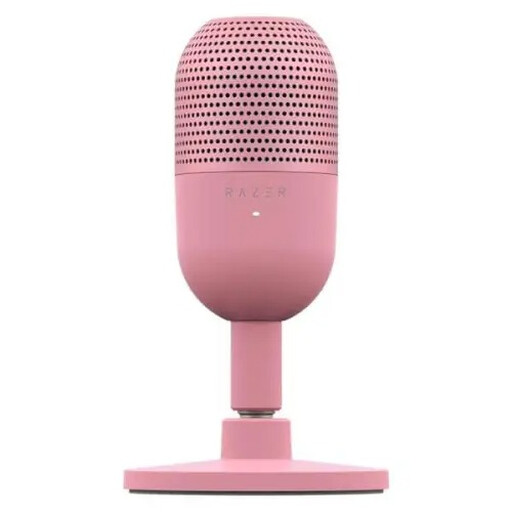
Razer SEIRÉN V3 MINI Quartz
This compact USB microphone is an option for a small desktop setup; the product name also mentions tap-to-mute.
View at Joybuy
 No image available
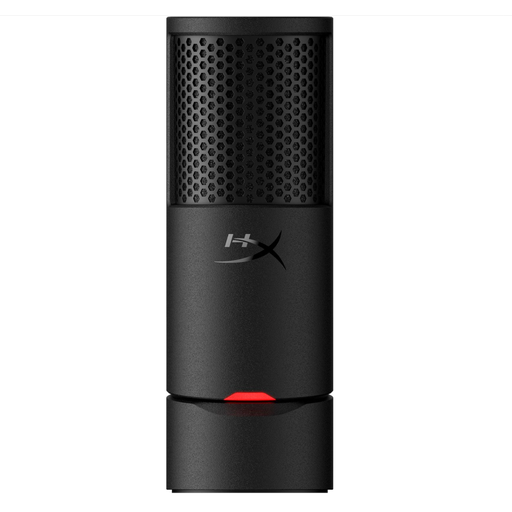
HyperX SoloCast 2
This cardioid USB condenser microphone is better suited to a recording space where you can reduce fan noise; a cardioid pattern doesn’t guarantee a silent recording.
The product name mentions plug and play and the colour black.
View at Joybuy
Frequently asked questions
Will a noise gate help with the fan while I’m speaking?
Mainly during pauses: according to RØDE, a noise gate reduces or cuts off sound below a set threshold. The fan may remain audible during spoken lines, so check that the threshold doesn’t cut off quiet words either.
How should I position the microphone to avoid plosive sounds or too much room noise?
Start close to your mouth and try different angles with a short test recording. RØDE recommends a distance of 6–10 cm and a slight angle for most RØDE microphones to reduce plosive sounds; the right distance depends on the model and your voice.
Do I need an audio interface as well as a USB microphone?
Not for recording directly to a device that supports the microphone over USB. The USB/XLR models mentioned also offer a separate XLR connection for a suitable analogue setup; check the connections and what’s included in the box for each model.
What can I do if my microphone breaks too soon during normal use?
According to ACM ConsuWijzer, you’re entitled to a product that meets what you could reasonably expect from the seller. If a product is faulty despite being used normally, the seller must offer an appropriate remedy free of charge; in the Netherlands, there isn’t one fixed statutory warranty period for every microphone.
Can I upload a recording of someone else’s poem online?
Not automatically. The Dutch government distinguishes between making a copy for personal use and distributing or publishing other people’s writing. Before publishing, check who holds the rights to the poem and whether you need permission or an applicable exception applies.


