
Poet reading in a shared space
You can’t always switch off background noise, and your main priority is making sure your words remain clear. Compare a dynamic USB microphone designed for close-miking by making a test recording in your own space.


If you’re recording in a quiet room, look for a cardioid USB condenser microphone that you can point towards your voice and monitor through headphones. In a noisier room, a dynamic USB microphone designed for close-miking may better suit your setup. You’ll need to maintain the right distance, and a test recording is important in either setting.
You can’t always switch off background noise, and your main priority is making sure your words remain clear. Compare a dynamic USB microphone designed for close-miking by making a test recording in your own space.
You want to be able to assess softer lines and changes in volume. Microphone placement, headphone monitoring and a test recording may matter more than a high stated sample rate.
You want a consistent connection and controls that are easy to reach when participants take turns recording. Check the selected audio input for each recording, and listen along as you record.
A good fit if: you’re reading in a reasonably quiet space and want to assess softer passages too.
Bear in mind: a sensitive microphone can also pick up fan noise or tapping on your desk. Point it towards your voice and make a test recording.
A good fit if: you can read in a noisier room with your mouth close to the microphone.
Bear in mind: you’ll need to maintain the right distance while reading. RØDE recommends around 5–10 cm for the PodMic USB; this distance does not automatically apply to other models.
| What to consider | What should you check? | Who is this important for? |
|---|---|---|
| Clarity in the presence of background noise | Check the polar pattern and the direction you need to speak into the microphone. Test it at a suitable height in your own space. | If I’m recording in a shared space, I want my words to remain clear despite the background noise. Around 33% of consumers prioritise clarity. |
| Soft and loud lines | Pay attention to microphone placement and gain controls. Record both a soft and a loud passage, then listen back to each. | If I alternate softer lines with a louder ending, I want to be able to assess both passages clearly. Around 27% of consumers prioritise the nuances of a reading. |
| Easy connection for multiple speakers | Check whether the supplied cable fits your computer’s port and whether you can use the main controls without additional software. | If participants are taking turns recording, I want to be able to connect and set up the microphone easily each time. Around 20% of consumers mainly need a shared, repeatable setup. |
| Monitoring during recording | Check whether the version you’re considering has a headphone output and direct monitoring. Listen back to the saved file too. | If I want to catch mistakes before sharing a recording, I need to be able to check what was captured both during and after recording. Around 20% of consumers prioritise monitoring their recordings. |
Check the full model name and connection: Shure distinguishes the USB/XLR MV7+ from the MV7X, which has an XLR connection only. RØDE also makes a distinction between the PodMic USB and the PodMic.
Before buying, check the connection on the exact version you’ve chosen. To connect an XLR-only model to a computer, you’ll need an audio interface and a suitable cable.
A microphone with a directional pickup pattern won’t make a room silent. A review of a specific USB condenser model noted that desk vibrations and computer noise were still concerns in that setup.
First, record a passage in the space where you plan to read and listen back before buying an accessory. This will help you decide whether you need a different location or mounting option.
Making a practice recording for yourself and publicly sharing a copyrighted poem aren’t automatically subject to the same conditions. Recognisable voices can also raise privacy concerns.
Before sharing, establish who is responsible for obtaining permission or any other necessary rights for the text, the performance and any identifiable participants.
RØDE offers compact USB condenser microphones as well as dynamic USB/XLR models designed for close-miking.
The Profile USB is designed for speech recording and has controls for gain, monitor mix and headphone volume.
The MV7+ is a dynamic USB/XLR microphone designed for speaking close to the microphone.
The AT2020USB-X is a cardioid USB condenser microphone.
This selection includes USB microphones for recording your voice on a computer, as well as clip-on or wireless microphones with a USB-C receiver for compatible mobile devices. Before buying, check that the connection is compatible with the device you want to record on.
 No image available
A USB condenser microphone for voice recording, with gain control and headphone monitoring according to the product description.
The description also mentions a boom arm, shock mount, pop filter and USB cable.
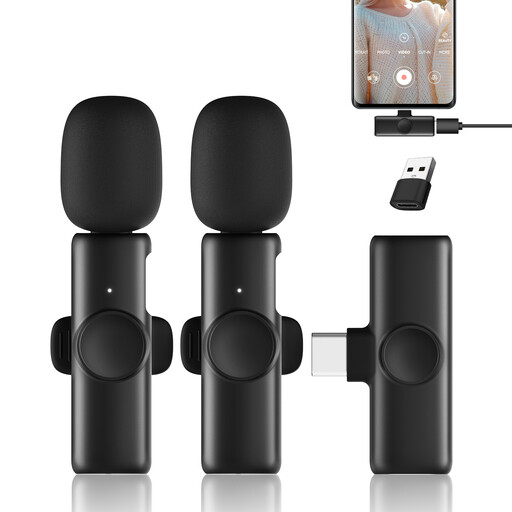 No image available
A clip-on lavalier option for mobile recording with a compatible Android phone featuring USB-C.
The product name specifies 2.4 GHz, two transmitters and one receiver. Check that your phone is compatible with the stated USB-C connection.
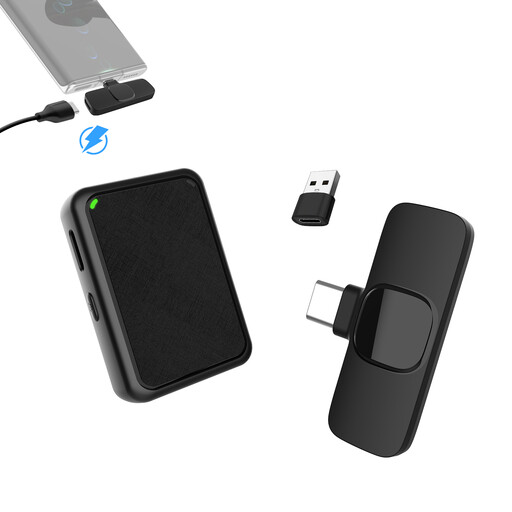 No image available
A clip-on option for mobile recording if your device meets the stated compatibility requirements.
The product name lists iPhone 18, 17 and 16 models with USB-C, one transmitter and one receiver.
 No image available
A USB microphone for a compact desktop setup; the product information lists use with PC and Mac.
The product information specifies a supercardioid pickup pattern and tap-to-mute controls.
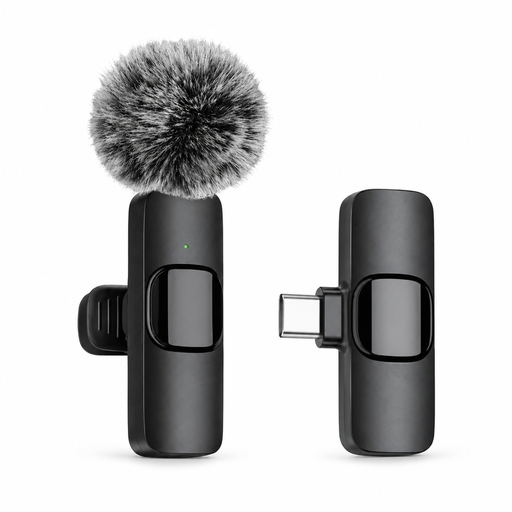 No image available
A clip-on lavalier option for voice recording with a compatible Type-C connection.
The product name specifies a wireless Type-C interface; the description mentions recording with smartphones.
Select the USB microphone as your audio input, point it towards your mouth as directed for that model, and record both a soft and a loud line. Listen as you record if direct monitoring is available, then check the saved file for background noise and tapping.
No. Check your tablet’s port and whether it’s compatible with the exact model. For example, RØDE specifies a different cable for the NT-USB Mini with certain USB-C devices, and an adapter for iOS devices with Lightning.
When you buy as a consumer in the Netherlands, you’re entitled to a legal guarantee. If a product is faulty, the seller must provide a solution. Online purchases from a business usually come with a 14-day cooling-off period, subject to applicable exceptions. The Dutch government explains these consumer rights; check the terms of any additional warranty before paying for it.
Making a practice recording for yourself is not the same as making it publicly available. According to the Dutch government, you can’t automatically use protected work publicly; check who holds the rights to the text and any performance, and what uses are permitted. This does not constitute general permission for this specific showcase.
An identifiable audio recording may count as personal data. An organisation needs a lawful basis under the GDPR to process it. The Dutch Data Protection Authority says that consent is required in most cases to publish other people’s personal data online. Don’t assume that the exception for purely personal or household use applies to a community showcase.