
Storyteller in an echoey room
Your main aim is to record one life story clearly, and you can position the microphone close to the storyteller. Distance, room acoustics and directional pickup all matter when choosing.


For a single storyteller, choose a directional microphone that can be positioned close to the speaker. If you also need to hear the interviewer’s questions clearly, make a test recording from both seats. A microphone with multiple polar patterns gives you more positioning options, but it won’t automatically make a voice from further away easier to understand. Also check the connection and whether the stand or boom arm you want is included.
Your main aim is to record one life story clearly, and you can position the microphone close to the storyteller. Distance, room acoustics and directional pickup all matter when choosing.
You want to hear the questions too, so you’re choosing between a shared microphone and a setup with one microphone per person. Test both seats before the conversation begins.
You want to record easily via USB and check during the conversation that voices and distracting sounds are being picked up clearly.
A good fit when: the storyteller does most of the talking and the microphone can be positioned close by.
Keep in mind: you’ll still need to speak close to the microphone and position it carefully; an interviewer sitting further away won’t automatically be picked up just as clearly.
A good fit when: you can position one speaker in a fixed spot at the table.
Keep in mind: a directional pickup pattern is no substitute for a quiet room or a suitable speaking distance.
A good fit when: the storyteller and interviewer sit opposite each other and you want to use a single microphone.
Keep in mind: with a shared microphone, you have less control over each voice’s level than you would with one microphone per person.
| What to consider | What to look for | Who it matters most to |
|---|---|---|
| Clarity in the room | Check the polar pattern, whether you can position the microphone close by, and how it sounds from the actual seat. RØDE Support recommends a speaking distance of around 5–10 cm for the PodMic USB; this advice doesn’t automatically apply to other models. | If I’m recording one storyteller in an echoey room, I want to position the microphone close by and be able to understand the voice clearly afterwards. Around 33% of consumers say intelligibility in their own room is their main concern when buying. |
| Two people speaking | Check that the polar pattern suits the seating positions, and listen back to a test conversation with both people speaking at a normal volume. | If I want to record both the storyteller and my questions, I want to hear how the balance sounds from both seats. Around 27% of consumers say being able to understand two voices is their top priority. |
| Monitoring during long recordings | Check whether the exact model has a headphone output and, if needed, level controls; test it with your recording computer. | If I’m recording a long conversation, I want to monitor distracting sounds and the incoming voice while recording. Around 20% of consumers put recording monitoring first. |
| Easy connection | Check that the USB connection and cable are compatible with your device, and see whether a stand or boom arm is included. You’ll need a suitable interface or mixer to use XLR. | If I want to get started without extra recording equipment, I want to know whether I can connect the microphone directly to my device. Around 20% of consumers say getting started easily via USB is their main concern when buying. |
Distance, hard surfaces and everyday background noise can all remain audible in the recording.
First, make a test recording in the intended spot. Adjust the positioning or the room before choosing a different microphone.
The interviewer and storyteller may sit at different distances from the microphone, so their voices may come through differently.
Test a complete question and answer from the seats you’ll actually be using.
If you need separate control over both voices, you may need a setup with extra microphones and recording equipment.
A bundle and a standalone microphone may include different items, even if their model names look similar.
Compare the full model name and the stated contents of the box.
If your chosen version doesn’t include a suitable stand, boom arm or cable, you may need to source one separately.
The PodMic USB and NT-USB+ are different options: the first is a dynamic USB/XLR model for close-miked speech, while the second is a USB condenser microphone with a cardioid pattern.
According to Audio-Technica, the ATR2100x-USB combines a dynamic cardioid capsule with USB and XLR.
The Profile USB is a cardioid USB condenser microphone designed for a fixed desktop setup.
The standard Yeti may be worth considering if you want to compare different polar patterns for a conversation with two people at the table.
The AM8T is a USB/XLR microphone set with a boom arm; the K688 is a separate USB/XLR model.
These product picks include a set with two microphones for a conversation between two people, as well as USB microphones for a fixed tabletop setup. Check that the receiver, connection and included stand suit your recording device and seating arrangement.
 No image available
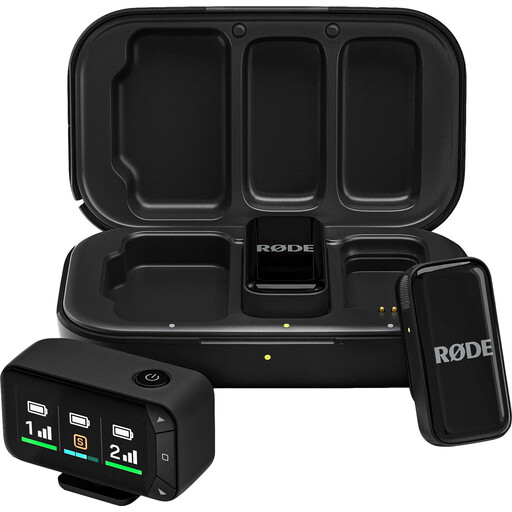
According to the product information, the two transmitters can record at the same time, making this set suitable for a conversation between a storyteller and interviewer.
The set lists a camera receiver and a USB-C receiver. According to the product information, recording on a computer via the receiver requires an available USB-C port.
 No image available
This microphone is suited to a fixed tabletop setup where you want to monitor the audio during a test recording.
The product information lists cardioid pickup, headphone monitoring, gain control, a mute button and an included boom arm stand.
 No image available
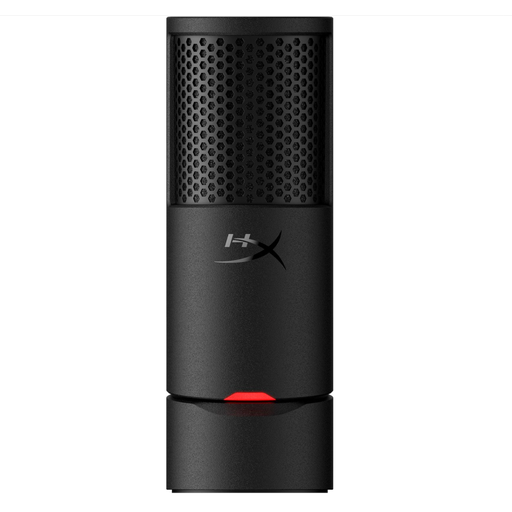
This USB microphone is worth considering for a fixed tabletop position and recording a single storyteller.
The product information lists cardioid pickup, an adjustable stand, a built-in shock mount and a pop filter.
 No image available
This USB microphone is an option for a fixed tabletop position if you want to be able to mute it directly.
The product information lists a supercardioid polar pattern and tap-to-mute.
Yes, but check how clear both voices sound from each seat by making a test recording. With a shared tabletop microphone, you’ll need to pay attention to the balance. If you want to control each voice separately, look into a setup with one microphone per speaker.
Position the microphone so that the main voice comes through clearly, listen back to a test recording, and reduce echo and minor background noise where possible. RØDE Support recommends around 5–10 cm for the PodMic USB; that distance doesn’t automatically apply to every tabletop microphone.
Not if you use the USB connection with a compatible device. You’ll need a suitable interface or mixer for the XLR output. Check which cables and stand are included with each version.
According to ACM ConsuWijzer, online consumer purchases generally come with a statutory cooling-off period of up to 14 days after delivery, although exceptions apply. Statutory guarantees also apply if a product doesn’t perform as you could reasonably expect under normal use; the seller is your point of contact.
Don’t assume that you can. The Dutch Data Protection Authority says that, under the GDPR, publishing another person’s personal data online usually requires their consent, although other legal grounds and a limited exception for use purely for personal or household purposes may apply. The rules depend on the purpose and the audience with whom you share the story. The Oral History Association also recommends discussing participation, storage and access with the storyteller in advance; this is professional best practice, not a separate Dutch statutory consent requirement.