If you’re recording commentary at a shared desk, a well-positioned dynamic USB microphone is a sensible starting point, provided you can speak close to it. A microphone or noise-reduction feature won’t necessarily remove other voices or keyboard noise, so a quiet spot and a good setup still matter. If you can keep your surroundings quiet, compare a cardioid USB condenser microphone too, and check the connection, stand or arm, and headphone controls for each model.
Who is this choice relevant to?
Narrator at a noisy desk
You’re mainly recording one voice while colleagues talk or type, and you can speak close to a carefully positioned microphone. Don’t expect it to remove every other voice. Shure and RØDE explain the limitations of noise reduction and the importance of speaking close to the microphone, respectively.
Narrator in a shared workspace
You set up your recording space each time and want to know which cables, stand and connections come with the exact version before you buy. Audio-Technica Netherlands and Samson list the desk accessories supplied with the models mentioned here.
Narrator in a quiet recording space
You can keep your surroundings quiet and want to consider a USB condenser microphone as well as dynamic models. Cameranu discusses the sensitivity of condenser microphones, while Elgato lists a cardioid condenser capsule for the Wave:3 MK.2.
What should you look for when choosing?
Start with where you’ll be recording and how close you can comfortably speak to the microphone. Then check that it will fit on your shared desk and decide whether you want to listen through headphones while recording.
| What to consider |
What should you look for? |
Who should pay particular attention? |
| Clear speech with background noise |
Compare the microphone’s pickup pattern and check whether you can speak close to it. If possible, make a test recording where you plan to use it. |
If colleagues talk or type while you record your commentary, you’ll want to capture your voice clearly without expecting other sounds to disappear. Around 36% of consumers prioritise reducing background noise. |
| A practical desk setup |
Check the supplied stand, the space you’ll need and the USB cable connectors for your computer. |
If you need to set up your recording space each time, check in advance whether the microphone will fit on your desk with the supplied accessories. Around 29% of consumers prioritise a complete setup that’s easy to move. |
| Listening while you record |
Check whether the exact version has a headphone socket and whether its controls suit the way you work. |
If you want to hear your voice as you record, check whether you can plug headphones straight into the microphone. This is the main buying concern for around 21% of consumers. |
| Recording in a quiet room |
Compare a cardioid USB condenser microphone with dynamic models, and check the system requirements for the exact version. |
If you can keep the room quiet, you can include a condenser microphone in your comparison too. Around 14% of consumers prioritise a quiet recording space. |
Common buying mistakes
-
Assuming noise reduction will stop colleagues’ voices
Shure says the MV7+’s real-time denoiser doesn’t remove background voices or keyboard clicks. If there’s distracting noise in your recording, you may need to record it again or wait for a quieter moment.
Assess the recording in your actual workspace, paying attention to how close you are to the microphone and which way it’s facing. If possible, choose a quieter time to record.
-
Comparing USB plugs alone
A compatible connection doesn’t tell you whether the microphone will sit at the right height and in the right place. The supplied desk stands and cables vary by model.
Check what’s included with the exact version, the cable connectors and the space needed for a stand or arm. Depending on what’s supplied, you may need to buy a compatible mount or cable separately.
-
Assuming different generations of a model are identical
The Wave:3 MK.2’s system requirements and connections don’t automatically apply to an earlier Wave:3 or another version.
Check the full model name and the system requirements for the exact version you want to use.
Brands to compare
Audio-Technica
The ATR2100x-USB is a dynamic cardioid handheld microphone with USB and XLR connections, designed for uses including voice-overs.
- Audio-Technica lists a headphone socket with volume control, two USB cables and a foldable desktop tripod for this model.
- Check whether the small tripod lets you position the microphone at the right distance on your desk. These listed features don’t mean the recording space will be quiet.
Samson
Samson says the Q2U combines a dynamic cardioid microphone with USB/XLR connections and desk accessories.
- Samson lists a desktop tripod, microphone clip, windscreen and cables for the Q2U.
- Check what’s included with the version on offer. Any claim about using it in an untreated room comes from the manufacturer; it isn’t a measurement of your workspace.
RØDE
The PodMic USB is designed for speech recording and, according to RØDE, has USB-C and XLR connections.
- RØDE lists a headphone output and features to reduce plosives and vibration. RØDE Support recommends speaking from around 5–10 cm away when using this model.
- Check that you can fit a suitable mount on your shared desk and speak close enough to the microphone.
Shure
Shure describes the MV7+ as a USB-C/XLR microphone for speech, with touch controls and adjustable signal processing.
- Shure lists a headphone socket and real-time denoiser for the MV7+.
- Shure says the denoiser doesn’t remove other voices or keyboard clicks. Also check the system requirements for the MOTIV Mix app.
Elgato
The Wave:3 MK.2 is a cardioid USB-C condenser microphone to consider if your recording space is quiet.
- Elgato lists a desk stand, headphone socket and specific system requirements for the MK.2.
- Don’t confuse the MK.2 with the earlier Wave:3, and bear in mind that a quiet room still matters when choosing a condenser microphone.
USB microphones at Joybuy
This selection features compact USB microphones for desk use, with an on-mic mute function. Compare the pickup pattern, positioning and controls you need for each version.
 No image available
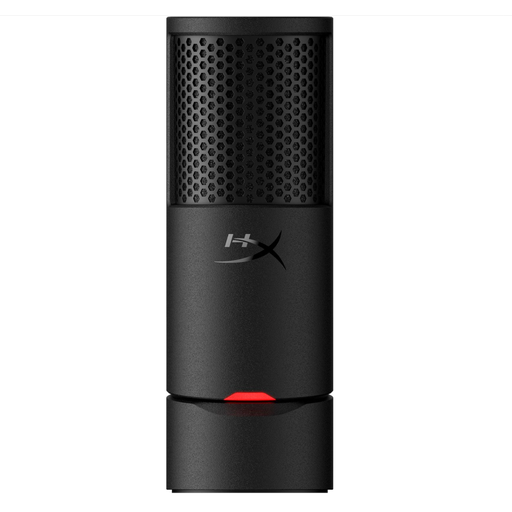
HyperX SoloCast 2 USB Gaming Microphone, Black
An option for a compact desk setup; the product name describes a USB microphone with a cardioid pickup pattern.
The product name also lists Plug & Play and the colour Black.
Joybuy
 No image available
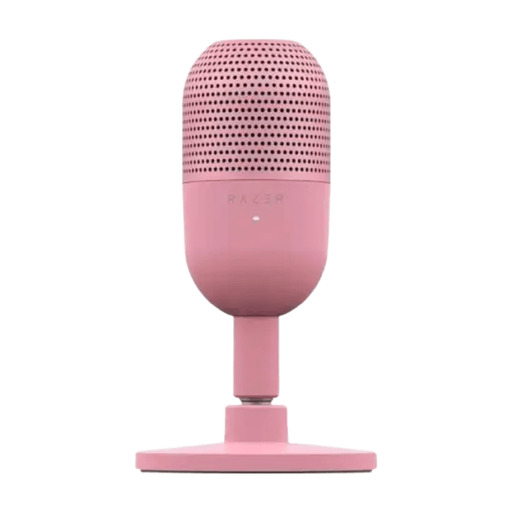
Razer Seiren V3 Mini Quartz Ultra-Compact USB Microphone
A compact USB microphone for anyone who wants an on-mic mute control on their desk; the product name lists tap-to-mute.
The version named in the product title is Quartz.
Joybuy
Frequently asked questions
Does noise reduction help when colleagues are talking next to you?
Not as a general guarantee. Shure says the MV7+’s denoiser doesn’t remove background voices or keyboard clicks. If possible, record when it’s quieter and speak close to a well-positioned microphone.
How should I position a PodMic USB?
RØDE Support recommends leaving around 5–10 cm between your mouth and the PodMic USB, with the top of the microphone facing your mouth. This is a guideline for this specific model, not a fixed requirement for all USB microphones.
What are my rights if a microphone I bought online isn’t suitable or breaks too soon?
For online consumer purchases in the Netherlands, you generally have up to 14 days after delivery to change your mind, subject to legal exceptions, according to ACM ConsuWijzer. You’re also covered by statutory guarantees if the product doesn’t do what you could reasonably expect under normal use. This doesn’t mean there’s one fixed guarantee period for all microphones.
What should I know about electrical product safety in the Netherlands?
Applicable European product rules apply to electrical and electronic devices placed on the market in the Netherlands. The Dutch government’s Ondernemersplein explains that, where CE marking is required for a device, the manufacturer must apply the mark and draw up an EU Declaration of Conformity. Check the product information for the exact version on offer.
Can I record colleagues who can be identified, or include museum texts in my commentary?
An audio recording that identifies someone may contain personal data. The Dutch Data Protection Authority says organisations need an appropriate legal basis under the GDPR to process personal data; consent is one possible basis. According to the Dutch government, you need the creator’s permission to distribute other people’s copyright-protected texts. What this means depends on the recording and how you intend to use it.


