Who is this suitable for?

Meditation leader in an echoing hall

You mainly record your own guided meditation and want to be able to place the microphone close to where you speak. Shure explains why the distance from the speaker affects the balance between direct and reflected speech; Audio-Technica and Samson describe cardioid models for speech recording.

Meditation leader with a soft speaking voice

You want to hear how quiet passages and breathing are captured as you record. The models discussed include a headphone output for direct monitoring, a useful feature in this situation; Audio-Technica, RØDE and Samson describe this feature on their models.

Organiser recording and using a hall mixer

You want to record digitally via USB and may also want to use a separate XLR connection to the hall equipment. Check that your chosen microphone has both connections and that they suit your set-up; Audio-Technica and Samson describe models with USB and XLR.

What to consider when choosing

In an echoing hall, microphone placement and a test recording are important: Shure explains that reflected speech can affect intelligibility.

What to consider What to look for Who is this important for?
Clear speech despite the echo Check the microphone’s polar pattern, place it close to the speaker and listen back to a test recording. If I’m recording one voice in an echoing hall, I want the words to be easy to follow. Around 36% of consumers prioritise intelligibility.
Checking quiet passages Check whether the microphone has a headphone output for direct monitoring. When recording quiet meditation instructions, I want to hear how soft passages are captured as I speak. Around 29% of consumers prioritise monitoring quiet speech.
USB recording and connection to a mixer Check whether the model has an XLR output as well as USB if you want to connect it to the hall mixer. If I want to record digitally and may also use the hall mixer, the microphone needs to work with both connection options. Around 21% of consumers prioritise this combination.
Capturing the atmosphere of the hall Check whether you can switch between polar patterns and test the different settings in the hall. If I deliberately want to capture the sound around the microphone as well as my voice, I need to take the room’s acoustics into account. Around 14% of consumers prioritise the atmosphere of the hall.

Common pitfalls

  • Assuming a polar pattern or noise-reduction feature will eliminate echo

    The balance between your voice and reflections also depends on microphone placement. Shure states that the MV7+ denoiser does not remove all background voices or sudden sounds.

    Test the microphone in the actual speaking position, using the settings you plan to use, and listen back to the recording.

    Changing the microphone position or making a new recording may take extra time.

  • Confusing USB with a direct XLR connection to the hall mixer

    USB recording and connecting to a conventional microphone input are two different signal paths.

    Check in advance whether you only need to record digitally or also need an XLR output for the hall equipment.

    If your chosen microphone does not have the XLR output you need, you may need a different model or suitable additional equipment for the mixer set-up.

  • Choosing an omnidirectional setting without listening to the hall

    According to Logitech, the Yeti Nano’s omnidirectional setting picks up sound from every direction. This may not suit your aim of making the meditation leader’s voice the focus.

    If you choose a model with switchable patterns, compare a short cardioid test recording with an omnidirectional one from the intended position.

Brands to compare

Audio-Technica

The ATR2100x-USB is a dynamic cardioid microphone with USB-C, XLR and direct monitoring. This makes it a relevant option for one speaker or a set-up with separate hall equipment.

  • According to Audio-Technica, USB and XLR cables and a desktop tripod are included.
  • Check that the connections suit your recording device and hall set-up.

Samson

According to Samson, the Q2U is a dynamic cardioid USB/XLR microphone with a headphone output.

  • The USB and XLR connections give you different connection options; the headphone output is for direct monitoring.
  • Samson’s claims about reducing hall noise are not an independent test of this model in a community hall.

Shure

According to Shure, the MV7+ combines a dynamic microphone designed for close speaking with USB-C, XLR, direct monitoring and adjustable processing.

  • Shure distinguishes between cardioid Voice Isolation and a separate, switchable real-time denoiser.
  • According to Shure, the denoiser can reduce certain continuous sounds, but it does not remove other voices or all sudden sounds.

RØDE

According to RØDE, the NT-USB+ is a cardioid USB condenser microphone with direct headphone monitoring.

  • RØDE lists a pop filter and desktop stand as included with this model.
  • The listed accessories do not remove the need to test the microphone in an echoing hall; product claims about sound quality are not an independent test in a hall.

Logitech G

According to Logitech, the Yeti Nano offers cardioid and omnidirectional recording modes.

  • The two patterns let you choose between focused recording and capturing sound from around the microphone.
  • The omnidirectional setting also picks up sounds in the room; test whether it suits your recording.

USB microphones at Joybuy

These USB microphones are options to compare for a fixed speaking position, focused recording and listening back to quiet passages.
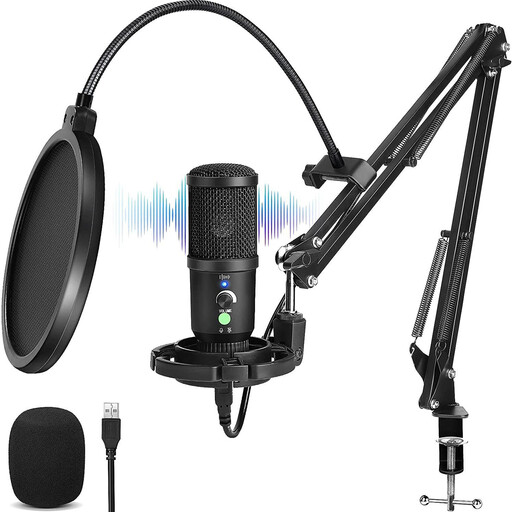
Cardioid USB condenser microphone

Cardioid USB condenser microphone with headphone socket

An option to test in a fixed speaking position; the cardioid pattern does not eliminate the room’s acoustics.

The description lists a 3.5 mm headphone socket and latency-free monitoring.

Joybuy
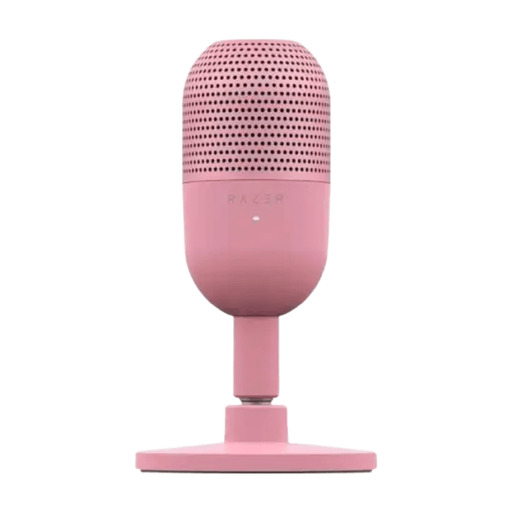
Razer Seiren V3 Mini Quartz USB microphone

Razer Seiren V3 Mini Quartz

For a single-speaker recording, a test recording will help you assess how the supercardioid pattern sounds in the hall.

A USB microphone with a supercardioid pattern. The product description lists a compact design for desktop use and tap-to-mute.

Joybuy

Frequently asked questions

Where should you place the microphone during meditation?

Start at the usual speaking position and make a test recording from the distance you plan to use during meditation. Shure explains that reflected speech can reduce intelligibility when the microphone is further from the speaker; the right distance depends on the hall and the set-up.

Can you listen directly and record at the same time?

Yes, if your chosen model has a headphone output for direct monitoring. According to the manufacturers, the ATR2100x-USB, Q2U, MV7+ and NT-USB+ all have this feature. Also check that your recording device is actually recording.

What is the cooling-off period for an online purchase?

For eligible consumer distance sales, you generally have a 14-day cooling-off period, according to the Dutch government; exceptions apply. Check whether you are buying as a consumer or on behalf of an organisation, and review the terms that apply to your purchase.

Can you record participants’ voices and share the meditation?

An audio recording in which someone can be identified may constitute personal data, according to the Dutch Data Protection Authority. If the GDPR applies to the processing, you must determine which lawful basis applies; consent is one possible basis. The Dutch Data Protection Authority states that processing for purely personal or household use falls outside the GDPR. Before recording and sharing, consider who may be identifiable and what you will use the recording for.
