
Speakers looking to reduce room echo
You record speech in an untreated room and want your direct voice to stand out more clearly against reflections. Shure and RØDE explain why microphone distance and placement matter.


A dynamic cardioid USB microphone is a practical choice if you can stay close to the microphone while recording. Shure points out that a microphone cannot improve the acoustics of a room. A cardioid USB condenser microphone may also be suitable if you want to capture subtle vocal nuances and can keep the room and background noise under control. Also check the recommended speaking distance, headphone monitoring, stand and connection.
You record speech in an untreated room and want your direct voice to stand out more clearly against reflections. Shure and RØDE explain why microphone distance and placement matter.
You want to preserve the nuances of a gentle meditation voice and can take care to choose a quiet spot, position the microphone carefully and make test recordings. RØDE and Sennheiser describe relevant recording and microphone features.
You want to record via USB and know in advance which monitoring features, cables and stand come with the version you choose. Samson, Audio-Technica and Sennheiser describe model-specific features and included accessories.
Start by considering how close you can comfortably speak to the microphone throughout a full meditation. Shure points out that a microphone cannot fix room acoustics; RØDE warns that placing it too far away can make your voice sound more distant and reverberant.
| What to consider | What should you check? | Who is this important for? |
|---|---|---|
| Echo and background noise | Check the microphone’s polar pattern and whether you can position it close to your mouth. Listen to a test recording in your own room. | If I record in an untreated room, I want to reduce echo and background noise as much as possible. Around 36% of consumers give reducing echo their top priority. |
| Subtle vocal nuances | Compare soft and normal speech in a test recording. Check the gain setting and how quiet you can make the room. | If I want to keep quieter passages clear, I consider both vocal detail and audible room reflections. Around 29% of consumers prioritise natural-sounding soft vocals. |
| Monitoring your recording | Check whether the microphone has a headphone socket and a level control. | For a long recording, I want to monitor echo, plosive sounds and levels as I speak. Around 21% of consumers prioritise real-time listening and level control. |
| A simple setup | Check which stand and cables are included, the connections on your device and the space available in your recording area. | If I want to get started quickly via USB, I want to know whether the accessories will work in my recording area. Around 14% of consumers give a simple, complete setup top priority. |
A microphone cannot improve room acoustics or completely separate direct speech from reflections. The room and microphone placement still matter.
First, make a short recording with the microphone closer to your mouth. If possible, try a quieter spot with fewer hard, reflective surfaces. Changing your recording location may take extra preparation.
RØDE specifically warns that the PodMic USB may sound quiet if it is too far away. The recommended distance for this model does not automatically apply to other microphones.
Follow the placement instructions for the microphone you choose, and check the distance and plosive sounds with a test recording.
The included stand and cables vary by brand and version. For example, the Sennheiser Profile USB and the Profile Streaming Set come with different stands.
Check the contents of the exact version against the connections you need and the space available in your recording area. Depending on your setup, you may need to buy a separate arm, cable or adapter.
The Samson Q2U is a dynamic cardioid microphone with USB and XLR connections for recording speech.
The ATR2100x-USB combines a dynamic cardioid capsule with USB and a separate XLR output.
The PodMic USB is a dynamic microphone with USB-C, XLR and digital settings for recording speech.
The MV7+ is a dynamic USB-C and XLR microphone with monitoring and adjustment features.
The Profile USB is a cardioid USB condenser microphone with controls for gain, mix and headphone volume.
These product picks are USB microphones for a simple desktop setup; their polar patterns and controls vary by model.
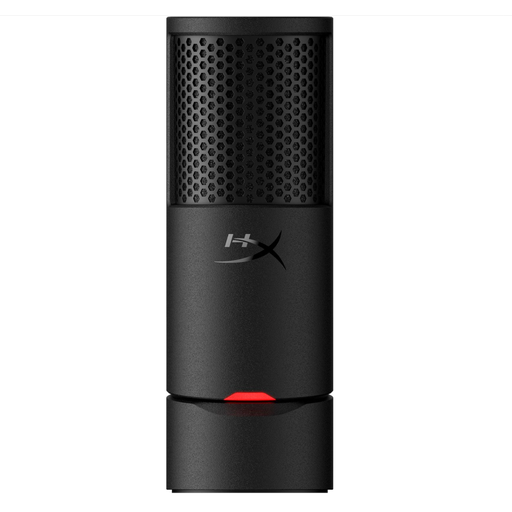 Image unavailable
Suitable for a desktop setup if you want to record via USB and use an integrated base.
The product description lists a cardioid condenser capsule, pop filter, shock mount and mute control.
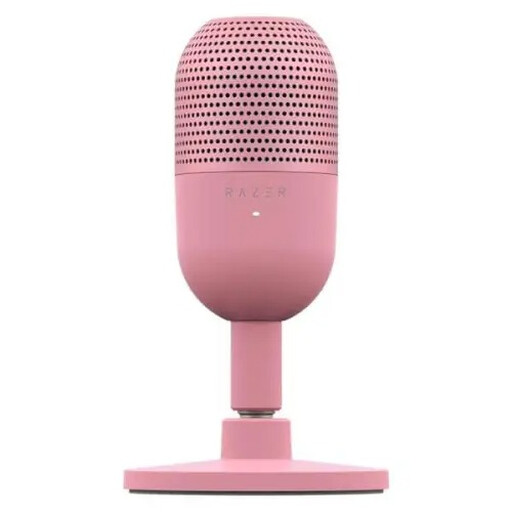 Image unavailable
Suitable for a compact desktop setup if you want to be able to mute the microphone easily while recording.
The product description lists a supercardioid polar pattern and tap-to-mute control.
No. A cardioid condenser microphone may also be suitable if you can keep the room and background noise under control. Choose a quiet spot, maintain a consistent speaking distance and make a test recording. Neither type of microphone can fix the room acoustics on its own.
Make a short test recording with both soft and normal speech, then listen through headphones for echo, plosive sounds and levels. Use the headphone socket on the microphone if your chosen model has one, and follow that model’s placement instructions.
Check in advance whether the version you choose includes the stand and cables you need. For a typical online consumer purchase, you generally have a statutory 14-day cooling-off period from delivery, subject to exceptions; ACM ConsuWijzer explains this period. Dutch statutory guarantees depend on what you can reasonably expect from the product and do not have a standard fixed duration of two years.
Not without permission: according to the Dutch government, you may only use copyrighted music with the creator’s permission. Check the rights for the specific music before publishing your meditation.