
Narrators with wide vocal dynamics
You switch between speaking softly and emphatically, and want to be able to check the levels during test recordings.


Start with the room. A dynamic microphone is worth considering if there’s noticeable background noise and you can position the mic close to your mouth. In a quiet room, you could also consider a cardioid condenser microphone. If your voice varies greatly between quiet and loud passages, make a test recording and check both the recording level and monitoring. Automatic level control and distortion prevention vary by model, and neither is a substitute for good microphone placement.
You switch between speaking softly and emphatically, and want to be able to check the levels during test recordings.
You record in a room where sounds from the surroundings are audible, and want to be able to position the microphone accordingly.
You want to assess distance, plosive sounds and recording levels as you speak, so monitoring and mounting are important to you.
Start by considering the room and how far you’ll be from the mic. Then compare features for handling vocal dynamics and monitoring while recording.
| Buying priority | What to look for | Who should prioritise this? |
|---|---|---|
| Room noise and clarity | Compare dynamic and condenser microphones; check the polar pattern and whether you can position the mic close to your mouth. | If sounds in the room could disrupt your solo narration, you’ll want a microphone and setup that suit the space. Around 36% of consumers give reducing room noise their highest priority. |
| Quiet and loud passages | Check what level control or distortion prevention the specific model offers, and test it with your own voice. | If you whisper and then deliver powerful emphases, you’ll want to be able to listen back to both passages clearly. Around 29% of consumers give managing vocal dynamics their highest priority. |
| Plosives and monitoring | Check whether monitoring and a pop filter are included or built in; also look at how the microphone is mounted. | If you want to assess plosives and distance as you speak, live monitoring is important. Around 21% of consumers give monitoring and plosive control their highest priority. |
| Connection and setup | Check the connection for your device, the cables and stand included, and any software requirements. | If you want to connect everything and get started at your desk without extra research, what’s included with that exact version matters. Around 14% of consumers give connectivity and a complete setup their highest priority. |
A dynamic element won’t automatically make a room quiet. Distance and positioning still affect how much background noise you hear in your recording.
Record a short test passage in the place you plan to use, then check your speaking distance and recording level.
Features Elgato lists for the Wave:3 MK.2 don’t necessarily apply to the older Wave:3 MK.1.
Compare the full model name and check the features of the version you’re considering.
The included mount and accessories vary by model. Without a suitable setup, it can be difficult to maintain the speaking distance you want.
Check what’s in the box and how the microphone can be mounted at your desk before choosing a model.
The dynamic MV7+ is an option for solo narration with varying vocal levels.
According to RØDE, the dynamic PodMic USB combines USB and XLR connections with direct monitoring for spoken-word recordings.
The ATR2100x-USB is a dynamic cardioid handheld microphone with USB-C, XLR and direct headphone monitoring.
The Wave:3 MK.2 is a cardioid USB condenser microphone to consider for a quiet room.
The dynamic Q2U is a USB/XLR option for spoken-word recordings.
This selection includes USB microphones for spoken-word recordings, from wireless USB-C options to desktop microphones. Check that each model’s connection and included setup suit your recording device and speaking position.
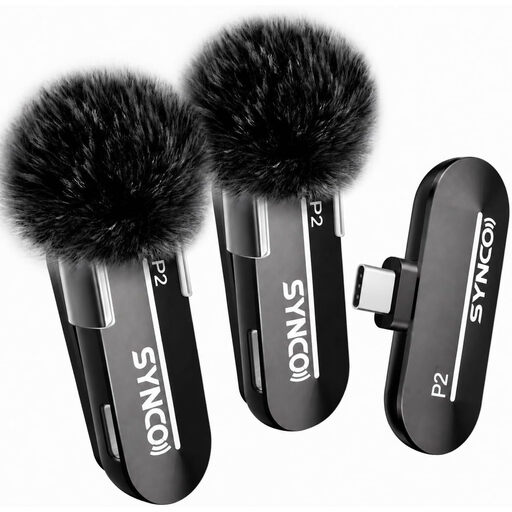 No image available
An option for spoken-word recordings with a compatible USB-C device.
The description mentions a monitoring socket on the receiver. OTG must be enabled for Android devices with USB-C.
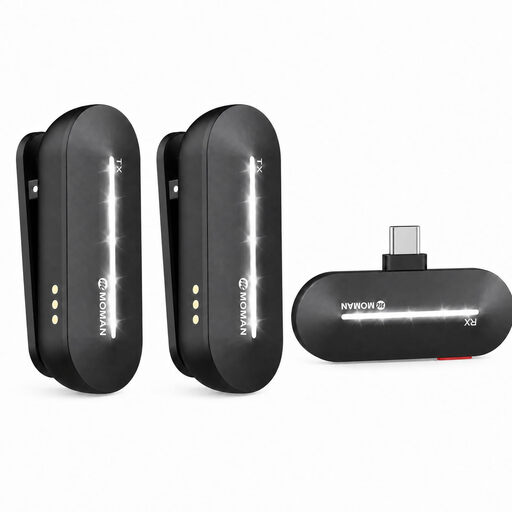 No image available
A USB-C lavalier microphone for recording with a compatible device.
The product name lists 2TX+1RX and a range of 150m. The description mentions real-time audio monitoring and use for interviews and podcasts.
 No image available
An option for USB voice recordings when you want to monitor your audio as you record.
The description mentions a cardioid polar pattern, gain control, a headphone socket, and an included arm, shock mount and pop filter.
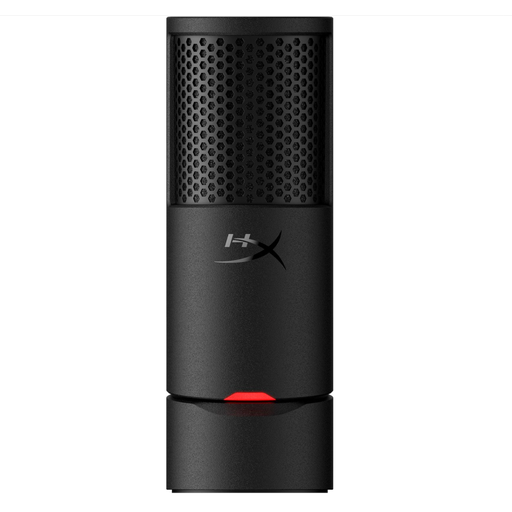 No image available
A USB microphone for voice recordings and podcasting.
The description mentions a cardioid pattern, condenser capsule and built-in pop filter, along with a compact adjustable stand.
 No image available
A compact USB microphone for voice recordings.
The description lists a supercardioid polar pattern and tap-to-mute control.
Start with a stable position close to your mouth, then record a test with both quiet and loud passages. For spoken-word recordings with a dynamic microphone, RØDE generally recommends 2–6 inches between your mouth and the grille. Treat this as the manufacturer’s starting point, not a fixed distance for every model.
You don’t need an extended warranty to have your statutory rights. The Netherlands Authority for Consumers and Markets states that the seller is responsible for the legal guarantee if a product is faulty; any additional commercial warranty is separate.
For online purchases, you generally have a statutory cooling-off period of up to 14 days after delivery. ACM ConsuWijzer explains this period; check the applicable terms and exceptions before using or returning the microphone.
Don’t assume that you can. According to the Dutch government, you generally need permission from the creator to use films and music protected by copyright. Creating your own spoken recap doesn’t in itself give you permission to make protected material available to the public. Whether a legal exception applies depends on the specific use.