For vowel practice, choose a microphone you can position at the same distance each time and use to listen back to recordings straight away. Keep your recording settings consistent too. A compact USB condenser microphone suits a quiet, fixed spot, while a dynamic USB microphone is an option if you speak close to the capsule in a less quiet room. Neither will correct your pronunciation for you.
Who is this buying guide for?
Language learner comparing vowel sounds
You record the same Dutch words or vowel sounds repeatedly and want to listen back to the recordings under similar conditions. Consistent positioning and recording settings matter more than a pronounced vocal effect.
Practising in a shared space
You speak close to the microphone because there’s background noise, but you also want to avoid bursts of air causing plosive sounds.
Beginner using a laptop
You want to record directly via USB and check how the recording sounds through headphones. The connection and supplied cable are therefore important things to check.
What should you look for when choosing?
Compact USB condenser microphone
Best for: a quiet practice spot where you can position the microphone in the same place each time. For speech applications, RØDE recommends a distance of around 10–15 cm for the NT-USB Mini.
Bear in mind: check that the supplied cable works with your computer, and keep the distance and recording settings consistent.
Dynamic USB microphone for close-range recording
Best for: anyone who can position the microphone close to their mouth and wants to monitor their voice as they practise. The Audio-Technica ATR2100x-USB and Shure MV7+ are examples with USB connectivity and headphone monitoring.
Bear in mind: directional recording is no substitute for a quiet room; plosive sounds can still occur if you speak directly into the capsule.
USB condenser microphone with extensive controls
Best for: anyone who wants to use the controls and monitoring on the microphone, and checks their computer’s system requirements first.
Bear in mind: keep any processing settings consistent between practice recordings. The Elgato Wave:3 MK.2 is a different version from the earlier Wave:3.
| What to consider |
What should you check? |
Who is this important for? |
| Comparable vowel recordings |
Check that you can position the microphone steadily in the same place and keep the recording settings consistent. |
I want to record the same vowels under similar conditions so I can listen back and compare them. Around 33% of consumers prioritise comparable vowel recordings. |
| Background noise |
Check the polar pattern and make a test recording in the room where you practise. |
If I practise in a shared space, I want to know how much background noise will make it into my recording. Around 27% of consumers give background noise top priority. |
| Plosives and mouth-to-mic distance |
Check whether you can adjust the microphone and whether it comes with a pop filter; test the position with a short recording. |
I want to speak close enough for my voice to be recorded, without plosives disrupting my practice. Around 20% of consumers prioritise a suitable mouth-to-mic distance and avoiding plosives. |
| Connection and playback |
Check that the connection matches your computer’s port and whether the model has a headphone output. |
I want to connect the microphone to my laptop and hear myself through headphones. Around 20% of consumers give connection and instant playback top priority. |
Common pitfalls
-
Assuming a polar pattern will silence a noisy room
A cardioid polar pattern and digital audio processing are different features. Directional recording doesn’t guarantee that background noise will disappear; voice isolation and noise processing on the MV7+ are features listed by Shure.
Make a test recording in your own practice space and judge for yourself what you can hear in it.
-
Treating different versions as the same product
The Elgato Wave:3 and Wave:3 MK.2 differ in processing and specifications. Versions and bundles of the Shure MV7+ may also vary.
Before buying, check the full model name, version, connection and package contents.
-
Choosing a very short distance without considering plosives
A burst of air directed straight at the capsule can cause a plosive. Shure highlights this as something to bear in mind with the MV7.
Test the positioning with a short recording and adjust it if you hear plosives.
Brands to consider
The features below apply to the models listed and are not a judgement on a brand’s full range.
RØDE
The NT-USB Mini is a compact USB condenser microphone for a fixed practice spot.
- RØDE lists a built-in pop filter, headphone output and detachable desktop stand. For speech applications, the manufacturer recommends a distance of around 10–15 cm.
- The supplied cable is USB-C to USB-A. RØDE specifies a different cable for computers with USB-C only, so check which connection you need.
Shure
The dynamic MV7+ offers USB-C and XLR connectivity for anyone who speaks close to the microphone and wants to manage voice recording settings.
- Shure lists a headphone output, automatic level control and a digital plosive-reduction feature.
- Voice isolation and noise processing are features described by Shure. Assess your chosen settings with a test recording and keep them consistent when making comparisons.
Audio-Technica
The dynamic ATR2100x-USB is a cardioid USB/XLR microphone with a headphone output for direct monitoring.
- According to Audio-Technica, the cardioid pattern picks up less sound from the sides and rear. The model is described as coming with USB-C to USB-C and USB-C to USB-A cables.
- The polar pattern doesn’t guarantee a noise-free recording; assess the recording in the room where you practise.
Elgato
The Wave:3 MK.2 is a USB condenser microphone with controls and monitoring for anyone who wants to manage their settings.
- Elgato lists a cardioid capsule and headphone socket.
- The Wave:3 MK.2 differs from the earlier Wave:3 in its processing and specifications. Check your computer’s system requirements too.
Product picks at Joybuy
These product picks are intended for speech practice using a microphone on a desk or close to the speaker. For each model, check that the connection and controls suit your recording device.
 No image available
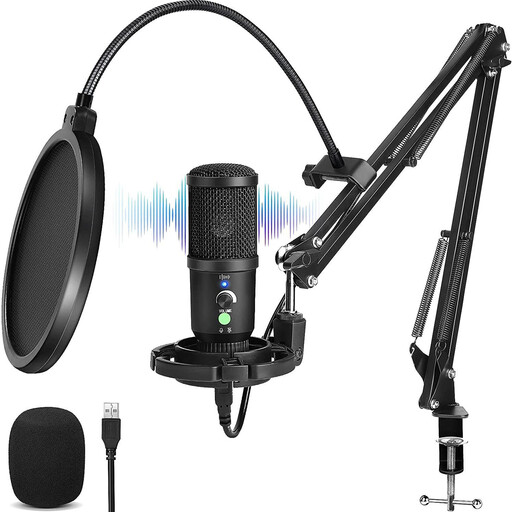
USB condenser microphone with cardioid polar pattern
An option for anyone looking for a fixed recording spot with USB connectivity and direct headphone monitoring.
Cardioid recording; gain control and mute; 3.5 mm headphone socket; scissor-arm stand and pop filter included.
View at Joybuy
 No image available
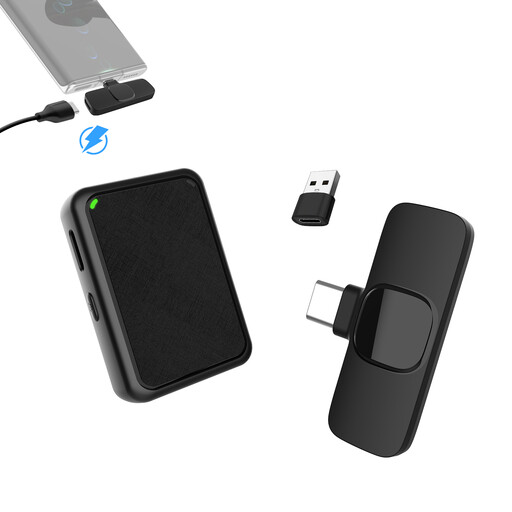
Moman MB1C clip-on microphone for iPhone 18/17/16, 1TX+1RX, USB-C
A clip-on option for anyone who wants to attach the transmitter to their clothing close to the speaker.
USB-C receiver; 1TX+1RX version.
View at Joybuy
 No image available
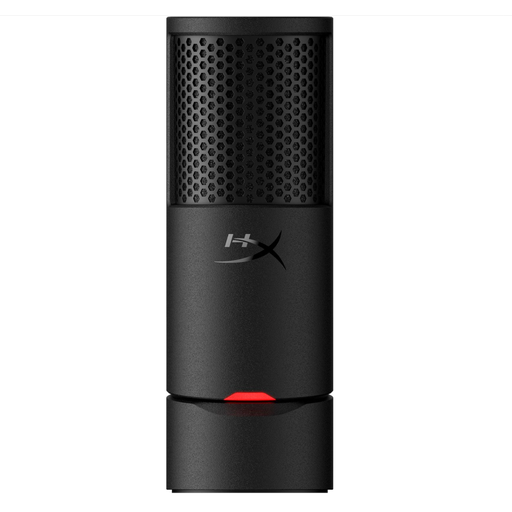
HyperX SoloCast 2 USB gaming microphone
Suited to anyone looking for a fixed desk setup and a microphone with a stand and pop filter.
Cardioid recording; mute; built-in pop filter; adjustable stand with a stable base; USB connection.
View at Joybuy
 No image available
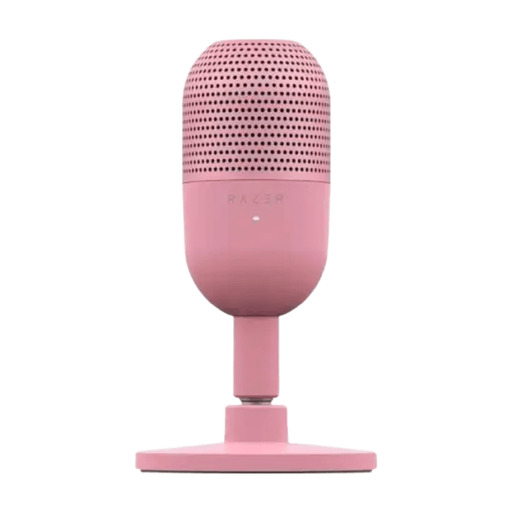
Razer Seiren V3 Mini Quartz ultra-compact USB microphone
A compact desktop option for anyone who wants to record on a computer via USB.
Supercardioid recording; tap-to-mute control; described as compatible with PC and Mac in the product description.
View at Joybuy
 No image available
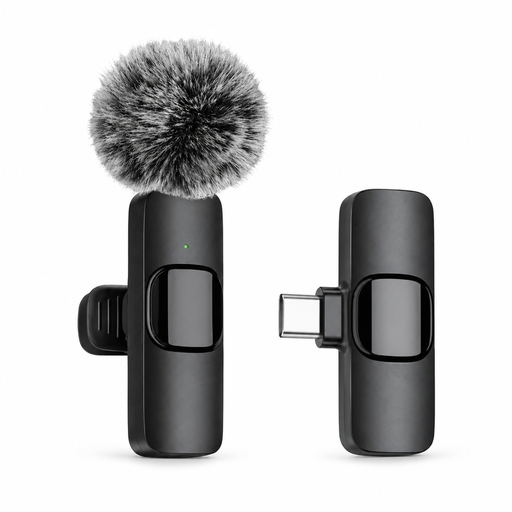
Verbex K9-Black wireless lavalier microphone with Type-C interface
A lavalier option for anyone who wants to wear the microphone close to the speaker; check that the receiver works with your recording device.
Wireless; Type-C interface.
View at Joybuy
Frequently asked questions
How should I position the microphone when recording words repeatedly?
Choose a position you can reproduce and start with a short test recording. For speech applications, RØDE recommends around 10–15 cm for the NT-USB Mini; that advice doesn’t automatically apply to other models. If you hear bursts of air, try a different position or a suitable pop filter.
Do I also need an audio interface for a USB microphone?
Not if you’re connecting it directly via USB to a compatible computer. Do check the port and cable, though: RØDE supplies a USB-C to USB-A cable with the NT-USB Mini and specifies a different cable for devices with USB-C only.
What can I do if I’m unhappy with a microphone bought online or it’s faulty?
For distance purchases, you’ll generally have a 14-day cooling-off period, subject to legal exceptions. Faulty products are also covered by the Dutch statutory guarantee. According to the Dutch government, there’s no fixed statutory guarantee period, and the retailer is your point of contact.
What should I check about EU compliance for an electrical USB microphone?
EU product rules may apply to electrical and electronic equipment, including rules on electromagnetic compatibility. The Dutch government describes CE marking and an EU Declaration of Conformity for equipment subject to the relevant requirements. Check the declaration for the exact version; a brand name or product specification for another market doesn’t in itself prove that the version sold in the Netherlands is compliant.


