For repeated speaking practice, a microphone is a good choice if you can position it in the same place for each recording and it works with your recording device. Placement matters even more in a noisy room. If you want to listen as you speak, check whether the model offers headphone monitoring and how it works.
Who are these microphones for?
Practising pronunciation on your own
Do you record the same Dutch words or sentences several times and want to listen back to your voice from a repeatable setup? Bax Music describes how some USB microphones let you listen back straight away, while RØDE outlines the connection options for the NT-USB Mini.
Practising in a noisy room
If you're recording one voice with background noise around you, direction and placement are important factors to compare. Shure and Razer describe the directional recording features of their respective models.
Listening along with example speech
Would you like to hear your own voice and, if needed, example speech playing back through headphones as you speak? Sennheiser and Audio-Technica describe the headphone outputs and mix controls on the Profile and AT2020USB-X.
What should you look for when choosing?
Start with a consistent speaking position and a connection that suits your device. Then consider whether direct monitoring or extra controls would be useful for your practice routine.
| What to consider |
What to look for |
Who it's important for |
| Comparable voice recordings |
Check the recording pattern and whether you can use a stand or keep the microphone in a fixed position. |
If I want to compare my pronunciation between attempts, I want to keep the distance and direction the same. Around 29% of consumers put clear, comparable recordings first. |
| Background noise |
Consider how close you can position the microphone to the speaker, and keep the settings the same between attempts. |
If you're recording in a less quiet room, you'll want to know how to position the microphone directionally. Around 24% of consumers put background noise first. |
| Direct monitoring |
Check whether headphone monitoring is available and whether you can mix your voice with audio from your device. |
If I want to hear myself as I speak, I want to know whether I can connect my headphones to the microphone. Around 18% of consumers prioritise direct monitoring. |
| Repeating recordings |
Look for easy-to-reach controls, such as a mute function, and select the right microphone as your input source. |
When I'm making lots of short attempts, I want to quickly check that the right input is active. Around 17% of consumers prioritise a smooth run of recordings. |
| Connection |
Compare the cable plugs with the ports on your computer or tablet. |
If my device only has certain ports, I want to know before buying whether the cable supplied will fit. Around 12% of consumers say device connectivity is their top priority. |
Pitfalls when choosing and using a microphone
-
Assuming a USB-C port on the microphone means it comes with a USB-C-to-USB-C cable
RØDE says the NT-USB Mini comes with a USB-C-to-USB-A cable. So the connection on the microphone doesn't automatically tell you which plug is at the device end.
Before buying, compare the port on your recording device with both ends of the cable supplied with the exact model.
If your device only has USB-C ports, you may need a different compatible cable or an adapter.
-
Assuming directional recording or noise processing guarantees a quiet recording
The recording features described don't change the fact that the microphone's location and position affect what you hear when you play the recording back.
Make a test recording in your usual practice spot, and keep the distance, direction and settings as consistent as possible between attempts.
-
Treating the RØDE NT-USB and NT-USB+ as the same model
RØDE says the NT-USB has been discontinued and points to the NT-USB+ as its newer version. So don't assume their specifications and model names are interchangeable without checking.
When comparing them, read the full model name and check which version you're actually choosing.
Brands worth comparing
RØDE
The NT-USB Mini is designed for a compact solo setup, while the NT-USB+ includes features such as a pop filter and desk stand.
- RØDE says the NT-USB Mini works with compatible computers without an extra driver and supports direct headphone monitoring.
- The cable supplied connects USB-C to USB-A. Check that it fits your recording device.
Sennheiser
The Profile is worth considering if you want controls for headphone volume and mixing your voice with audio from your device during speaking practice.
- The product specifications list a cardioid condenser capsule, headphone output and desk stand supplied with the Profile.
- Check that the USB-C cable supplied fits your device. These features apply to the Profile and aren't automatically available on other models.
Shure
The MV6 is a dynamic USB option to compare if you're looking for directional recording of a single speaker.
- Shure lists automatic level adjustment, noise processing and a headphone output for the MV6.
- These are the manufacturer's features and claims, not a guarantee that background noise will disappear in every room.
Audio-Technica
The AT2020USB-X is a condenser option if you want to monitor your voice directly and mix it with example speech playing back.
- Audio-Technica lists a headphone output, mix control, mute control and desk stand for this model.
- Check that the cable supplied and any adapter fit your recording device. The specifications aren't an independent test of pronunciation.
Razer
The Seiren V3 Mini is a compact option for one speaker, with directional recording and an easy-to-reach mute control.
- Razer lists a supercardioid pattern, desk stand and status indicator for the Seiren V3 Mini.
- The manufacturer's claim about reducing room noise isn't a guarantee for a particular practice space.
Joybuy products for voice recordings
These options include USB desktop microphones and compact wireless clip-on or lavalier models for voice recordings. Check that each model's connection and wearing style suit your practice setup.
 No image available
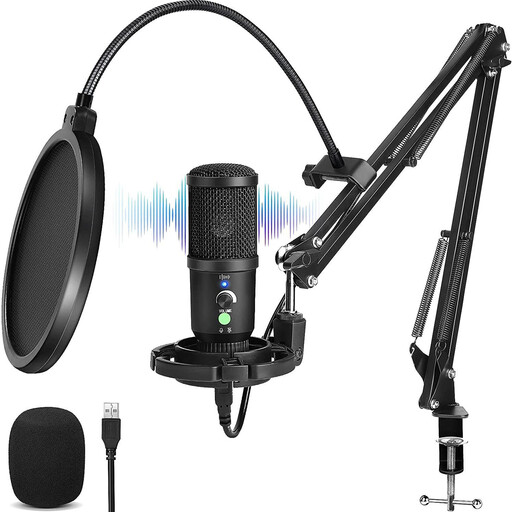
USB condenser microphone with cardioid pattern
The headphone monitoring mentioned may suit you if you want to hear yourself as you practise.
The product title lists a cardioid pattern and latency-free monitoring.
View at Joybuy
 No image available
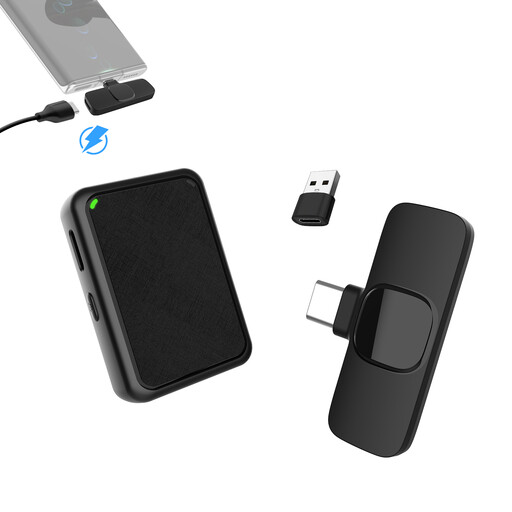
Moman MB1C clip-on microphone, 1TX+1RX, USB-C
The clip-on design may suit you if you'd rather attach a microphone to your clothing for voice recordings than speak into one on a fixed desk stand.
The product title lists a USB-C receiver and compatibility with iPhone 18, 17 and 16.
View at Joybuy
 No image available
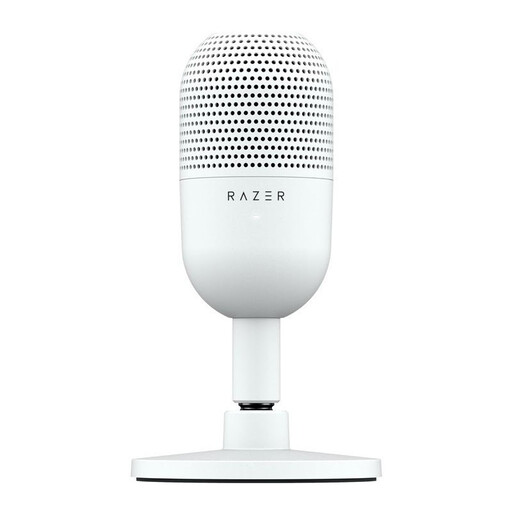
Razer Seiren V3 Mini White
This compact model may suit a fixed solo setup on a desk if you can position the microphone in the same place each time.
Razer lists a supercardioid pickup pattern and tap-to-mute control. Directional recording doesn't guarantee a quiet recording in every room.
View at Joybuy
 No image available
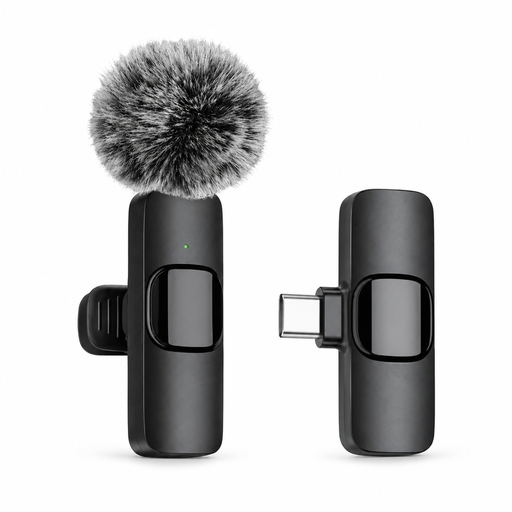
Verbex K9-Black wireless lavalier microphone
The lavalier design may suit you if you want to attach a microphone to your clothing for voice recordings rather than place it on a desk.
The product title lists a Type-C interface. Check that it fits your recording device.
View at Joybuy
Frequently asked questions
How can you check that your USB microphone is recording, rather than your laptop's built-in microphone?
Select the USB microphone as the audio input in your sound settings, and check the input in your recording app too. Then make a short test recording and listen back to it.
Can you hear yourself without an audible delay during speaking practice?
It depends on the model and connection. According to the manual, the RØDE NT-USB Mini supports direct monitoring when you connect headphones to the microphone. Check whether other models have this feature.
Should you buy an extended warranty when shopping online?
Not necessarily. In the Netherlands, there is no fixed statutory warranty period; if a product is faulty, the seller is your point of contact. First compare what an extended warranty adds. Many online consumer purchases also usually come with a 14-day cooling-off period.
Can you record your speaking practice and share a recording with a practice partner?
According to the Dutch Data Protection Authority, the GDPR does not apply to the processing of personal data carried out solely for personal or household use. That exception does not necessarily apply if you publish someone else's personal data in a public source. This information does not amount to general permission to share recordings of a practice partner publicly.


