
Practising with a quiet voice
You want to listen back to words and sounds without having to speak louder. Focus on microphone placement and listen back to a test recording, as Shure’s placement advice recommends.


For gentle speaking practice, having a microphone close to you and pointing towards your voice matters more than simply turning up the gain: more gain can also amplify room noise. If your room is noticeably noisy, a dynamic cardioid USB microphone may be worth comparing; in a quiet room, a cardioid USB condenser microphone is another option. Make a test recording where you usually practise and check the connection, desk space and whether you need a headphone function.
You want to listen back to words and sounds without having to speak louder. Focus on microphone placement and listen back to a test recording, as Shure’s placement advice recommends.
You can hear household or computer noise, for example, and can speak close to a directional microphone. Compare recordings in your usual practice space; a microphone won’t change the room’s acoustics, as Shure explains.
You’re looking for a USB setup and may want to hear your own voice as you speak. Check the stand, cable and headphone socket supplied with the specific model.
Choose this option if: you can speak close to the microphone in a room with noticeable background noise.
Bear in mind: keeping a consistent speaking position is still important; a microphone’s features won’t make the room quiet.
Choose this option if: you practise at a desk in a quiet room and want a compact USB setup.
Bear in mind: a cardioid pattern won’t remove echo; also check that the supplied cable is compatible with your device.
| What matters | What to check | Who is this important for? |
|---|---|---|
| Being able to hear quiet speech clearly on playback | Check that you can position the microphone close to you and point it towards your voice; make a test recording. | If I speak quietly, I want to listen back to sounds without speaking louder. Around 36% of consumers give clear quiet speech the highest priority. |
| Background noise and echo | Record in the place where you plan to use it, with your usual background noise, then listen for your voice, noise and echo. | Anyone practising in a noticeably noisy room wants background noise to mask their voice as little as possible; around 29% of consumers put this first. |
| Connecting via USB | Check the cable type and connection for the exact model and device. | If I want to record without a separate audio interface, the USB connection needs to work with my device. Around 21% of consumers give easy connection the highest priority. |
| Listening while practising | Check whether the model has a headphone output for direct monitoring. | For short practice sessions, I want to hear straight away what the microphone is picking up; around 14% of consumers give direct monitoring the highest priority. |
Simply turning up the signal won’t restore the balance between direct speech and echo.
First, try a steady position close to the microphone and listen back to a saved test recording.
A directional pattern can’t improve a room’s acoustics. Shure points out that a microphone can’t completely separate direct speech from reflected sound.
Test it where you actually practise. Compare microphone types without assuming that noise reduction is guaranteed.
Cables and stands vary by model and version. FIFINE, for example, lists different bundles for the AM8.
Compare the version on offer with your device’s port and the space available on your desk.
If your device has a different port, you may need a suitable cable; check what’s included with the specific version.
The Q2U is a dynamic cardioid microphone with USB and XLR connections, suited to anyone who speaks close to the microphone and wants both connection options.
The ATR2100x-USB is a dynamic cardioid USB/XLR microphone for anyone who values cable options and direct monitoring.
The NT-USB Mini is a compact cardioid USB condenser microphone for a quiet desk setup.
The AmpliGame AM8 is a dynamic cardioid USB/XLR microphone; pay close attention to the version and bundle when comparing it.
These Joybuy products are USB microphones suitable for speech recording or a desk setup. Check the connection and version listed for each model.
 No image available
Could suit anyone who wants to record speech via USB and monitor through a headphone output while recording.
The product name lists a cardioid pattern, latency-free monitoring and a 3,5 mm connection.
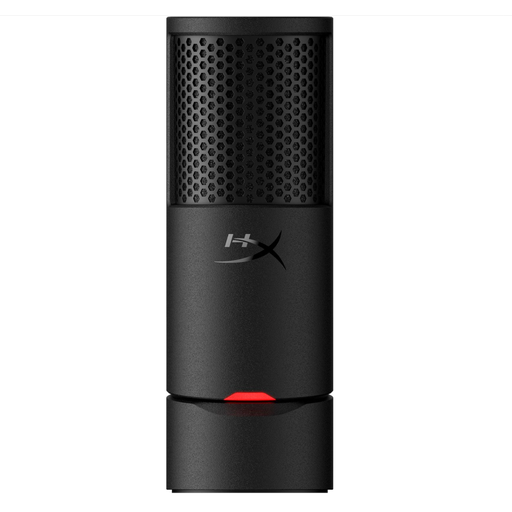 No image available
Could suit anyone looking for a USB microphone for speech recordings and a compact desk setup.
The product name lists a cardioid pattern and plug-and-play functionality; the version is described as black.
 No image available
Could suit anyone looking for a USB microphone for voice recording at a compact desk.
The product name lists the Quartz version and tap-to-mute functionality.
No. First, consider how far you are from the microphone and the sound in your practice space. A directional microphone can still pick up echo, so make a test recording at your usual speaking volume before choosing based on microphone type alone.
Connect the USB microphone, select it as the input in your recording software and record a short practice sentence at your usual speaking volume. Point the front towards your mouth, listen back to the saved file and adjust the position if needed. According to their manufacturers, the RØDE, Samson and Audio-Technica models mentioned offer direct headphone monitoring.
Before ordering, check what’s included with the exact version, particularly the cable and stand. According to the Dutch government, when buying remotely from a business you will often have a 14-day cooling-off period, although there are exceptions. If a product is faulty, the seller is your point of contact for the legal guarantee; the Netherlands does not have a fixed statutory guarantee period.
According to the Dutch Data Protection Authority, recordings made solely for personal or household use are outside the scope of the GDPR. Don’t assume the same exception applies if you share or publish recordings in which other people can be identified more widely: GDPR rules and an appropriate legal basis may then apply. The assessment depends on the circumstances of the recording and sharing.