
Practising with a fan running
You record yourself while a fan is audible, and can move either the microphone or the fan. Pay particular attention to the distance from your mouth and the direction of the microphone.


If you need to keep a fan running while practising Dutch, start with a dynamic cardioid USB microphone that you can position close to your mouth. This lets you adjust its position and direction in relation to the fan, although a cardioid pattern won’t eliminate sound completely. If you’d also like to try noise processing, check whether the specific model has a denoiser and compare short recordings with the feature switched on and off.
You record yourself while a fan is audible, and can move either the microphone or the fan. Pay particular attention to the distance from your mouth and the direction of the microphone.
You want to assess Dutch sounds and consonants. Direct headphone monitoring and the option to compare recordings with and without processing may be useful features to consider.
You want to record over USB and are considering the included stand, cable and controls. A simple setup doesn’t automatically mean fan noise will disappear.
A good fit if: you can position the microphone close to your mouth and adjust its direction in relation to the fan.
Keep in mind: a cardioid pattern also picks up sound audible in front of the microphone. Speaking close to it and using a suitable mount can make a difference.
A good fit if: the fan is constantly audible and, alongside good positioning, you’d like to try additional noise processing.
Keep in mind: a denoiser doesn’t guarantee a noise-free recording or unchanged sound for every pronunciation recording. Listen to the results for yourself.
A good fit if: you want a simple desk setup and can switch the fan off or move it further away.
Keep in mind: a pop filter or cardioid mode alone is no proof that constant fan noise will be removed.
| What to consider | What should you check? | Who is this important for? |
|---|---|---|
| Keeping your voice clear | Check the cardioid pattern, how close the microphone can be positioned to your mouth and its direction in relation to the fan. | When I practise with the fan on, I want to be able to hear my voice clearly on playback. Around 36% of consumers give top priority to voice clarity with fan noise in the background. |
| Assessing pronunciation | Check whether there’s a headphone output and whether any noise processing can be switched on and off. | I want to listen back to sounds and consonants and compare how processing affects my recording. Pronunciation checks come first for around 29% of consumers. |
| Getting started easily via USB | Check the USB connection and which cable, stand and controls are included with the exact model. | If I want to record without a separate audio interface, having the right cable and a simple setup matters. Around 21% of consumers particularly value getting started easily. |
| Setup and expandability | Check the mounting options, the accessories you’ll need and whether you might want to use an XLR connection later. | I want to point the microphone from a fixed position or potentially use XLR equipment in the future. For around 14% of consumers, setup or expandability is the main consideration. |
Shure clarifies that ‘Voice Isolation’ refers to the cardioid pickup pattern. The MV7+’s separate real-time denoiser is designed for constant noise, but even this feature doesn’t guarantee a noise-free recording.
Make short test recordings with the fan on, position the microphone carefully and, if needed, compare the denoiser switched on and off.
RØDE describes the PodMic USB’s pop filter as protection against plosive sounds when speaking. That’s different from processing constant background noise.
Assess plosive sounds and fan noise separately, and pay attention to microphone placement too.
The PodMic USB has a mounting point; Audio-Technica lists a desk stand and cables for the ATR2100x-USB. What you need depends on your speaking position and the connections available.
Compare the contents of the box for the exact model with your USB port and preferred microphone mount.
You may need a suitable arm, mount or adapter for the setup you want.
The MV7+ is a dynamic cardioid USB microphone designed for close-up speech recording, with an optional real-time denoiser.
The PodMic USB is a dynamic USB/XLR microphone for close-up speech recording.
The ATR2100x-USB combines a dynamic cardioid microphone with USB and XLR connections.
The SoloCast 2 is a compact USB condenser microphone for a desk setup.
The Yeti offers several pickup patterns and on-microphone controls for a range of recording situations.
These Joybuy products are USB microphones for recording speech at a desk. Check the pickup pattern and make a test recording in your own space to see how the fan sounds in the recording.
 No image available
For speech recording at a desk when you want to record via USB and mute the microphone with a tap.
The product description lists a supercardioid pickup pattern and says it can help limit background noise. Assess this with a test recording while the fan is on.
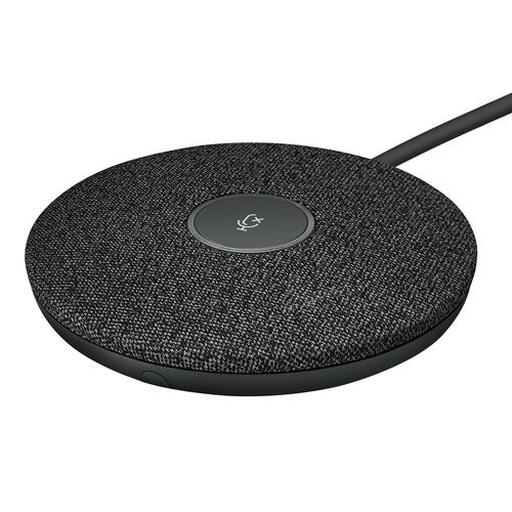 No image available
For recording speech at a desk when you want a mute button on the microphone.
The product description lists an omnidirectional pickup pattern and a 2,95 m cable. If you’re using it with a fan running, bear in mind that it picks up sound from all around and check the results in your own space.
Speak into the intended front of a cardioid microphone, keep the distance from your mouth consistent and, if possible, point the less sensitive side towards the fan. RØDE recommends around 5–10 cm for the PodMic USB; this distance is specific to that model.
It depends on the connections and included cables for the exact model. According to the manufacturer, the Audio-Technica ATR2100x-USB has a headphone output for direct monitoring and comes with USB-C, USB-A and XLR cables.
No, a cardioid pattern won’t eliminate fan noise completely. Audio-Technica describes the ATR2100x-USB as reducing the pickup of sound from the sides and rear. Make a test recording with the microphone in the position where you plan to use it.
Record the same short exercise with the feature switched on and off, then listen back to both versions. Shure lists a real-time denoiser for the MV7+ and distinguishes it from ‘Voice Isolation’, which refers to the cardioid pickup pattern.
For a distance purchase from a business, you’ll generally have a 14-day cooling-off period, according to the Dutch government. There are exceptions, so check the seller’s information and bear in mind that this doesn’t necessarily apply to purchases from a private individual.