Who is this choice relevant for?

Readers in a reverberant room

If you’re recording alone and don’t want to renovate the room first, look for a setup that allows you to keep a short, consistent speaking distance. Shure points out that a microphone can’t improve a room’s acoustics; for the PodMic USB, RØDE recommends a distance of around 5–10 cm.

Performers with wide vocal dynamics

If you whisper and then suddenly raise your voice, you’ll want to assess the recording level and the sound of any automatic processing. Shure describes Auto Level on the MV7+ as a feature that adjusts the gain; a test recording will help you decide whether the settings suit your performance.

Beginners with a simple desk setup

If you’re recording directly via USB, check in advance which stand, cable and headphone connection are included with the exact version. Sennheiser lists a desk stand and USB-C cable as part of the basic Profile USB package.

What should you look for when buying?

Dynamic, positioned close

A good fit if: you’re speaking solo and can maintain a short, consistent distance.

Bear in mind: you’ll need to position the microphone carefully; a directional pattern won’t remove reverberation.

Dynamic with USB and XLR

A good fit if: you want to record via USB now, with the option of using an audio interface later.

Bear in mind: using XLR requires additional equipment; automatic level control doesn’t guarantee that quiet and loud passages will sound natural.

Cardioid USB condenser

A good fit if: you can record in a quiet environment and value on-mic controls or an included desk stand.

Bear in mind: a cardioid pattern won’t prevent reflections in the room; assess the sound from your usual speaking distance.

Consideration What should you check? Who is this important for?
Voice versus room sound Check the polar pattern, which side to speak into and whether you can maintain a short, consistent distance. Record a passage in your own room; Shure notes that a microphone won’t improve the acoustics. If I want my voice to remain clear without treating the room first, I’ll focus on positioning. Around 36% of consumers say room sound is their main concern when buying.
Quiet speech and shouts Check whether you can adjust the gain and monitoring. Compare test recordings of your quietest and loudest passages, with any processing switched on and off. If my speaking volume varies considerably, I want to hear whether the recording still sounds expressive. Around 29% of consumers prioritise vocal dynamics.
A simple desk setup Check the included stand and cable, how it connects to your device and whether you can monitor through headphones. If I want to get started without extra mounting equipment, I want to know what’s in the box beforehand. Around 21% of consumers prioritise a simple setup.
Adding XLR later Check whether the exact model has both USB and XLR, and factor in a suitable interface or mixer for a future setup. If I want to record with an interface or mixer later, having an extra connection option matters. Around 14% of consumers choose expandability as their main buying consideration.

Common pitfalls

  • Assuming a high recording resolution will solve reverberation

    The maximum sample rate alone doesn’t tell you how many room reflections will be in your recording. Audio-Technica lists a maximum of 24-bit/96 kHz for the AT2020USB-X, but Shure explains that a microphone can’t improve the room’s acoustics.

    First compare the setup and speaking distance, then make a test recording in your own room.

  • Assuming every USB microphone can sit straight on your desk

    The included mounting accessories vary by version. Sennheiser lists a desk stand with the basic Profile package; the Dutch Shure product page consulted doesn’t list a desk stand for the MV7+ version shown.

    Check what’s in the box and which stand or boom arm you’ll need for your speaking position.

  • Treating automatic features as a guarantee of a natural performance

    An adjustable feature won’t tell you how quiet and loud passages will sound together. Shure describes Auto Level for the MV7+, but you’ll need to judge the expressive balance for yourself.

    Record your quietest and loudest speaking levels, then compare the sound with the feature switched on and off.

Brands to compare

RØDE

The PodMic USB is a dynamic USB/XLR microphone for close-miked speech recording.

  • According to RØDE, the PodMic USB has an internal shock mount and pop filter, a supplied external pop filter and a headphone output.
  • RØDE recommends a speaking distance of around 5–10 cm for this model. Check that this position works for your performance and mounting setup.

Shure

The MV7+ is a dynamic USB/XLR microphone with adjustable digital features.

  • Shure lists Auto Level, digital noise features and a 3.5 mm headphone socket.
  • These features won’t remove reverberation from an untreated room. Also check which mounting accessories are included with the exact version.

Sennheiser

The Profile USB is a cardioid condenser microphone with on-mic controls.

  • Sennheiser lists gain, mix and headphone controls, as well as a mute button. A desk stand is included with the Profile Base Set.
  • A cardioid pattern won’t fix the acoustics of an untreated room; assess the sound with a recording made from your usual speaking distance.

Audio-Technica

The AT2020USB-X is a cardioid USB condenser microphone with direct monitoring and mix control.

  • Audio-Technica specifies a maximum of 24-bit/96 kHz for this model; an optional shock mount is listed separately.
  • The maximum sample rate doesn’t indicate reduced room reverberation. Compare the setup and recording in your own room.

USB microphones at Joybuy

These USB microphones are options for focused voice recording at a desk. For dramatic readings, pay attention to the recording pattern, the controls and how a test recording sounds in your own room.
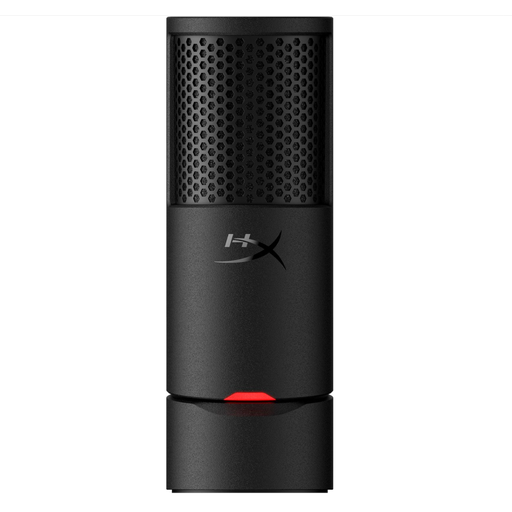
HyperX SoloCast 2 USB microphone, black

HyperX SoloCast 2, black

Could suit you if you want to record via USB with a cardioid pattern and value a mute control.

The product information lists a built-in pop filter and shock absorber.

View at Joybuy
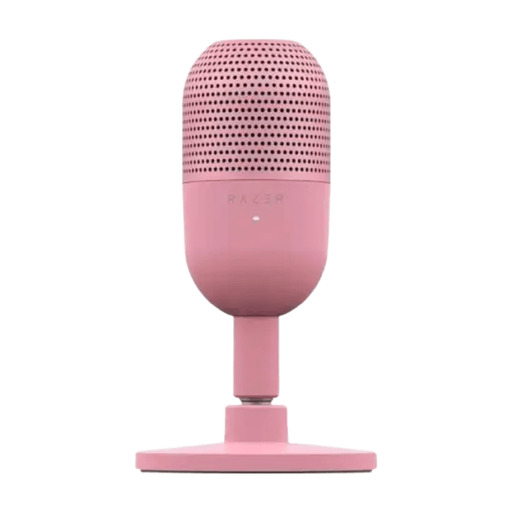
Razer Seirēn V3 Mini, Quartz

Razer Seirēn V3 Mini, Quartz

Could suit you if you’re looking for a compact USB microphone with a mute control for recording.

The product information lists a supercardioid pickup pattern and tap-to-mute.

View at Joybuy

Frequently asked questions

Will a cardioid microphone or noise reduction eliminate room reverberation?

No. A microphone can’t improve the room’s acoustics. Directionality and a short speaking distance can help inform your recording setup, but assess the result with a test recording in your own room.

How should I position a microphone for a solo performance?

Point the correct side towards your mouth and try to keep the distance consistent as you read. For the PodMic USB, RØDE recommends around 5–10 cm; that’s a recommendation for this model, not a universal distance.

Do I need an extra audio interface to record via USB?

You don’t need an extra interface to record directly via USB with the USB models mentioned. If you later use the XLR output on a microphone such as the PodMic USB, RØDE describes connecting it to analogue equipment such as an audio interface or mixer.

What can I do if a microphone I bought online doesn’t work properly?

For a consumer purchase in the Netherlands, you’re entitled to a legal guarantee if the product doesn’t meet reasonable expectations under normal use. ACM ConsuWijzer says the seller is responsible for providing an appropriate solution. Online purchases also generally come with a 14-day cooling-off period after delivery, subject to legal exceptions.

Can I publish a recording of a book that’s still in copyright?

Not without permission. According to the Dutch government, you need the creator’s permission to use a book protected by copyright. Check the rights for the specific text before publishing; this doesn’t apply to a personal test recording.
