Who is this choice relevant to?

Expressive speaker

You alternate between quieter sentences and powerful appeals, and want to check during a test recording that the levels are right. Shure and Sennheiser describe features for automatic level control and level monitoring respectively.

Recording in a reverberant room

You can’t fully adapt the room and want to keep speech clear. Shure emphasises that microphone placement and room acoustics continue to affect the recording.

Creator with a simple desk setup

You want to record via USB and check in advance that the controls, monitoring and included accessories will work at your desk. For specific models, RØDE and Sennheiser describe features including a desktop stand and controls for direct monitoring.

What should you look for when buying?

Directional USB condenser microphone

A good fit if: you record in a fixed position in a relatively quiet room and want to record directly via USB.

Keep in mind: a cardioid pickup pattern is no substitute for a suitable room or good positioning; test the loudest passage too.

Dynamic USB microphone for close-up recording

A good fit if: you can stay close to the microphone and room sound is a key concern.

Keep in mind: this option also depends on distance and the room; automatic level control or digital processing doesn’t guarantee a recording free of reverberation or level problems.

What to consider What should you check? Who is this important to?
Changing vocal volume Compare the available level controls and indicators; test the level using the loudest passage. If I speak softly and loudly, I want to be able to assess both passages properly before using the recording. Around 36% of consumers prioritise control over vocal dynamics.
Clarity in a reverberant room Check whether you can position the microphone close to the speaker and keep it steady, then listen to the room sound in a test recording. When I’m recording in a room I can’t adapt, I want to know whether my words will remain clear. Around 29% of consumers prioritise clarity in the space available to them.
Plosives and monitoring Check whether a pop filter is included and whether you can listen to your recording through headphones. If plosives could disrupt my appeal, I want to be able to hear and assess them during a test recording. Around 21% of consumers focus first on plosives and recording monitoring.
A USB setup that works for you Check the USB connection and whether the included stand or arm and cable will work with your desk. When I want to get started without a complicated setup, I want to know whether the connection and included accessories are enough for my speaking position. Around 14% of consumers prioritise easy connectivity and a suitable setup.

Common buying mistakes

  • Assuming noise processing will fix every reverberant room

    Shure explains that a microphone can’t improve the acoustics of the room it’s in. Features for noise or level control are also specific to individual models.

    Make a test recording in the room you plan to use and listen to check that the quieter passages remain clear too.

  • Assuming one model is a complete recording kit

    The included accessories vary by model and version. An arm, stand, cable or pop filter you need may therefore determine whether a particular setup will work for you.

    Check what’s included with the exact version and compare it with the accessories you need to speak from your preferred distance.

  • Confusing extra connections or features with better sound

    USB/XLR connections and digital features offer different ways to use a microphone, but they don’t in themselves prove that it will sound better in your room.

    Decide how you want to record first, then test the full performance, including the loudest sentence, before making your final recording.

Brands to compare

RØDE

The NT-USB+ is a cardioid USB condenser microphone, while the PodMic USB is a dynamic USB/XLR option for close-up recording.

  • RØDE lists direct headphone monitoring for both models. For the NT-USB+, the manufacturer also mentions a pop filter and desktop stand.
  • The microphone types and included accessories vary. Compare them model by model; the manufacturer’s descriptions don’t tell you which microphone will sound better in your room.

Shure

The dynamic MV7+ combines USB-C and XLR, making it an option to compare for close-up recording and automatic level control.

  • For the MV7+, Shure describes Auto Level Mode, digital processing and a digital feature to reduce plosives.
  • These are manufacturer features specific to this model, not a guarantee that reverberation or level problems will disappear from every recording. Check the results with a test recording.

Sennheiser

The Profile USB is a cardioid USB condenser microphone for a fixed desk setup, with controls on the microphone itself.

  • For the standard version, Sennheiser lists a desktop stand and cable, as well as gain, mix and headphone controls.
  • Check that the desktop setup allows you to use your preferred speaking position and that the connection is compatible with your recording device.

Audio-Technica

The AT2020USB-X is a USB condenser microphone worth comparing if direct monitoring and controls are important to you.

  • Audio-Technica lists a headphone output and mix control.
  • Work out separately which mount or pop filter you’ll need for your setup; this product information doesn’t compare recording quality with other models.

Logitech G

The Yeti offers several pickup patterns; for one speaker, it’s worth matching the pattern to your recording.

  • Logitech G Netherlands lists gain, mute and direct headphone controls.
  • According to Logitech G, Blue VO!CE effects require G HUB software. Effects are no substitute for good microphone placement.

USB microphones at Joybuy

USB microphones for recording speech in a fixed setup, with a focus on recording control and a suitable speaking position.
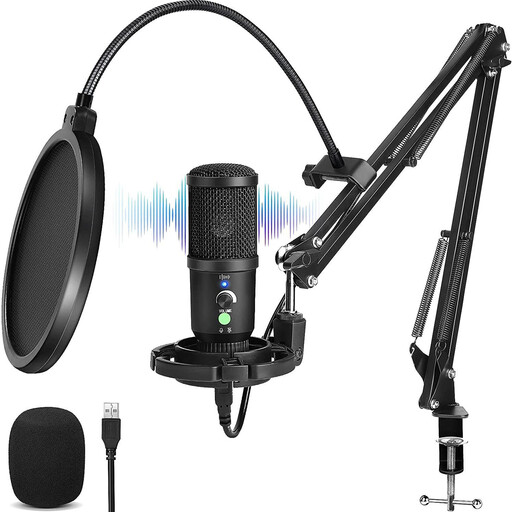
USB condenser microphone with cardioid pattern

USB condenser microphone with cardioid pattern

A good fit if you’re looking for a USB condenser microphone with a cardioid pattern for recording speech; check that the version on offer suits your preferred speaking position.

Joybuy
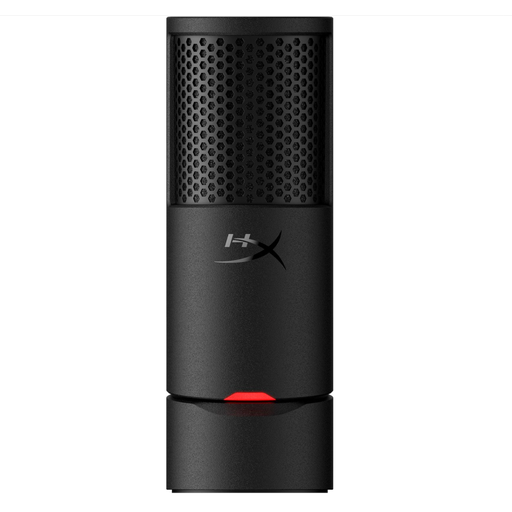
HyperX SoloCast 2 USB microphone, black

HyperX SoloCast 2 USB microphone, black

An option if you’re looking for a cardioid USB microphone for a desk setup; the product title specifies plug-and-play.

Joybuy
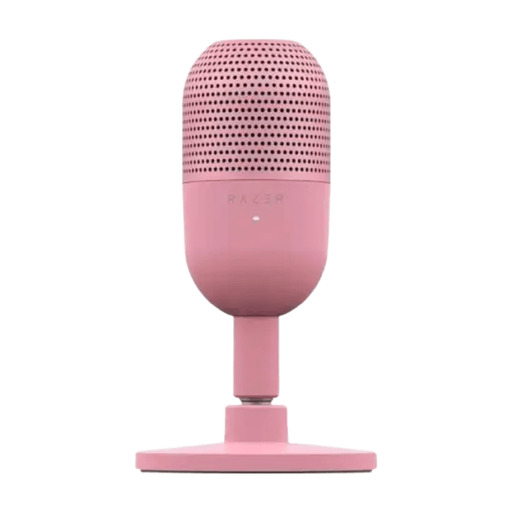
Razer Seiren V3 Mini Quartz USB microphone

Razer Seiren V3 Mini Quartz USB microphone

A good fit if you’re looking for a compact USB microphone for a fixed position; the product title mentions tap-to-mute controls.

Joybuy

Frequently asked questions

How can you test an expressive performance before recording the final appeal?

First, record both the quietest and the most powerful passage, then listen back. Check the recording level, plosives and audible room sound. If necessary, adjust the level or microphone position and test again. Sennheiser describes the Profile USB as having gain control with an overload indicator, but controls vary by model.

Do you also need an XLR audio interface to record directly via USB?

Not when using the USB connection on a USB/XLR model such as the RØDE PodMic USB. RØDE describes both a direct USB connection to a computer and a separate XLR connection via an interface or mixer. Check the connection and cable for the exact model you’re buying.

What if a microphone you bought online doesn’t work properly?

For a consumer purchase in the Netherlands, statutory consumer rights apply alongside any manufacturer’s warranty: a product must meet what you could reasonably expect, and the seller must resolve a fault that occurs too soon during normal use. ACM ConsuWijzer also states that online purchases generally come with a statutory 14-day cooling-off period after delivery; check which exceptions apply to your purchase.

Can you use someone else’s recognisable voice in an online charity appeal?

A sound recording in which someone is recognisable may be personal data. Processing it requires a lawful basis under the GDPR; the Dutch Data Protection Authority says that publishing other people’s personal data online is, in principle, only permitted with their consent. Discuss the intended use before recording and publishing, and don’t assume that taking part in the recording automatically means someone has agreed to its publication.
