Who is this choice relevant to?

Voice actor in a reverberant hall

You’re mainly recording one character voice at a time and want clear speech despite the sound of the hall. Speaking close to the microphone and positioning it carefully matter more than relying on a general promise of noise reduction.

Drama group with actors taking turns

You’re recording several roles one after another, moving or passing the microphone around, and want to check during recording that every voice is coming through clearly.

Creator with a fixed recording spot

You can keep the hall quiet while recording and want a straightforward USB set-up that lets you monitor the voice as you record.

What should you look for when choosing?

Dynamic USB microphone for close-up recording

Choose this option: if one actor speaks at a time and you can keep the microphone close to their mouth.

Bear in mind: a directional pickup pattern or automatic level control won’t, by itself, make the recording free from reverberation and background voices.

Handheld microphone with USB and XLR

Choose this option: if actors take turns holding the microphone or you’d like the option of using a suitable XLR set-up later.

Bear in mind: varying the distance from the speaker can change the recording level; you’ll also need suitable recording equipment to use XLR.

USB condenser microphone in a fixed position

Choose this option: if the hall sounds quiet enough in a test recording and one speaker can record from a fixed position.

Bear in mind: the type of microphone alone won’t tell you how much room noise you’ll hear; the room and microphone position determine whether the recording is usable.

What to consider What to look for Who is this important for?
Room noise and background voices Check the pickup pattern and make a test recording in the actual location, with the microphone pointed towards the speaker. If I’m recording one voice in a reverberant hall, I want clear speech without relying on noise processing. Around 33% of consumers say room noise is their main concern when buying.
Actors taking turns Decide whether the microphone will be handheld or repositioned, and check which accessories are included. When actors take turns, I want to be able to pass the microphone around or reposition it easily. For around 27% of consumers, use with different actors is the top priority.
Quiet and loud passages Check whether the exact model offers direct headphone monitoring, and test both quiet and loud dialogue. When performing expressively, I want to hear changes in level while recording. Around 20% of consumers prioritise monitoring the recording and its level.
Connection and complete set-up Check that the USB connection and cable work with your recording device; also check the stand, clip and windscreen. If I want to get started without missing parts, I check that the connection and included accessories suit my set-up. For around 13% of consumers, easy connection is the main consideration.
Voice recording in a quiet location Assess your own hall with a test recording and check that a fixed set-up will work. When the hall is quiet enough, I want to record and monitor a voice from one fixed position. For around 7% of consumers, capturing vocal detail in a quiet set-up is the deciding factor.

Common mistakes when choosing

  • Assuming noise reduction solves every problem caused by room noise

    A directional microphone still picks up sound within its pickup area. Shure says the MV7+’s noise processing does not remove background voices.

    Listen to a test recording in the hall and first adjust the microphone position and recording conditions.

  • Confusing an XLR model with a USB version

    A similar model name doesn’t prove that a version records directly via USB. You’ll also need suitable recording equipment to use an XLR connection.

    Check the connections and included cables for the exact model before ordering.

  • Assuming a stand and cable are always included

    Included items vary by model and version. You may need a suitable stand, cable or adapter to create the set-up you want.

    Compare the box contents with your device and the place where the actor will record.

Brands to consider for this set-up

Audio-Technica

The ATR2100x-USB combines a handheld design with USB-C and XLR, making it a good match for recordings where actors take turns.

  • Audio-Technica lists direct headphone monitoring, USB and XLR cables, and a desktop tripod stand. Its cardioid pickup pattern captures less sound from the sides and rear, but won’t eliminate reverberation in a hall.
  • Decide whether actors will hold the microphone or place it on the included stand.

Samson

The Q2U is a dynamic USB/XLR microphone with basic accessories for a portable speech-recording set-up.

  • Samson lists a headphone output, microphone clip, desktop tripod stand, windscreen, and USB and XLR cables.
  • A directional recording won’t automatically prevent room noise from being audible; assess the room with a test recording.

RØDE

The PodMic USB is a dynamic USB/XLR option for close-up recording; the NT-USB Mini is a compact USB condenser microphone for a fixed position.

  • RØDE recommends speaking about 5–10 cm from the PodMic USB. The NT-USB Mini offers direct headphone monitoring and a detachable stand.
  • Choose between these models based on a test recording in your own hall, rather than a general claim about quality.

Shure

The MV7+ is a dynamic USB-C/XLR option for anyone who wants level control and monitoring while recording character voices.

  • Shure lists Auto Level Mode, a headphone socket and an optional Real-time Denoiser.
  • According to Shure, the denoiser does not remove background voices. Also check that the software features work with your device and app.

Joybuy products for USB voice recording

This selection features USB microphones for voice recording. Make a test recording in the hall and check that the connections and included items suit your set-up.
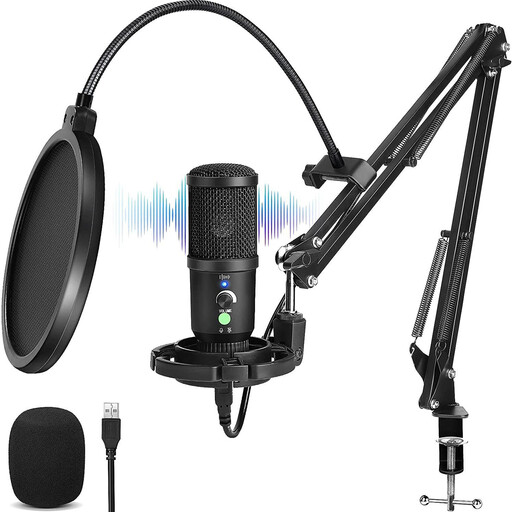
USB condenser microphone with cardioid pickup pattern

USB condenser microphone with cardioid pickup pattern

Suitable for a fixed USB voice-recording set-up if a test recording confirms that the hall is quiet enough.

USB condenser microphone; cardioid pickup pattern; zero-latency monitoring.

View at Joybuy
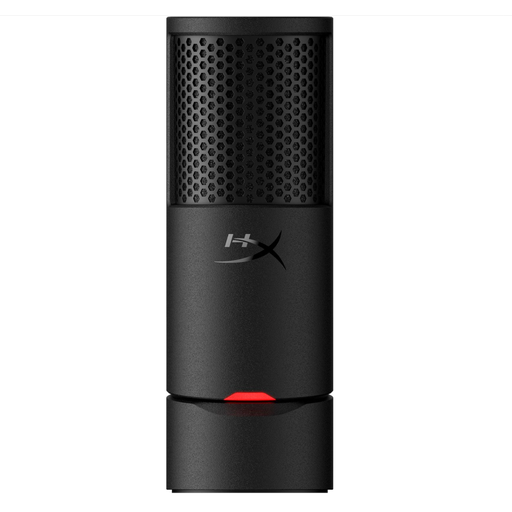
HyperX SoloCast 2 USB gaming microphone

HyperX SoloCast 2 USB gaming microphone

A USB microphone to consider for voice recording from a fixed position; check the sound with a test recording in the hall.

USB; cardioid pickup pattern; plug-and-play; black.

View at Joybuy
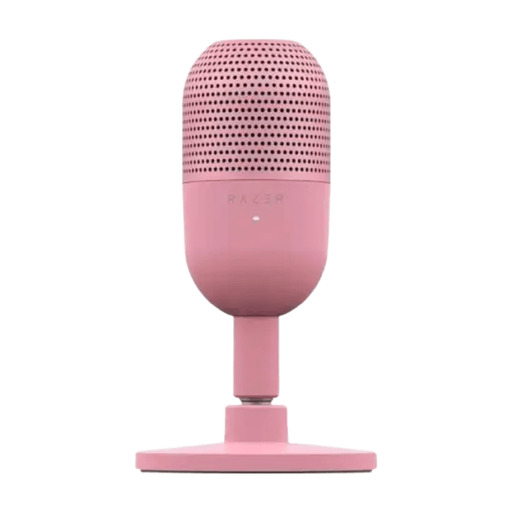
Razer SEIRÉN V3 MINI Quartz USB microphone

Razer SEIRÉN V3 MINI Quartz USB microphone

Suitable for a USB voice-recording set-up where you want a mute control on the microphone; assess the recording in the intended location too.

USB; tap-to-mute control; ultra-compact.

View at Joybuy

Frequently asked questions

Does every actor need their own USB microphone?

Not if you’re recording roles one after another and can position the microphone properly each time. For several people speaking at once, one microphone in the middle of the table may not be suitable; work out the set-up with a test recording.

How can you stop a character voice from being recorded too quietly?

Keep the distance and direction consistent, and monitor the recording if the model offers direct headphone monitoring. For the PodMic USB, RØDE recommends a distance of about 5–10 cm, with the top facing the mouth; this isn’t a general rule for other models.

Do you need an audio interface for USB recordings?

Not if you’re connecting directly via USB to a compatible device. If you want to use the XLR output on a USB/XLR model, check that you have suitable recording equipment.

What if the microphone doesn’t work properly after you buy it?

If a product is faulty, the seller must provide a solution. According to the Dutch government, there is no fixed statutory warranty period in the Netherlands; any manufacturer’s warranty is separate from this.

Can we record and publish recognisable voices at a community centre?

A sound recording that makes someone recognisable may be personal data. An organisation needs a lawful basis under the GDPR to process it; the Dutch Data Protection Authority lists consent as one possible lawful basis. The appropriate basis depends on the specific production.
