For spoken book reviews in an untreated room, a directional microphone that you can position close to your mouth is a practical first choice. A dynamic USB model is a sensible option, but it won't eliminate room echo. RØDE warns that speaking further away can make echo and background noise more noticeable. Then choose according to your setup: do you need a complete starter kit, USB/XLR flexibility or digital controls?
Who is this choice relevant for?
Solo reviewer dealing with noticeable room echo
You record book reviews in an ordinary room and can position the microphone close to your mouth. In that case, it's important that your voice stays clear above the sound of the room; RØDE stresses the importance of speaking at close range.
New reviewer with a simple setup
You want to get started via USB and check whether the version you've chosen includes a suitable stand, the right cable and headphone monitoring. Audio-Technica Netherlands and Samson list different accessories for their various models.
Reviewer looking to expand their setup
You want to record via USB now and may want to use XLR equipment later, or have more control over monitoring and processing while recording. To check this, look at the connections and features of the exact model version.
What should you look for when buying?
Dynamic USB starter kit
A good fit if: you want to record straight to a computer and use cables or a desk stand as part of your setup.
Bear in mind: the stand needs to bring the microphone close enough to your mouth without getting in the way of your reading space.
Dynamic USB/XLR model
A good fit if: you want to get started via USB and may want to use an XLR interface or mixer later.
Bear in mind: an XLR setup requires suitable additional equipment. Also check that the stand or boom arm will work with your setup.
USB condenser microphone
A good fit if: you're specifically looking for a condenser model with software features and can assess positioning and sound reflections with a test recording.
Bear in mind: this type isn't automatically unsuitable or protected from room echo. Also check the system requirements for the specific model.
| What matters |
What to look for |
Who it's important for |
| Voice versus room echo |
Check the polar pattern and whether you can position the microphone close to your mouth; make a test recording in your own workspace. |
When reading aloud in a reverberant room, I want to keep the microphone close without it getting in the way of my book or screen. Around 42% of consumers give reducing room echo their top priority. |
| Getting started easily |
Check the included cables, cable connectors, desk stand and connection to your computer. |
I want to get started via USB without extra equipment and know in advance what's in the box. Around 25% of consumers prioritise a simple setup. |
| Expanding your setup later |
Check whether the same model has both USB and XLR; an XLR connection to a computer requires suitable equipment. |
If I use USB now but may want to switch to XLR later, I look for those connections on the exact model. Around 17% of consumers give expandability their top priority. |
| Monitoring your recording |
Check for a headphone output, direct monitoring and any software controls or system requirements. |
When recording a long review, I want to hear how clearly my voice is coming through and make adjustments if needed. Around 16% of consumers prioritise monitoring while recording. |
Buying pitfalls
-
Choosing a microphone for noise reduction, then positioning it too far away
Speaking from further away can make room echo and background noise more noticeable. Digital processing is no substitute for good microphone placement.
Decide where your microphone, book and screen will go, then make a short test recording from that position.
-
Confusing models or generations with similar names
PodMic and PodMic USB are different versions. Wave:3 MK.1 and Wave:3 MK.2 are also different models, so their connections and features may vary.
Before buying, compare the full model name, connection, box contents and system requirements.
-
Comparing the microphone on its own
You may need a separate boom arm, suitable stand or audio interface for the setup you have in mind.
Check what's included with each version and what equipment you'll need for an XLR setup, if applicable.
Brands to consider
Audio-Technica
The ATR2100x-USB is a dynamic cardioid USB/XLR handheld microphone supplied with cables and a desk stand.
- Audio-Technica Netherlands lists direct monitoring, two types of USB cable and a desk stand.
- Check that the desk stand suits your recording position and setup.
Samson
The Q2U is a dynamic cardioid USB/XLR kit with a desk stand and windscreen.
- Samson lists direct monitoring and describes the model as suitable for use in untreated rooms.
- Suitability for an untreated room is a manufacturer's claim, not a measured result for your room. Also check whether the compact desk setup works for you.
RØDE
The PodMic USB combines USB and XLR with headphone monitoring and adjustment options.
- RØDE lists an integrated yoke and built-in features to reduce plosives and vibrations.
- Don't confuse the PodMic USB with the PodMic without USB. RØDE highlights input level and speaking distance as things to check if your signal is quiet.
Shure
The MV7+ is a dynamic USB-C/XLR microphone for anyone looking for controls and digital processing too.
- Shure describes features including Voice Isolation, Auto Level and denoising.
- These features don't guarantee that room echo will disappear. Also check the version and app compatibility.
Elgato
The Wave:3 MK.2 is a USB condenser microphone with software-based audio controls.
- Elgato lists a cardioid condenser capsule, headphone socket and included desk stand.
- Elgato lists Windows 11 or later, or macOS 14.2 or later, as the system requirements. Assess room echo with a test recording, and don't confuse MK.2 with MK.1.
USB microphones at Joybuy
These USB microphones are options for recording speech on a computer. Make a test recording to see how well the positioning works in your room.
 No image available
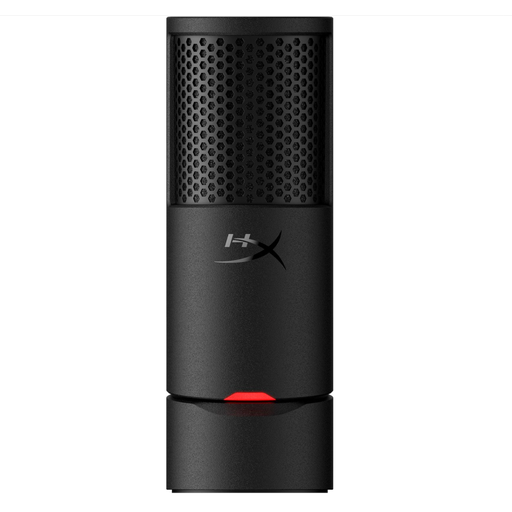
HyperX SoloCast 2 USB microphone, black
An option for recording speech via USB. Make a test recording to see how your voice compares with the room echo.
The product information lists a cardioid polar pattern, built-in pop filter and shock absorber.
USB-C to USB-A, plug-and-play and mute controls are listed. The product name specifies a black version.
Joybuy
 No image available
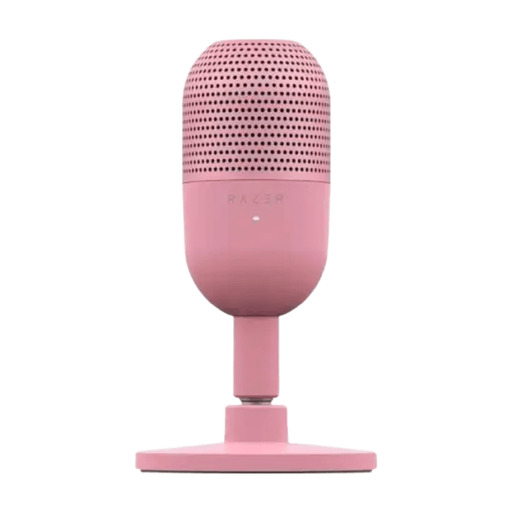
Razer Seiren V3 Mini Quartz USB microphone
A compact USB microphone for recording speech. Test the positioning in your own room before recording a full review.
The product information lists a supercardioid polar pattern and USB plug-and-play.
The Quartz version has tap-to-mute controls.
Joybuy
Frequently asked questions
Can a USB microphone eliminate the echo in my room?
No, don't count on it. RØDE says that speaking further away can make room echo and background noise more noticeable. Position the microphone close to your mouth and compare a short recording made in your own workspace.
How should I set up a RØDE PodMic USB if my voice sounds quiet?
For the PodMic USB, RØDE advises checking the input level and distance from the speaker, with around 5–10 cm given as a model-specific positioning guide. This isn't a universal distance for other microphones.
Do I need an audio interface straight away for a USB/XLR microphone?
Not if you connect the USB port directly to a compatible computer. To send an analogue XLR signal to a computer, you'll need a suitable interface or mixer.
What if a microphone I bought online isn't suitable or is faulty?
For a consumer purchase made remotely from a business in the Netherlands, there's generally a 14-day cooling-off period, according to the Dutch government. Faulty products are also covered by statutory guarantees; the seller must provide a suitable solution. The Netherlands doesn't have a fixed two-year statutory guarantee period for every product.
Can I read passages from a book aloud in a public review?
A short quotation may be covered by Dutch quotation law if it's relevant to the review, no longer than necessary, and the source and author are credited. This doesn't give general permission to read long passages or an entire book aloud; you may need permission to do so.


