
Speakers who practise close to the microphone
You want to hear your voice clearly on playback and can maintain roughly the same position in relation to the microphone throughout your speech. Shure describes the MV7+ as suitable for close-mic speech.


If you can stay close to the microphone while practising, a dynamic USB microphone designed for close-mic speech is a sensible first option. In a quiet room, a compact USB condenser microphone could also be a good fit. Record a test of both language sections and listen out for plosive sounds, differences in volume and background noise. If you want to monitor your voice as you practise, check whether the exact model has a headphone output and suitable monitoring features.
You want to hear your voice clearly on playback and can maintain roughly the same position in relation to the microphone throughout your speech. Shure describes the MV7+ as suitable for close-mic speech.
You want to listen for consonants, plosive sounds and changes in volume in both languages. A test recording and suitable monitoring features can help you check these details; RØDE and Sennheiser describe such features on specific models.
You want a small USB setup that’s quick to connect and easy to place for a short practice session. RØDE and Razer offer models described as compact.
| Buying concern | What should you check? | Who is this relevant to? |
|---|---|---|
| Clear speech at close range | Check the pickup pattern, the direction you need to speak into, and whether the stand or boom arm lets you position the microphone steadily at close range. | If I can stay in roughly the same spot for both language sections, it’s easier to compare my voice; around 36% of consumers say clear speech at close range is their main buying concern. |
| Plosive sounds and differences in volume | Check for a pop filter and gain control. RØDE lists a built-in pop filter for the NT-USB Mini; Sennheiser describes gain control for the Profile. | If I want to assess strong consonants and differences in level between the languages, I pay attention to the recording and the controls; around 29% of consumers prioritise articulation and recording volume. |
| Monitoring your voice as you speak | Check whether the exact model has a headphone output and how it mixes your voice with audio from your computer. RØDE and Sennheiser describe these features on specific models. | If I want to hear what the microphone is picking up while I practise, monitoring matters to me; around 21% of consumers give immediate playback their highest priority. |
| Connecting and positioning the microphone | Check the USB connection, the cable supplied and whether the stand lets you position the microphone at your preferred speaking distance. | If I have limited desk space and want to get started quickly, a simple setup is a major consideration; around 14% of consumers say compact size and connectivity are their main buying concerns. |
A directional microphone can still pick up other voices and sudden noises. Shure gives these as examples of sounds that the MV7 models’ noise reduction does not remove.
Make a test recording in the place where you plan to practise, covering both language sections, and listen for background noise during pauses too.
A desktop stand and a boom-arm setup are different options, and your preferred speaking distance affects where you can place the microphone.
Check what’s included in the box and see whether you can stay close to the microphone in your usual speaking position.
A USB connection doesn’t automatically mean the microphone has a headphone output or mix control.
Check these features on the exact model if monitoring your voice as you speak is an important reason for your choice.
Shure describes the MV7+ as a dynamic USB/XLR microphone for close-mic speech.
RØDE describes the NT-USB Mini as a compact cardioid USB condenser microphone for uses including speech recording.
Sennheiser describes the Profile as a cardioid USB-C condenser microphone, available in several setups.
FIFINE describes the AmpliGame AM8 as combining a dynamic cardioid microphone with USB and XLR.
Razer describes the Seiren V3 Mini as a compact USB microphone with a supercardioid condenser capsule.
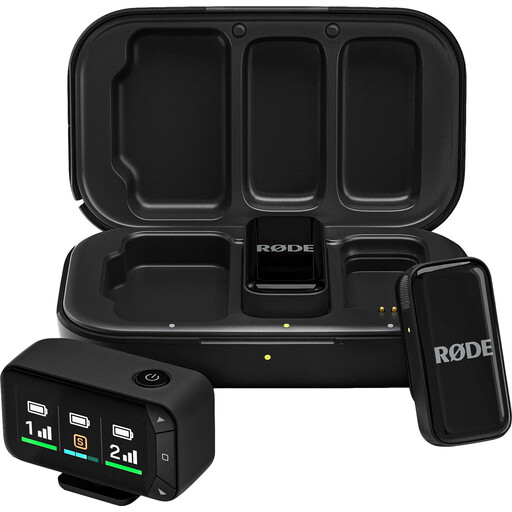
This selection includes products for practising speech: compact desktop USB microphones and a wireless RØDE kit with a USB-C receiver for use with a compatible computer.
 No image available
A good fit if you want to position the microphone close to the speaker and use the kit with a computer that has a USB-C port.
The kit includes two microphones, a camera receiver, a USB-C receiver and a charging case. You’ll need a USB-C port to use it as a USB audio device with a computer.
 No image available
Could be a good fit if you want to monitor your voice through headphones as you practise.
This product version is described as having a cardioid pickup pattern and latency-free monitoring. Check that the connection and controls suit your recording setup.
 No image available
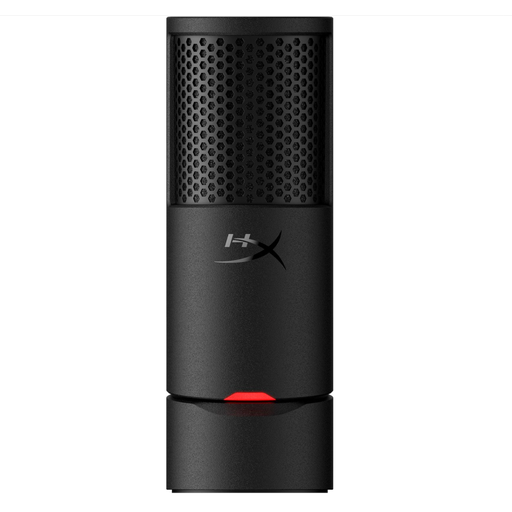
One to consider if you’re looking for a USB microphone for use at your desk.
This product version is described as a USB microphone with a cardioid pickup pattern.
 No image available
A good fit if you want a compact USB setup and need to be able to mute the microphone quickly while practising.
This version is described as ultra-compact and has tap-to-mute controls.
No. You can make a test recording of both language sections and listen back to your own voice. The microphone features described here relate to sound recording and monitoring, not pronunciation or translation.
Keep your speaking distance and gain steady during a test recording, then listen back. RØDE lists a built-in pop filter for the NT-USB Mini; for plosive sounds with the MV7, Shure recommends positioning the microphone slightly to one side and pointing it towards your mouth. Try this positioning separately with other models.
No. Check your device, its connection and the cable or adapter you need. For example, RØDE lists a different cable for the NT-USB Mini when using a USB-C input, and an adapter for an iOS device with a Lightning connection.
For online purchases by consumers, you generally have a statutory cooling-off period of up to 14 days after delivery; ACM ConsuWijzer lists some exceptions. Your statutory guarantee is separate from a manufacturer’s guarantee: if a product doesn’t meet what you could reasonably expect when used normally, the seller is responsible for offering an appropriate solution.
The relevant European product regulations apply to electrical and electronic equipment sold in the Netherlands. The Dutch government describes CE marking and an EU declaration of conformity as manufacturer obligations when required by the applicable rules. A CE mark doesn’t indicate how well a microphone records your speech.