
Voice artist without a quiet room
You record a single voice at home and want it to remain clear when there’s background noise. You can speak close to a directional microphone.


If you’re recording a single voice up close in a noisy room, a directional dynamic USB microphone is a sensible option to try. In a quiet room, you could also test a directional USB condenser microphone. Dedicon stresses that the audio description voice should remain distinct alongside the other sound, but no microphone can compensate on its own for echo, an unsuitable microphone distance or incorrectly set levels. Test both soft and emphatic passages, and check that direct headphone monitoring and the included accessories suit your setup.
You record a single voice at home and want it to remain clear when there’s background noise. You can speak close to a directional microphone.
You have a quiet space and want to assess soft and emphatic passages as part of a coherent performance. RØDE stresses that microphone placement affects the recorded sound.
You want to listen to your voice and, if needed, the original sound as you record, so you can assess clarity and differences in volume. Manufacturers describe direct monitoring on models including the Shure MV7+, RØDE NT-USB+ and Audio-Technica AT2020USB-X.
A good fit if: you’re recording a single voice up close and want to take the background noise in your space into account when choosing.
Bear in mind: keeping a fairly consistent speaking distance takes practice; directional recording won’t make a room quiet.
A good fit if: you have a quiet recording space and want to try both soft and expressive vocal passages.
Bear in mind: distance and acoustics still matter. Assess whether echo and plosive sounds are acceptable in your own space.
| What to consider | What should you look for? | Who is this important for? |
|---|---|---|
| Clarity in a noisy room | Check the pickup pattern, speaking distance and any included wind or pop protection. Make a test recording in your own space. | If I’m recording a single voice at home and can hear background noise, I want to know first whether speaking close to the microphone will make my recording usable. Around 33% of consumers say clarity in a noisy room is their main concern. |
| Vocal nuance and plosive sounds | Test a representative script with both soft and emphatic passages. Check whether the microphone is cardioid and whether pop protection is included. | With a quiet recording space, I want to hear whether restrained and emphatic lines work well together. Around 27% of consumers prioritise vocal nuance in a quiet space. |
| Levels and monitoring | Check whether direct headphone monitoring is available and whether you need a mix control to listen to your voice alongside computer audio. | If my speaking volume varies, I want to check how soft and loud passages sound while recording. Around 27% of consumers focus mainly on controlling changing recording levels. |
| A complete starter setup | Check the right connection, cable, stand, mount and box contents for the exact version. | If I want to get started quickly, I want to know in advance whether the accessories will work with my computer and desk. Around 13% of consumers prefer a straightforward setup with compatible components. |
Features such as Auto Level Mode and noise processing are descriptions supplied by the manufacturer for specific models. They won’t automatically remove echo or background noise, and they may not give you the result you want with expressive passages.
Make a test recording in your own workspace with everyday background noise. Compare soft and emphatic lines, and listen to whether any processing preserves the performance.
Allow extra time to position the microphone and assess test recordings.
The RØDE NT-USB and NT-USB+ are different models; their connections and features are not necessarily interchangeable.
Compare the full model name and check the connection and box contents of the version you want to buy.
Included components vary by model and version. The shock mount for the Audio-Technica AT2020USB-X is optional.
Check the mount, pop protection and package contents before ordering.
You may need an arm, adapter or shock mount if the included setup doesn’t suit your workspace.
When you buy through a platform, the actual seller is your point of contact for resolving problems with your purchase. ACM ConsuWijzer advises checking who the seller is.
Make a note of the seller’s details before ordering and keep your order confirmation.
The dynamic MV7+ has USB-C and XLR connections, and is an option for recording a voice up close.
The NT-USB+ is a cardioid USB condenser microphone for use in a quiet recording space.
The AT2020USB-X is a USB condenser microphone, while the dynamic ATR2100x-USB offers USB and XLR.
The dynamic Q2U is a USB/XLR option for recording a single voice up close, with a desktop setup.
This selection includes USB-C wireless lavalier microphones and USB desktop microphones for voice recording. Check that the connection, pickup pattern and placement suit the way you record audio description.
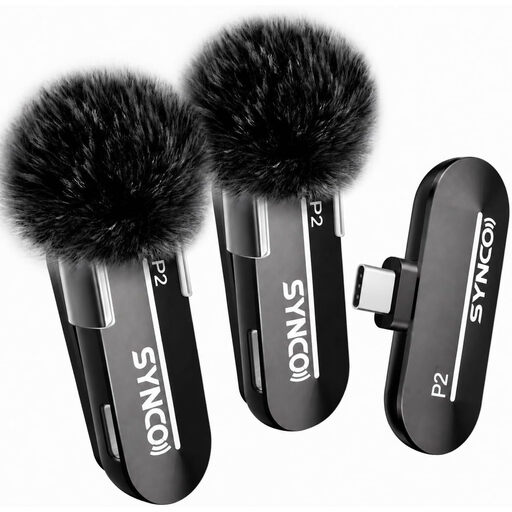 No image available
A wireless microphone set to consider if you want to record with a compatible USB-C device.
The product description lists a USB-C receiver, monitoring and simultaneous charging. Check that your device is compatible.
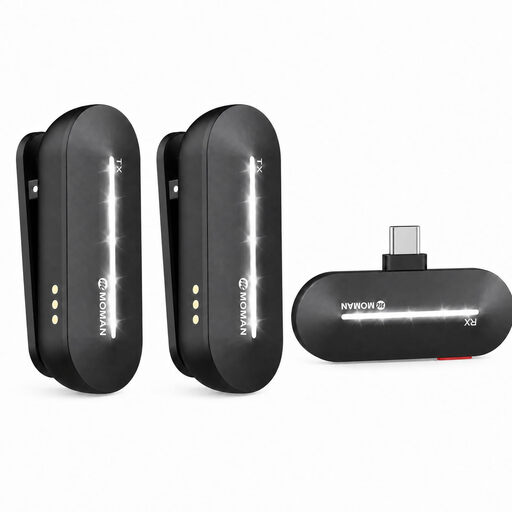 No image available
This wireless lavalier setup is designed for use with a compatible USB-C device.
The product description lists two omnidirectional transmitters and a USB-C receiver with monitoring. Omnidirectional lavalier microphones are less focused on a single voice than a directional microphone setup designed for a noisy room.
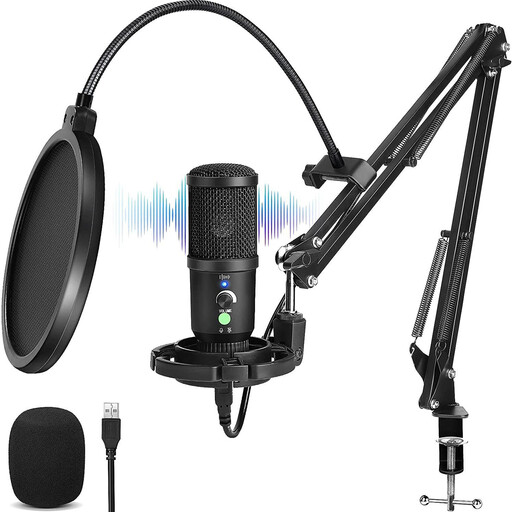 No image available
A USB condenser microphone to consider if you’re looking for a cardioid microphone for voice recording.
The product description lists a headphone socket for monitoring, gain control, mute, an arm, shock mount and pop filter. Check that the connection and included setup suit your computer and workspace.
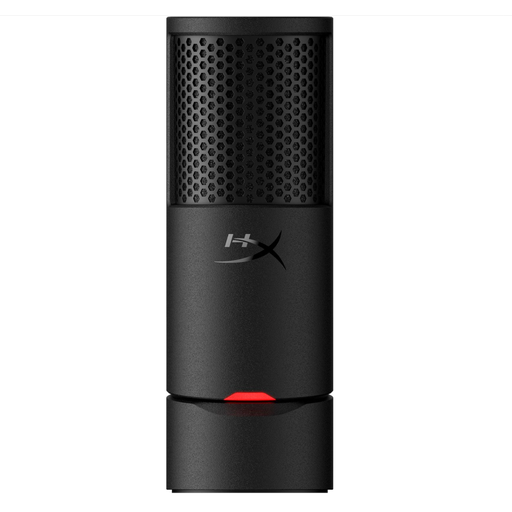 No image available
A USB desktop microphone to compare if you’re looking for a cardioid microphone for voice recording.
The product description lists an adjustable stand, mute, a built-in pop filter and shock absorption. Check that the desktop setup suits your preferred speaking distance.
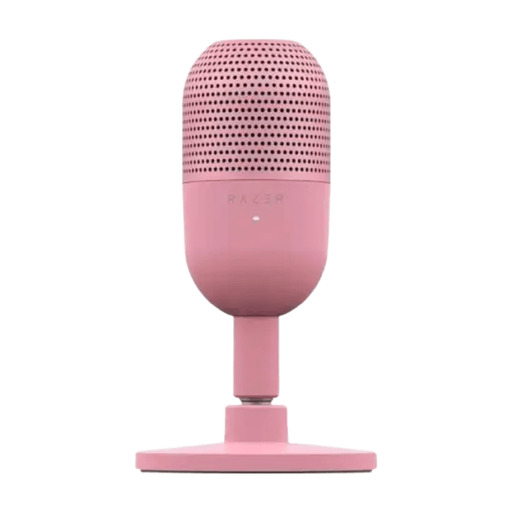 No image available
A compact USB desktop microphone to compare if you’re looking for directional voice recording.
The product description lists a supercardioid pickup pattern and tap-to-mute. Check that the placement suits your desk and speaking distance.
In the space where you plan to record, read the same short description softly and emphatically, then listen back to the recording alongside the original sound. Keep the microphone position as consistent as possible; RØDE stresses that distance and placement affect the recording. Dedicon advises that the audio description voice should be distinguishable from other voices in the soundtrack.
You don’t need a separate audio interface for the USB recording setup described here: according to their manufacturers, the Samson Q2U, Shure MV7+, RØDE NT-USB+ and Audio-Technica AT2020USB-X all have a USB connection. Do check which cable and computer port suit your setup. On some models, XLR is an additional connection option for a different setup.
First check your speaking direction and microphone placement, and use any included pop protection. Audio-Technica lists an optional shock mount for the AT2020USB-X to reduce noise from vibrations. Follow the instructions for storing and using the exact model you have.
For an ordinary online consumer purchase, ACM ConsuWijzer says you generally have up to 14 days after delivery to change your mind, subject to legal exceptions. You’re also covered by the legal guarantee if the product doesn’t meet what you could reasonably expect under normal use; the seller is your point of contact. Check who the actual seller is before ordering.
Electrical and electronic equipment placed on the market in the Netherlands must comply with the applicable European product rules. The Dutch government also outlines responsibilities relating to conformity and CE marking. The requirements depend on the product and its features. For products covered by the Cyber Resilience Act, the government says manufacturers’ reporting obligations have applied since 11 September 2026; most of the other rules apply from 11 December 2027. A product name alone doesn’t show that a specific version meets all the applicable requirements.