
Learner in low light
You often switch between listening and speaking during your language lesson, and want to check your mute status quickly. Check what indication the headset you choose gives when the microphone is muted.


Start with a headset that fits the USB port on your lesson device and lets you mute the microphone quickly. In a dimly lit room, it’s useful to have a mute status you can recognise at a glance. For speaking practice, the microphone position and a test in your lesson app also matter. If your lessons are longer, check the fit and listening comfort too.
You often switch between listening and speaking during your language lesson, and want to check your mute status quickly. Check what indication the headset you choose gives when the microphone is muted.
You want to position the microphone near your mouth and test it before your lesson, especially if there’s background noise. Check the microphone in the lesson app you use.
If you wear the headset for a whole lesson, consider how it fits and the quality of the ear cushions alongside the controls you want. Also check that the controls are easy to reach.
In low light, easy-to-recognise mute controls are particularly useful. Check the microphone and the sound you hear separately in your lesson app too.
| Feature to consider | What should you look for? | Who is this important for? |
|---|---|---|
| Mute controls in low light | Check where the mute button is, what any indicator means, and test the status in your lesson app. | When it’s my turn to speak, I want to be able to see quickly in low light whether my microphone is muted. That’s why around 28% of consumers focus on clear mute controls. |
| Making your own voice clear | Check whether the microphone is adjustable and test a recording in your lesson app, including with the background noise in your room. | For pronunciation practice, I want my teacher to hear my voice clearly. Around 22% of consumers give clear speech the highest priority. |
| Hearing your teacher and others | Check the earcups and volume controls, and test the audio output in your lesson app. | For listening exercises, I want to follow spoken instructions clearly. Around 22% of consumers prioritise being able to hear others. |
| Fit during lessons | Check the headband, ear cushions and fit; comfort is personal. | For a long lesson, I want my headset to feel comfortable and the controls to remain within easy reach. Around 17% of consumers focus on comfort for extended wear. |
| Connection and lesson app | Check that the headset fits the available USB-A or USB-C port, then select the correct microphone and speaker in the app. | Before I buy a headset, I want to know whether it connects to my device and works with my lesson app. Around 11% of consumers give compatibility the highest priority. |
Noise cancellation on a microphone relates to the sound it picks up. It doesn’t mean that background noise disappears for you while you’re listening.
Consider the microphone and what you hear through the earcups separately. Test both in the lesson app you use.
Creative says that the mute button on the HS-720 V2 lights up red. According to the Logitech manual, the light on the H390 flashes when the microphone is muted and stays on when it isn’t muted.
Read the manual for the exact version and check the mute status in your lesson app before your lesson.
According to Logitech, the H390 is available in USB-A and USB-C versions. According to HP, the Poly Blackwire 3325 Stereo, product number 8X221AA, has a USB-C cable with a USB-A adapter and a 3.5mm connection.
Compare the full version and the connections supplied with the port on your lesson device.
The HS-720 V2 is a wired USB headset to consider if you want a visible mute status and sidetone.
The H390 is a wired headset with volume and mute controls, and is available in USB-A and USB-C versions.
The Ayda USB-ENC is a USB headset with an adjustable headband and a flip-up microphone that mutes when raised.
The Blackwire 3325 Stereo, product number 8X221AA, is worth considering if you need several connection options.
These wired headsets are designed for online lessons and combine USB connectivity with different microphone controls and connection options. Check which features and connections suit your device and lesson app for each model.
 No image available
An option if you want an adjustable microphone boom and a mute indicator during lessons.
The product description lists USB, stereo audio, inline mute controls, a mute indicator light and volume control.
The product description advises against listening at high volumes for extended periods.
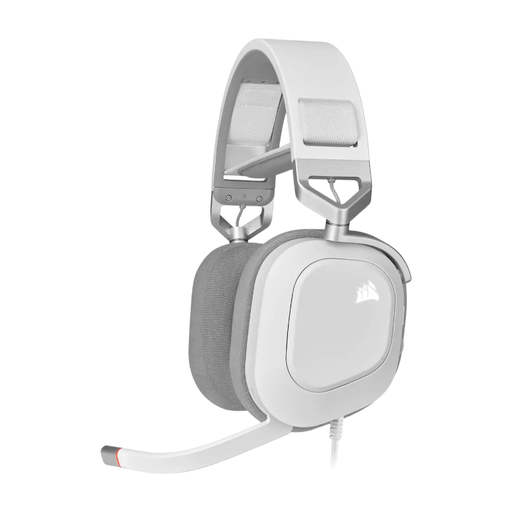 No image available
An option if you want a microphone that flips up to mute.
The product description lists a wired USB connection, earcup controls, an adjustable headband and memory foam ear cushions.
The product description advises against listening at high volumes for extended periods.
 No image available
An option if you want a 3.5mm connection as well as USB connectivity.
The product description lists stereo audio, microphone mute and a LINK controller supplied for USB.
The USB connection is made through the LINK controller; the headset also has a 3.5mm connection.
 No image available
An option if you want to flip the microphone up to mute it.
The product description lists USB-A, a USB-C adapter cable, volume control, an adjustable headband and ear cushions.
The product description advises against listening at high volumes for extended periods.
 No image available
An option if you want to mute the microphone using an inline control during lessons.
The product description lists a wired USB connection, a microphone and an inline mute control.
Low light doesn’t in itself affect the headset’s audio quality, but it makes easy-to-recognise mute controls more useful. Test the microphone and speaker separately in your lesson app.
Connect the version that fits your device’s port, then select the headset as the microphone and speaker in your lesson app. If you use Zoom, you can test both separately and select a different device if needed.
Adjust the headband and microphone to suit your head and mouth position, and check that you can reach the mute control. Start at a comfortable volume and don’t turn it up unnecessarily.
For an online purchase from a professional seller, you generally have a statutory 14-day cooling-off period from delivery; exceptions may apply, and return costs may be charged if you were told about them in advance. If a product is faulty, you should be able to claim under the statutory guarantee from the seller. This is separate from any manufacturer’s warranty.