
Presenters in a noisy workspace
You want participants to hear your voice clearly above all else. Compare the microphone design and any manufacturer claims about noise cancellation, then test a recording in your own space.


Start with a headset that connects to your computer’s port and has enough cable slack when your desk is at its highest setting. Then compare the microphone, how easy the mute controls are to reach and how the headset fits your workspace. A noise-cancelling claim doesn’t guarantee that people will be able to hear you clearly.
You want participants to hear your voice clearly above all else. Compare the microphone design and any manufacturer claims about noise cancellation, then test a recording in your own space.
You switch between desk heights and want to avoid pulling the headset cable taut. Check both the cable length and the route to your computer when the desk is at its highest setting.
You want a headset that connects to your computer and lets you mute quickly while presenting. Check the USB type, whether an adapter is needed and where the controls are positioned.
First, check the connection and cable route when the desk is at its highest setting. Then consider which microphone and controls suit the background noise and the way you present.
The percentages below relate to consumers considering a USB headset for this situation; each consumer has one main reason for buying.
| What to consider | What to look for | Who is this important for? |
|---|---|---|
| Clear speech | Check the position of the microphone boom and make a test recording with your usual background noise. Treat noise-cancellation claims as claims made by the manufacturer, not as the results of comparative testing. | If I present in a noisy room, I want my voice to come across clearly, so I test the microphone in my own surroundings. Around 29% of consumers prioritise clear speech. |
| Cable slack | Measure the route to the USB port you use while the desk is at its highest setting, allowing room to move. Compare this distance with the stated cable length for the exact version. | When I raise the desk, I want to move freely without the cable becoming taut or getting caught. Around 24% of consumers say cable slack is their main requirement. |
| USB connection | Check your computer’s port, the connection on the exact model and whether the USB-A or USB-C adapter you need is included with that version. | If I want to connect the headset to my computer, I want to know in advance whether the port and version are compatible. Around 18% of consumers prioritise having the right USB connection. |
| Mute controls | Check where the mute button is or how the flip-up microphone works. Also test whether your meeting app responds when you change the microphone’s position. | During a presentation, I want to be able to mute the microphone without searching through menus. Around 18% of consumers prioritise having call controls close to hand. |
| Fit and awareness of your surroundings | Choose between mono and stereo, and try the fit. Also consider whether you want to keep hearing people in the room while presenting. | If I’m presenting for a long time or want to keep talking to people in the room, I look for comfort and the option of leaving one ear free. Around 11% of consumers prioritise fit or staying aware of their surroundings. |
Trust describes several Ayda versions. An Ayda with a 3.5mm connection is not automatically a USB headset.
Compare the manufacturer’s part number, connection and included adapter for the exact version being offered.
The cable also needs to reach your computer when the desk is raised. The length you need depends on the position of the USB port and the route around your workspace.
Measure the full route with the desk at its highest setting, leaving room to move and adjust the desk.
A claim about reducing background noise picked up by the microphone doesn’t automatically tell you how much sound you’ll hear through the earcups.
Decide which problem you want to solve, then assess the microphone recording and listening comfort separately.
Compare models with different in-line controls, connections and microphone designs.
Compare specific Ayda versions with different connections and controls.
Assess the specific Blackwire 3225 version, which offers several connection options.
Compare the Evolve2 30 SE if you’re looking for a mono or stereo version, or a particular USB connection.
Consider the IMPACT 100 as a wired office headset with in-line controls.
These Joybuy product picks are intended for computer presentations and calls. Check that the connection, controls and cable on each version suit your sit-stand desk.
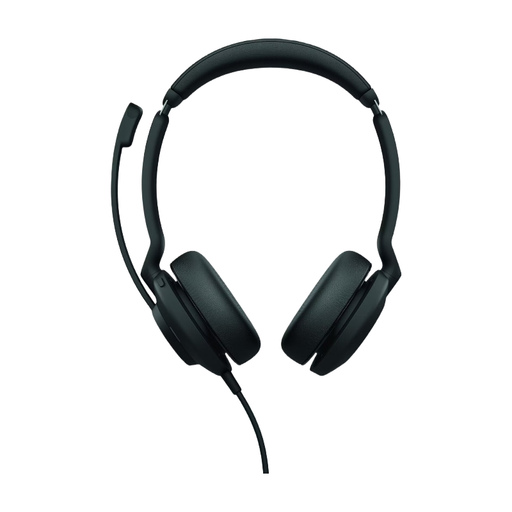 No image available
An option to compare for computer communications and call controls. Jabra lists several USB and wearing-style versions; check which one is being offered and whether it suits your computer and meeting app.
 No image available
A wired USB option to compare if you want to position and control the microphone during computer presentations. Check that the controls are easy for you to reach.
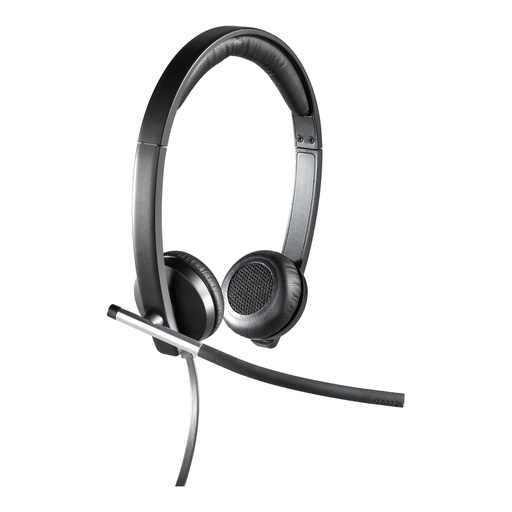 No image available
This wired stereo headset is an option to compare for calls and conferences. Before buying, check which connection comes with the version being offered.
 No image available
A wired USB headset to compare for internet calls on a computer. Consider whether the fit and controls suit how long and how often you present.
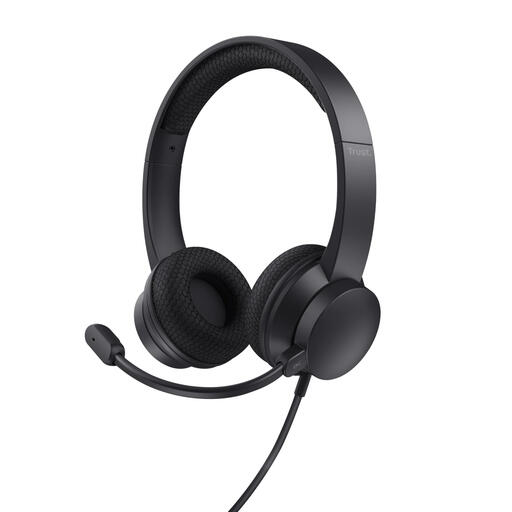 No image available
An option to compare for online meetings over USB. Check the connection and controls on the version being offered to make sure they suit your computer and presentation needs.
Connect the right version, select the headset as the input and output device in your computer and meeting app, then make a short test recording. For the Evolve2 30 SE, Jabra recommends positioning the microphone close to your mouth; also check that the USB version matches your port.
Yes, as long as the cable has enough slack at the highest setting and won’t get caught. Logitech lists a cable length of 1.9 m for the H390 USB-A, while Trust lists 1.8 m for the Ayda USB 25088. Compare these specifications with the route in your own setup.
No. A microphone noise-cancellation claim doesn’t automatically tell you how much sound you’ll hear through the earcups. Assess how clearly your voice comes across and how comfortable the headset is to listen to separately.
No. Check the connection on the exact version and whether a suitable adapter is included. Jabra describes several USB versions of the Evolve2 30 SE and notes that your computer and app must support audio through the headset.
No. Don’t assume that it does just because it’s described as noise-cancelling. The Dutch Arboportaal outlines obligations around exposure to harmful noise at work; these depend on the level of exposure, not on whether you use a presentation headset.