
Individual presenter
You’re presenting research findings from your own laptop and want remote participants to be able to hear your voice and respond to you.


If you’re presenting from your own computer, choose a USB headset with a connection, microphone and mute controls that suit your setup. If several people in the same room need to be heard by remote participants, a personal headset microphone may not be suitable as a room microphone. Microsoft Support describes room audio as a separate audio source, while Zoom warns that multiple computers with active audio in one room can cause echo.
You’re presenting research findings from your own laptop and want remote participants to be able to hear your voice and respond to you.
As well as online participants, people in the same room may want to ask questions. So decide whether personal audio is enough or whether the room itself needs audio. Microsoft Support explains how to select meeting room audio in Teams.
You’ll be wearing the headset for a while, switching between speaking, listening and muting. Comfort and easy-to-reach controls are important considerations.
Choose this when: you’re speaking from a fixed computer and the other participants have their own audio connection.
Bear in mind: the cable limits how much you can move around, and a headset microphone isn’t designed to pick up speakers throughout a room.
Choose this when: several people in your room will be speaking and online participants need to hear them too.
Bear in mind: microphone range and echo; test the setup from the places where participants will be sitting.
| What to consider | What should you check? | Who is this important for? |
|---|---|---|
| Clear speech | Check the microphone and mute controls, and test a call from the place where you’ll be presenting. | If I’m speaking through my own headset, I want to know that my voice comes across clearly from that spot. Around 33% of consumers put presenter speech clarity first. |
| Participation from people in the room | Decide who will be speaking in the room, which device will handle the meeting audio, and whether people can be heard from all the seats. | If people next to me ask questions, remote participants need to hear them too. Around 27% of consumers prioritise being able to hear several people in the same room. |
| Connection and controls | Check whether your computer has USB-A or USB-C, and whether the exact headset variant has the controls you need for your meeting platform. | If I want to avoid connection or control issues, I check the port and model variant before buying. Around 20% of consumers make compatibility or controls their top priority. |
| Comfort | Compare mono and stereo models, adjustability and ear cushions; if possible, try the fit before a long session. | I want to be able to wear the headset comfortably throughout a longer discussion. Around 20% of consumers prioritise comfort over the other considerations. |
When people next to you are speaking, their voices also need to reach online participants. A headset you’re wearing won’t necessarily pick up everyone in the room.
Before buying, distinguish between a single presenter and several people speaking in the room. In the latter case, test the complete audio setup and the places where people will be sitting.
If several people are taking part, you may need a separate room audio solution.
Zoom lists multiple computers with active audio in the same room as a possible cause of echo.
Decide which device will handle the active audio and, if necessary, disconnect computer audio on the other devices.
A product range may include different connections and platform controls. A feature on one version won’t necessarily be available on every variant.
Compare the full product number and check that the connection and controls you want are suitable for your computer and meeting platform.
The Dutch Government says there is no fixed statutory guarantee period for all products in the Netherlands. A manufacturer’s guarantee is a separate arrangement.
Read the terms of the guarantee offered. If a product is faulty, contact the seller.
The wired H570e range includes mono and stereo variants with different USB and platform versions.
The wired Blackwire 3200 series offers variants for comparing features such as mono and stereo wear styles.
The wired Ayda USB and Ayda USB-ENC models are designed for calls and online meetings on a computer.
The wired Evolve2 40 SE range includes variants for personal calls, including mono and stereo models.
The IMPACT 100 MS Stereo USB-C+A is a wired version with USB-C and a USB-A adapter included.
These models are options for an individual presenter speaking from a computer through a wired USB headset. If several people in the same room need to take part, consider separately whether the room needs audio.
 No image available
An option for an individual presenter who wants to use mute and call controls on the headset.
USB-A connection with USB-C adapter; two integrated microphones; mute and call controls. The product information states that it is Teams-certified.
A personal headset microphone isn’t a substitute for audio that needs to pick up several speakers in a room.
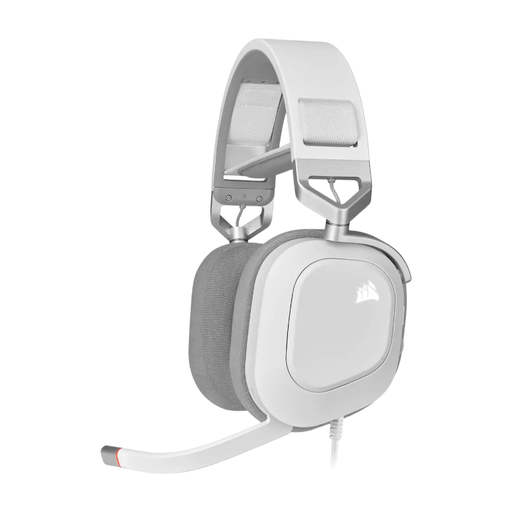 No image available
A wired USB headset for a presenter who speaks through their own microphone.
The product information lists a fold-up microphone, earcup controls, an adjustable headband and memory foam ear cushions.
A personal headset microphone isn’t a substitute for audio that needs to pick up several speakers in a room.
 No image available
A wired USB option if an adjustable microphone position is important to you.
The product information lists a microphone boom that rotates through 270 degrees and compatibility with Windows, Mac and Chromebooks.
A personal headset microphone isn’t a substitute for audio that needs to pick up several speakers in a room.
 No image available
An in-ear option for a computer or other device with a compatible USB-C connection.
The product information lists in-line controls, a lightweight design and several sizes of ear tips.
Check that the in-ear style is suitable for a longer presentation.
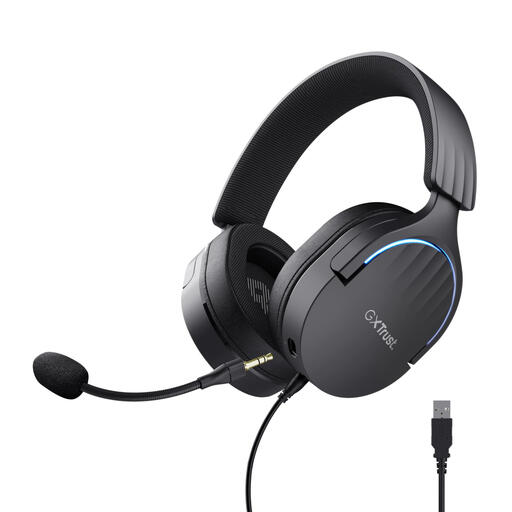 No image available
A USB headset for an individual presenter who wants mute and volume controls on the earcup.
The product information lists a flexible, detachable microphone, mute and volume controls, and compatibility with Windows PCs.
A personal headset microphone isn’t a substitute for audio that needs to pick up several speakers in a room.
Don’t assume that you can. If several people are speaking in the same room, decide which device will handle the meeting audio and test whether everyone can be heard. Microsoft Support describes room audio as a separate audio source in Teams.
In Teams, select the connected speaker and microphone, then make a test call. Also check that the correct microphone remains selected after you connect another audio device.
According to Zoom, multiple computers with active audio in one room can cause echo. If necessary, disconnect computer audio on the other devices; according to Zoom, muting their microphones alone isn’t always enough.
That depends on the integration and controls you need. If you want specific Teams call controls, check whether the particular version you’ve chosen is certified. Microsoft describes plug-and-play functionality and call controls for certified devices.
No. The European Union describes CE marking in relation to product rules that apply to certain products; the mark is only required when the relevant rules say so. Teams certification relates to how a product works with Teams, as described by Microsoft. Check both separately for the product and the platform features you need.