
Home readers with a soft voice
If you want to hear soft words and silences clearly in the recording, make a test recording before your final reading. The Audacity manual recommends checking the recording level during a test.


For softly spoken readings, an adjustable microphone boom, a compatible connection and a test recording using your own voice are a practical starting point. A USB headset is usually easier to connect directly to a computer; headsets designed for recording may offer different connections and monitoring options, but can sometimes require extra equipment. Manufacturers’ claims about call clarity do not prove that a headset is better for recording softly spoken poetry.
If you want to hear soft words and silences clearly in the recording, make a test recording before your final reading. The Audacity manual recommends checking the recording level during a test.
If there is background noise, placing the microphone close to your mouth can help capture your voice directly. A quiet place to record is still important; a directional microphone is no substitute for one.
If you already use a recorder or audio interface, you can choose a headset to suit its microphone and headphone connections. Also check whether you need an adapter or power supply; the connection instructions from Audio-Technica and RØDE vary by model.
A good fit if: you want to connect directly to a computer and it has a compatible USB port.
Bear in mind: features designed for calls do not, on their own, tell you how well it records softly spoken readings.
A good fit if: you want headphones with a detachable microphone and your device supports the required connection.
Bear in mind: RØDE specifies the supplied TRRS cable for the NTH-100M; for an XLR connection, the brand describes a suitable adapter that provides plug-in power.
A good fit if: you already have equipment with compatible microphone and headphone connections.
Bear in mind: check the inputs and power requirements for the specific version; a directional microphone also needs to be positioned correctly.
| What to consider | What to check when buying | Who it is for |
|---|---|---|
| Soft words and dynamics | Record both soft and louder lines, then check the meter and listen to the playback. Audacity recommends a peak of around −6 dB as a guide for its recording workflow. | If I want soft lines to remain clear without louder lines distorting, I make a test recording first; around 33% of consumers prioritise being able to hear a soft voice clearly. |
| Background noise | Test the headset in the room where you plan to record and listen to check that consonants and silences remain clear. Noise reduction in Audacity is designed for constant background noise, not individual clicks or irregular sounds. | If noise from a shared space drowns out my reading, I want to assess the recording location and microphone position first; around 27% of consumers put reducing distracting room noise first. |
| Connections and equipment | Compare the connection on the exact headset version with the inputs on your computer or recorder. Check whether you need a splitter, adapter or power supply. | If I want to keep using my existing recording equipment, I check which connections are available in advance; around 20% of consumers prioritise compatibility with their own equipment. |
| Microphone position and comfort | Try positioning the microphone beside your mouth rather than directly in front of it, and listen for p and b sounds. Also check that the headset remains comfortable during a reading. | For a longer reading, I want a stable microphone position and a fit that works for me; around 20% of consumers prioritise comfort and a practical microphone position. |
Features described by Logitech or Jabra for calls are not an independent assessment of how well a headset handles softly spoken readings. The recording may sound different from what you expect based on its call features.
Record soft words, silences and p and b sounds with the headset you are considering, then listen back to the result.
USB, TRRS, and separate XLR and headphone plugs require different inputs. Some connections may need a compatible splitter, adapter or audio interface.
First note the inputs on your recording device, then check the connections on the exact headset version.
You may need a splitter, power adapter or audio interface if your existing equipment does not connect directly to the headset.
A level that is too low can make soft lines difficult to hear, while one that is too high can distort louder passages. You may then have to record everything again.
Start by recording a short passage with both soft and louder lines, then check the meter and listen to the playback. Audacity recommends a peak of around −6 dB as a guide for its recording workflow.
The BPHS1 is a dynamic broadcast headset with separate XLR microphone and headphone connections. The BPHS2C is a separate condenser version.
The NTH-100M combines over-ear headphones with a detachable microphone, including for voice recording.
The H390 is a wired USB computer headset with a rotatable microphone boom.
The Evolve2 40 SE is a wired office headset with a microphone boom, worth considering if you also want to use the headset for calls.
The WH20 is a headworn microphone for anyone who does not need integrated headphones.
These wired headsets offer different connections and microphone setups to consider for recording at home; always make a test recording to hear how your voice sounds.
 No image available
An option if you want to adjust the flexible, detachable microphone; check that your recording device has a compatible connection.
Wired, with a 3.5mm connection. The product name specifies a version for PS5.
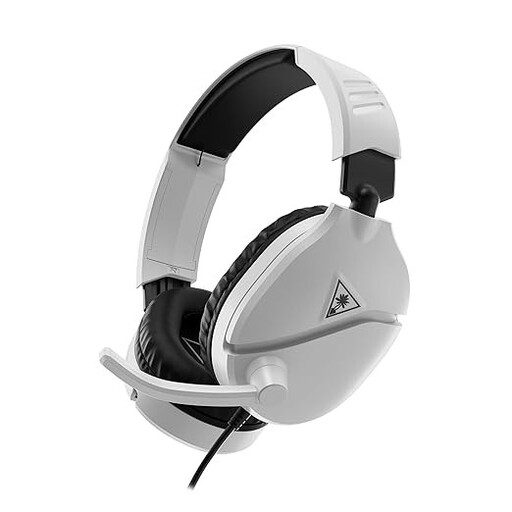 No image available
A good fit if you want to lower the microphone boom while using the headset and can match its connection to your recording device.
Wired 3.5mm connection and a flip-to-mute microphone boom. The product name lists support for PC, PS5, Switch 2 and Xbox Series X|S; according to the product description, an adapter may be needed for Xbox.
 No image available
A wired USB option if your computer or recording device supports USB and you want an adjustable microphone position.
USB connection. Check in advance that it is compatible with your device’s recording input.
 No image available
A good fit if you want to be able to mute the microphone during a reading; check which USB connection your device has.
The product name specifies USB Type-A. The product description also mentions a USB-C adapter cable and a flip-up mute microphone.
 No image available
An option if you want to position the microphone close to your mouth and have a compatible 3.5mm connection; make a test recording to check the positioning.
Wired headset with a 3.5mm connection and a microphone mute button. For a PC with separate audio connections, the product description lists a splitter cable.
First record both soft and loud lines, then check the meter and listen to the playback. For its recording workflow, Audacity recommends a maximum peak of around −6 dB as a guide; this is not a product specification.
Try positioning the capsule beside your mouth rather than directly in front of it, and listen for p and b sounds. Shure recommends this position for its SM35 headworn microphone; check the result with your own headset and pronunciation.
First check the sound source and microphone position. According to the Audacity manual, noise reduction is designed for constant background noise, not as a fix for individual clicks or irregular traffic noise.
Not simply because you are the one reciting the poem. The Dutch Government says that protected texts generally require permission, and that a private copy for personal use must not be distributed or made public. Before publishing, check who holds the rights and whether permission or a relevant exception applies.
That depends on the connection and the inputs on your recording device. A TRRS headset, a USB headset and a model with separate XLR and headphone connections all need different connection options; check for each version whether you need a splitter, adapter or power supply.