
Online presenter
You’re leading the reading from a computer and want to make sure your own voice is clear. Easy-to-reach mute and volume controls can help you manage your contribution.


A personal USB headset is a good fit if you mainly need your voice to reach online participants via a computer. Check the connection, microphone position and mute controls. If other people are speaking in the same room, a microphone near your mouth will not automatically pick them up clearly: first decide how their voices will be transmitted. A mono headset leaves one ear free so you can stay in touch with the room, while a stereo headset covers both ears.
You’re leading the reading from a computer and want to make sure your own voice is clear. Easy-to-reach mute and volume controls can help you manage your contribution.
You also want to transmit the voices of other people in the same room to online participants. First, work out the overall microphone set-up: a personal headset is not automatically a microphone for the whole room.
You want to hear online participants while staying in touch with the people in the room. Compare mono and stereo options, and consider how the headset fits.
First decide which voices need to be heard online. Then weigh up the headset’s connection and design.
Suitable when: you’re presenting from one computer and mainly want to transmit your own voice.
Trade-off: the microphone is designed for the wearer, and the cable limits where you can stand.
Suitable when: readers are joining from separate locations and can each set up their own audio.
Trade-off: if devices are close together in the same room, coordinate their microphones and speakers to help prevent echo.
Suitable when: one set-up needs to transmit the voices of several readers in the same room.
Trade-off: you’ll need to decide separately which microphone, placement and playback route will work for the room.
| Consideration | What should you look for? | Who should prioritise this? |
|---|---|---|
| Presenter clarity | Check the position of the microphone boom and the mute controls. Test the headset with the meeting app you plan to use. | If I’m reading from one computer, I want my voice to reach online participants clearly. Around 28% of consumers say transmitting their own voice is their top priority. |
| Making sure other readers can be heard | Decide who will be speaking where, then test how each voice reaches the meeting. | If other people are reading in my room, I want their voices to reach online participants too. Around 28% of consumers prioritise making sure other readers can be heard. |
| Connection and controls | Check the USB version against the ports available on your computer, then select the headset as the microphone and speaker in the app. | If I want to mute quickly during the reading, I need a suitable connection and easy-to-reach controls. Around 17% of consumers say this is their main buying concern. |
| Staying connected to the room and comfort | Choose mono or stereo deliberately, and check the fit and cable position in your planned set-up. | If I want to follow the room as well as online participants, I’ll consider the headset design and whether one ear stays free. Around 16% of consumers prioritise staying connected to the room and getting the right fit. |
| Purchase and aftercare | Check which version you’re buying and keep the product description and proof of purchase. | If I’m buying a headset for a meeting, I want to know in advance which version I’ll receive and what terms apply. Around 11% of consumers say purchase and aftercare are their main considerations. |
A personal microphone sits near the wearer’s mouth. A claim about background noise does not prove that it will pick up other readers in the room clearly.
Decide which voices need to be heard online and test the full set-up before the reading.
Having microphones and speakers active on devices close together can make the audio set-up more complicated. Microsoft says that when you join the same meeting on a second device, Teams initially turns off that device’s microphone to prevent echo.
Choose an audio source for each stage and check which microphones and speakers are active before anyone speaks.
Connections and mono or stereo options can vary within a product range. A version with an unsuitable connection may require an adapter or an exchange.
Before buying, check the full model name, connection and headset design.
The Dutch government says that statutory warranty in the Netherlands does not have a fixed time limit.
Keep your proof of purchase and the product description, and distinguish your statutory rights from any manufacturer’s warranty.
The features listed apply to the product ranges or versions described. Check which features are included with the specific headset you choose.
The H390 is a personal wired computer headset, with USB-A and USB-C options in the range.
The Ayda USB ENC is an on-ear PC headset with controls that let you mute the microphone quickly.
According to HP, the Blackwire 3200 series includes mono and stereo versions. This difference may matter if you also want to follow what’s happening in the room.
The Evolve2 40 SE is a wired UC headset available in mono and stereo versions, with different USB options.
The IMPACT 100 series includes wired headsets for calls, with different designs and connections.
This selection focuses on personal USB headsets for presenters who want to transmit their own voice via a computer. A personal headset is not a replacement for a separate microphone set-up if other readers in the same room also need to be heard online.
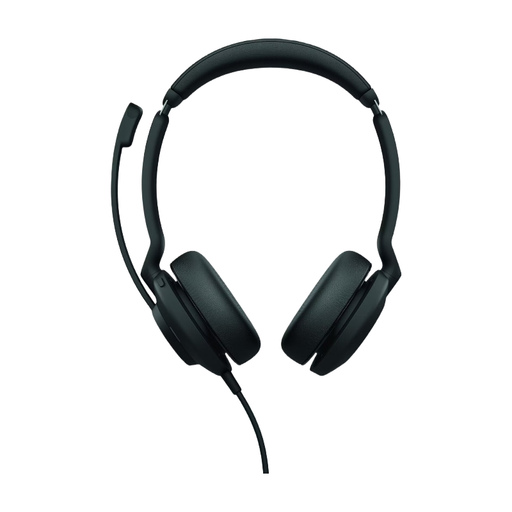 No image available
A personal headset for computer-based communication, with controls for adjusting the volume and muting the microphone.
USB-A connection with a compatible USB-C adapter; two integrated microphones, according to the product description. Check that the headset and app work with the device you use.
The headset microphone is not a proven solution for picking up other readers in the same room.
 No image available
A wired headset for calls, with a positionable microphone boom and in-line controls for adjusting the volume or muting the microphone.
The product description lists a mute indicator, ear cushions and an adjustable microphone boom. Check that the fit will be comfortable for the session you have planned.
The personal microphone is not a proven solution for picking up other speakers in the same room.
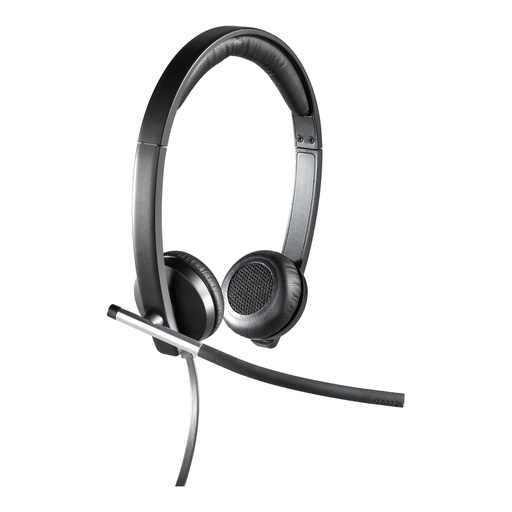 No image available
A wired stereo headset for calls via USB, with in-line controls.
The product description lists a microphone and says it is designed for extended use during calls and conferences. Stereo covers both ears; whether you can still follow what’s happening in the room also depends on your set-up.
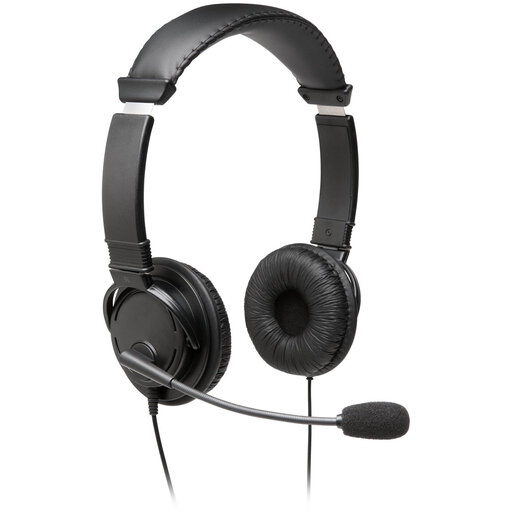 No image available
A USB stereo headset with a microphone boom, for presenters who want to position the microphone near their mouth.
The product description lists a 270-degree rotating microphone boom and a 1.8 m cable. Check that the cable is long enough to reach your computer.
A personal headset microphone will not automatically pick up other readers in the same room.
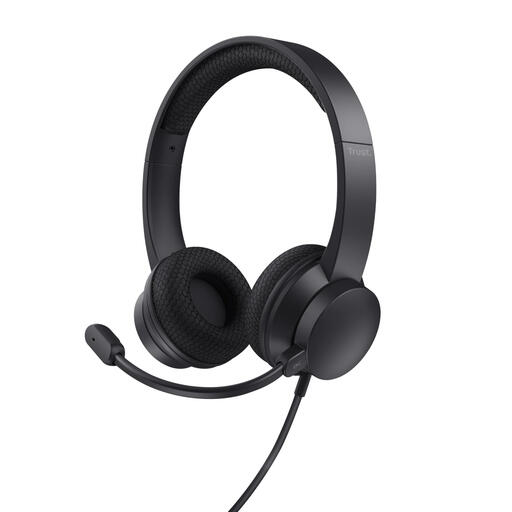 No image available
A personal headset for calls, with a microphone that flips up to mute and volume controls on the earcup.
The product description lists USB-A with a USB-C adapter, an adjustable headband and ear cushions. Check which connection you need.
The manufacturer’s claim about microphone noise reduction does not show that the headset will pick up other readers in the room.
Don’t assume it can: a personal headset’s microphone sits near the wearer’s mouth. Decide and test how the voices of other people in the room will reach the meeting. You may need a separate room audio set-up.
In Teams, if that’s the app you use, select the connected headset as your speaker and microphone, then make a test call. Also check microphone access for your device and browser, and test whether another reader can be heard.
Check which microphones and speakers are active, and test the set-up before the meeting starts. Microsoft says that Teams initially turns off the microphone on a second device when it joins the same meeting. Don’t turn it back on without a plan.
When you buy online from a business, you often have a 14-day cooling-off period, although exceptions apply. You also have rights if a product is faulty. The Dutch government says that statutory warranty in the Netherlands does not have a fixed time limit.
A headset does not automatically give you permission to do so. If an organisation processes personal data in a recording, the Dutch Data Protection Authority says it needs a lawful basis under the GDPR. If consent is used as the lawful basis, it must be freely given, specific and informed, among other things. Whether a particular recording and publication are lawful depends on the circumstances.