
Active participant at the kitchen table
You ask questions or discuss topics during training and want to be able to mute the microphone quickly when there’s noise at home.


Start with a wired USB headset that fits an available port on your computer. If you’ll mainly be listening, consider the style and how easy it is to reach the volume control. If you regularly ask questions, a microphone that’s easy to mute matters more. Microphone noise cancellation applies to the sound you transmit; it doesn’t automatically mean you’ll hear less background noise.
You ask questions or discuss topics during training and want to be able to mute the microphone quickly when there’s noise at home.
You want to get started without connection problems, so you compare the USB-A or USB-C version with the available port on your laptop.
You don’t speak much, but want to set the lesson audio and volume to a comfortable level. Whether mono or stereo suits you also depends on how much you want to hear of your surroundings.
First check the connection, then decide whether you’ll mainly be listening or actively joining in. For a longer session, the fit and controls matter too.
| Feature to consider | What to look for when buying | Who is this important for? |
|---|---|---|
| USB connection | Check whether the version uses USB-A or USB-C and whether your computer has a free port. Only count on an adapter if one is listed as included with that version. | If I want to connect without any hassle, I first check which port I can use during training. Around 33% of consumers prioritise a compatible connection. |
| Speaking and muting | Check where the microphone and mute control are, and whether the buttons you want to use work with your training app. | If I regularly ask questions, I want to be able to mute my microphone quickly when there’s noise at home. Around 27% of consumers prioritise being able to speak clearly and mute easily. |
| Comfort and listening | Compare mono and stereo if you want to keep one ear free or use both ears for the lesson audio. Weight alone doesn’t predict how comfortable a headset will feel. | If I’m listening for a long time, I look for a comfortable fit and volume that’s easy to adjust, without assuming one style will suit everyone. Around 20% of consumers say this is their main consideration. |
| Controls during the lesson | Check whether the volume and mute buttons are easy to reach and whether your training app supports their functions. | If I’m switching frequently between listening and speaking, I want to adjust the volume or microphone quickly. Around 20% of consumers place particular value on these controls. |
Trust describes both an Ayda USB and an Ayda USB-ENC. These versions aren’t necessarily the same; products with Ayda in the name may also have a different connection.
Check the full product name, manufacturer part number and connection for the specific version.
Noise cancellation in a microphone applies to the sound you transmit. It doesn’t tell you how much background noise you’ll hear during training.
Choose based on both your speaking needs and your listening environment. If you need noise reduction for the wearer, look for information about that separately.
Support for certain Teams button functions may depend on the app and device you’re using.
Before the session, check that your microphone and speakers are selected in your training app, and that the buttons work as you expect.
The H390 is a wired computer headset worth comparing if you’re looking for a straightforward connection for a training computer. Choose the USB-A or USB-C version that fits your available port.
The Ayda USB-ENC is a wired option to compare if you want to be able to mute the microphone during online meetings.
According to Jabra, the Evolve2 30 SE comes in mono and stereo versions, including a version for Microsoft Teams.
The IMPACT 100 series includes wired mono and stereo headsets to compare by style and connection.
The Blackwire 3200 series includes wired headsets for online calls, with different connection and style options.
This selection includes wired USB headsets for computer-based training, with options to compare for listening and active participation.
 No image available
An option to compare if you’re looking for a wired USB headset for computer-based training.
The product name specifies USB and a wired headset.
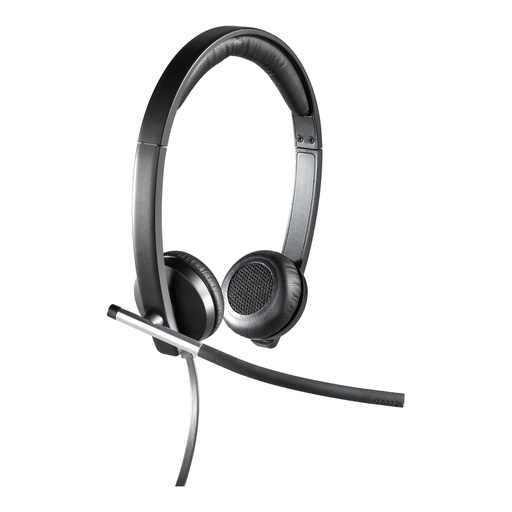 No image available
A wired stereo headset to compare if you want to use both ears for the lesson audio during training.
The product name specifies a stereo version and a wired connection.
 No image available
An option to compare if you’re looking for a wired USB headset for computer-based training.
The product name specifies USB, a wired connection and the colour black.
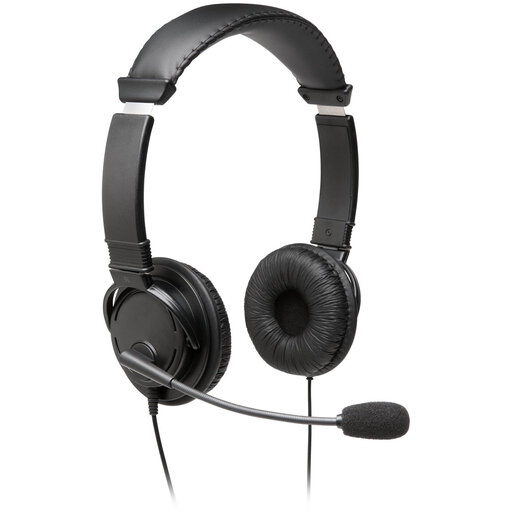 No image available
An option to compare if you’re looking for a USB headset with a microphone for training sessions where you want to join in too.
The product name specifies USB and a microphone.
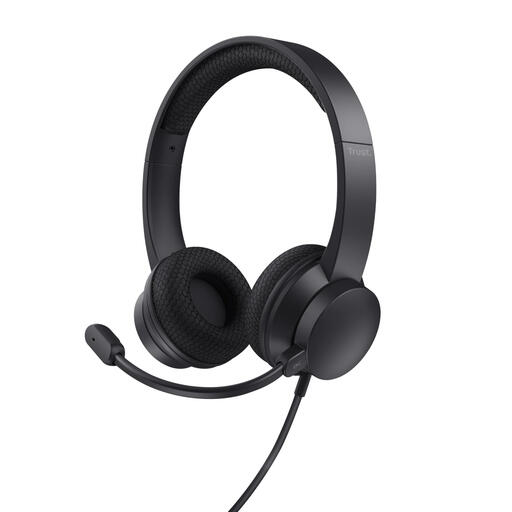 No image available
An option to compare if you’re looking for a wired headset for training sessions where you regularly switch between listening and speaking.
The product name specifies USB Type-A and the colour black. Check that this connection is compatible with your computer.
Choose a version that fits an available port on the computer you’ll use for training. The Logitech H390 is available with USB-A or USB-C; the EPOS IMPACT 100 specifications list USB-C with a USB-A adapter included. Only count on an adapter if one is listed as included with your version.
Select the headset separately as the microphone and speaker in the app, then test it before training. In Microsoft Teams, you can select these devices in the audio settings; other apps may have different settings.
A Teams-certified version isn’t a general requirement when choosing a USB headset for training. If you want to use specific Teams button functions, check that the version and your Teams app support them. Microsoft describes these button functions for the installed app on Windows and Mac.
Keep the volume as low as practical while still being able to understand speech, and take regular listening breaks. The World Health Organization stresses that both sound level and exposure time matter.
According to the Dutch government, for an applicable distance purchase you generally have a 14-day cooling-off period, with some exceptions. A product must also be of satisfactory quality; if it has a fault, contact the seller. The Dutch government notes that the Netherlands does not have a fixed statutory two-year guarantee period for every product.