
Teacher in a noisy home
You’re explaining a lesson while other people at home are talking or typing. Test the microphone in the room where you teach to find out how much of that background noise your participants can hear.


Start with how clearly your voice comes across. Choose a headset with an adjustable microphone boom, then test it in the room where you teach to hear how much background noise from other people at home gets picked up. Stereo may suit you if you want to focus on your participants; mono may be a better fit if you want to keep one ear free. Also check the USB connection, mute controls and fit. Microphone noise reduction and sound isolation around the earcups do different things, and neither will make a shared home quiet.
You’re explaining a lesson while other people at home are talking or typing. Test the microphone in the room where you teach to find out how much of that background noise your participants can hear.
You listen out for questions and choose between two earcups for greater sound isolation or one free ear so you can still hear what’s going on around you.
You wear your headset for longer periods, so consider the fit, how easy it is to mute and whether the connection works with your computer.
First, check that your microphone sounds clear in your own space. Then consider the style, connection and controls that suit the way you teach.
| What matters | What to look for when buying | Who is this important for? |
|---|---|---|
| How clearly your voice comes across | Check the position of the microphone boom and make a test recording with the usual background noise in your room. | If I’m teaching while other people at home are talking, I want to know whether my voice comes across clearly. Around 33% of consumers say how clearly the tutor can be heard is their main concern. |
| Hearing participants while staying aware of your surroundings | Check whether the exact model is mono or stereo and see how the earcups fit. | If I want to follow questions clearly but still hear what’s happening around me, I’ll consider whether to choose two earcups or keep one ear free. Around 27% of consumers prioritise hearing participants or keeping one ear free. |
| Connection and audio settings | Check whether the model has USB-A or USB-C and compare it with the ports on your computer. Test both the microphone and speakers in your teaching app. | If I want to start my lesson without connection problems, I’ll also check which audio device is active in the app. Around 20% of consumers say a suitable connection and working audio settings are their main concern. |
| Comfort and muting | Check the fit and find out where the mute button is or how to mute the microphone boom. | If I’m teaching a longer session and don’t want to transmit sound between lessons, I’ll look for a comfortable fit and easy-to-reach mute controls. Around 20% of consumers prioritise these features. |
These features help with different sides of the conversation. Microphone noise reduction is about the sounds your participants may hear through your microphone; sound isolation around the earcups is about what you hear. Neither will make a shared home quiet.
Check the microphone and earcups separately, and test a call in your own surroundings.
Some product ranges come in versions with different USB connections. The model name alone doesn’t always tell you which connector the version you’ve chosen has.
Compare the connection on the exact version with an available port on your computer, and check whether an adapter is included.
A USB dongle doesn’t make a headset wired. With a wireless version, you’ll also need to consider the connection and charging.
Choose between wired and wireless deliberately. If you opt for a wireless headset, check the adapter, connection and charging method for the exact version.
Logitech offers wired USB headsets, including the H390 and Zone Wired.
Jabra offers wired USB versions, including mono and stereo models of the Evolve 20.
The Blackwire 3200 series includes wired mono and stereo headsets.
The wired IMPACT 100 series includes mono and stereo versions for calls.
The Ayda USB-ENC is a wired on-ear option.
This selection features wired USB headsets for online calls, with a focus on microphone controls and use during longer sessions.
 No image available
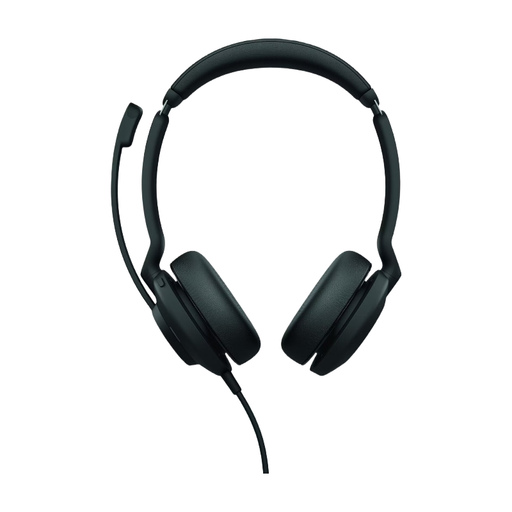
A good option if you’re looking for a wired USB headset with stereo sound and mute controls for online lessons.
Stereo; USB-A; mute control. The description also mentions an adjustable headband and memory foam ear cushions.
 No image available
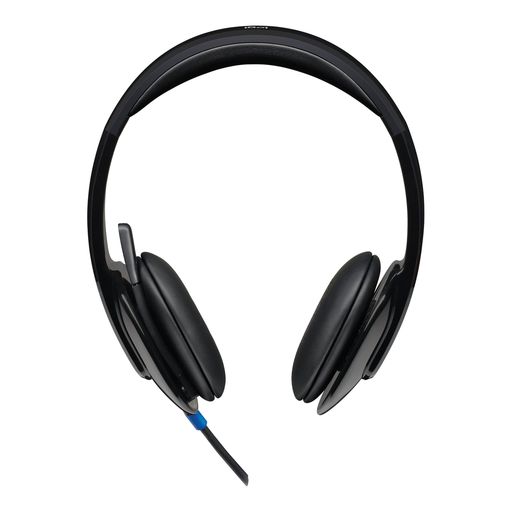
A good option if you want to use a wired stereo headset with on-ear controls during an online lesson.
USB Type-A; stereo; noise-cancelling microphone; on-ear volume and mute controls. The description mentions an adjustable headband and supra-aural earcups.
 No image available
A good option if you want an adjustable microphone boom and easy-to-reach mute controls while teaching.
Wired USB headset; stereo; adjustable microphone boom; in-line mute control and mute indicator.
 No image available
A good option if you’re looking for a wired USB headset with an adjustable microphone for online calls.
Stereo; plug-and-play USB; adjustable microphone. The description also mentions volume and mute controls.
 No image available
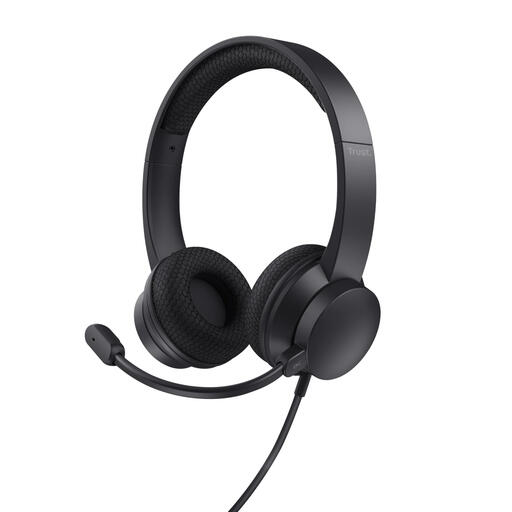
A good option if you want to adjust the volume and mute the headset during an online lesson.
Stereo; USB Type-A; microphone flips up to mute; on-ear volume controls. The description mentions an adjustable headband.
Select your USB headset as both the input and output device in your teaching app, then test them. Zoom, for example, describes a test that plays back a microphone recording. You can also repeat it with the usual background noise at home.
No. Microphone noise reduction is about how much of your surroundings your conversation partners can hear. Passively isolating ear cushions are designed to reduce the sound you hear as the wearer, and the fit also plays a part.
Not as a general requirement. Microsoft describes certification as a testing programme covering areas such as audio, controls and compatibility. Specific Teams features may vary by version, so check which features you need for your lesson.
According to the Dutch government, when you buy at a distance from a business, you’ll generally have a 14-day cooling-off period. Check the relevant exceptions and terms. The Dutch government also states that there is no fixed statutory warranty period in the Netherlands. If a product is faulty, contact the seller.
If you organise online teaching for a school or university, the Dutch Data Protection Authority highlights the privacy of pupils, students and teachers, and the education provider’s responsibility to minimise the impact of a breach. These institutional requirements don’t necessarily apply to every private tutor. Check your own organisation’s rules before making recordings too.