
Teacher with an online pupil
You mainly make video calls and want the microphone and mute controls to be easy to reach during lessons.


If you teach online, start with a wired USB headset that has an adjustable microphone boom and easy-to-reach mute controls. If a pupil is sitting at the table too, a mono headset can be practical as it leaves one ear free; just check the exact model and connection. A noise-cancelling microphone does not necessarily mean that someone else at the table will be heard clearly.
You mainly make video calls and want the microphone and mute controls to be easy to reach during lessons.
You want to keep hearing the person in the room while listening in online, so compare mono models too.
You wear your headset for several lessons and want to focus on the fit, ear cushions and controls.
| What to consider | What should you check? | Who is this important for? |
|---|---|---|
| How clearly the teacher can be heard | Check the adjustable microphone boom and mute controls. Test a call with the participants who need to listen online. | If I teach online, I want the participant to be able to follow what I’m saying. Around 33% of consumers put teacher voice clarity first. |
| Being able to hear the pupil at the table | Check whether the model is mono and whether the uncovered ear will be on the side you need. | If I’m speaking to someone at the table and an online participant at the same time, I want to keep hearing the person in the room. Around 27% of consumers prioritise this. |
| Comfort through several lessons | Look at the adjustable headband and type of ear cushion, and consider whether the fit will remain comfortable for you. | If I wear the headset for back-to-back conversations, I mainly want a fit that stays comfortable for me. Around 20% of consumers prioritise comfort. |
| Connection and controls | Compare the USB port on your device with the model you’re considering, and check where the mute controls are. | If I want to mute quickly during a lesson, I also want to make sure the plug fits my computer. Around 20% of consumers prioritise connection and controls during lessons. |
The microphone features described are designed to pick up the wearer’s voice and reduce background noise. That doesn’t automatically mean an online participant will hear the pupil sitting opposite you clearly too.
Have both speakers join a test call if the online participant needs to hear them both.
A mono model leaves one ear uncovered. A stereo model may be less suitable if you also need to pay attention to the person next to you during the lesson.
Compare mono and stereo models based on who you need to hear in the room.
USB-A and USB-C use different plugs, and what’s included in the box can vary by model. You may need an adapter if the connection on the model you choose doesn’t match your computer.
Check your device’s port, the full model description and whether any adapter you need is included.
The H390 is a wired USB headset for calls, with product information offering a choice of USB-A and USB-C.
The Ayda USB and Ayda USB-ENC are separate models designed for calls via a PC.
The Blackwire 3200 series includes wired USB headsets in different wearing styles and connection options.
The Evolve2 30 SE is designed for calls and collaboration, and is also available in a Teams version.
The IMPACT 100 series includes wired mono and stereo models for calls.
These headsets may be suitable for conversations around the kitchen table. Check the connection, microphone setup and fit of each model to make sure it suits your lessons.
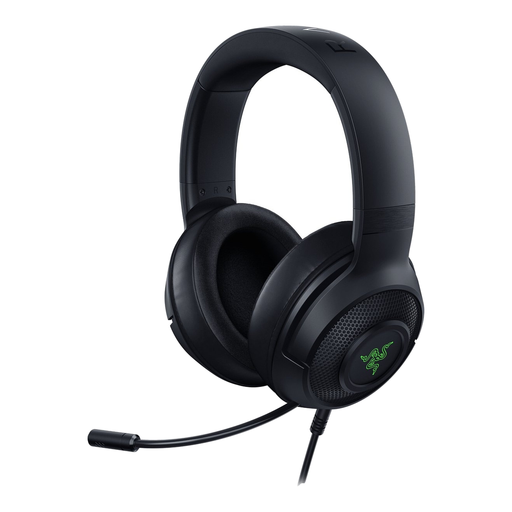 No image available
Before choosing, check that the microphone pickup and connection suit the way you teach online.
 No image available
The product name identifies this as a wired USB headset. Check that the connection fits your computer and that the microphone setup suits your lessons.
 No image available
The product name describes a wired USB headset. Before use, check the connection and whether the microphone is suitable for your call setup.
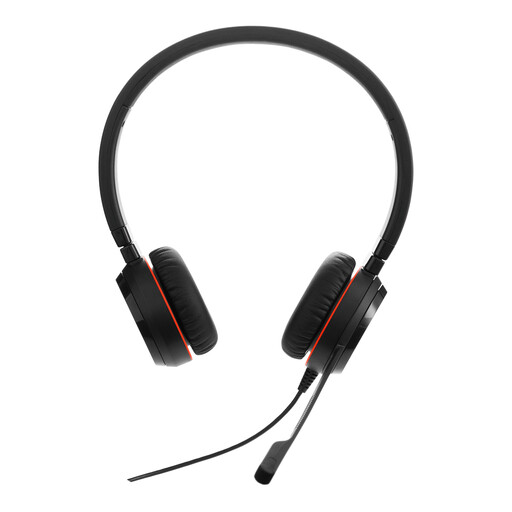 No image available
The model described is stereo. It connects directly via 3.5 mm; to connect via USB, you’ll need the included LINK MS controller.
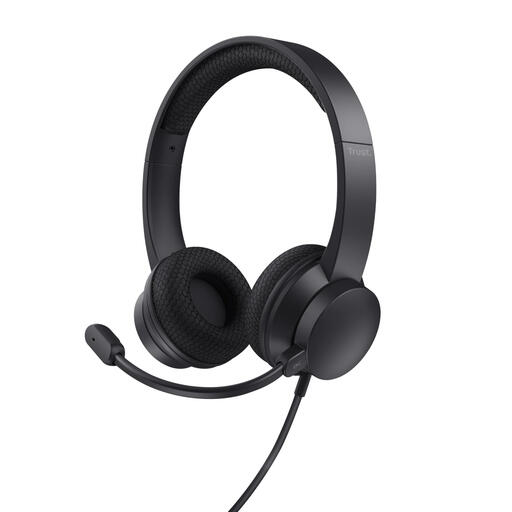 No image available
The product name specifies USB Type-A. Check that this connection fits your computer and whether any adapter you need is included with this model.
Don’t assume it will. Manufacturers describe microphones that pick up the wearer’s voice and can reduce background noise; that doesn’t mean the other speaker will be picked up clearly. Test your setup with both speakers if the online participant needs to hear them both.
Connect the USB model that fits your device and, if necessary, select the headset as the input and output device in your calling software. Adjust the headband and position the microphone boom near your mouth. Logitech’s H390 instructions recommend this position for better voice pickup. Then test the mute function and listening volume too.
Keep the ear cushions clean by following the instructions for your model, and check that they’re securely attached. Trust describes the Ayda USB ear cushions as easy to clean; this guidance doesn’t automatically apply to other models.
If a product is faulty, contact the seller to find a solution. According to the Dutch Government, there is no fixed statutory guarantee period in the Netherlands. An extended guarantee may be useful if it gives you additional rights.
Distance purchases generally come with a 14-day cooling-off period, but there are exceptions. Check the seller’s information for your order. Your statutory rights for faulty products are separate from the cooling-off period.